Summary: An Air Canada CRJ-900 (Flight 8646) landed on LaGuardia’s Runway 4 late Sunday and struck a Port Authority firefighting vehicle that had been cleared to cross the runway while responding to a separate United Airlines emergency. Two people in the aircraft’s flight deck were killed and dozens were injured. Investigators are probing air traffic control staffing and communications, the lack of a transponder on the rescue vehicle, and surface-detection system performance; the inquiry may take many months.
How the LaGuardia Collision Unfolded: Air Canada Jet Strikes Fire Truck After Landing
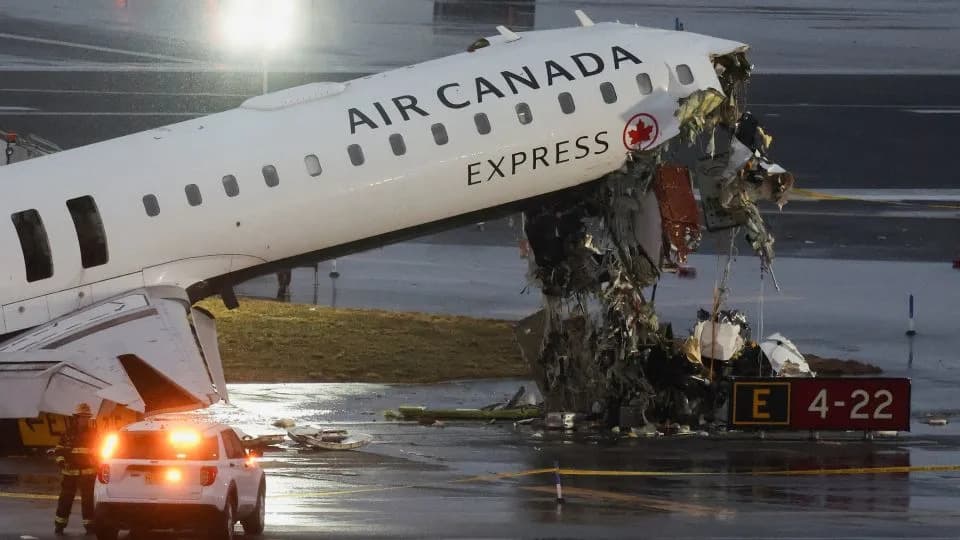
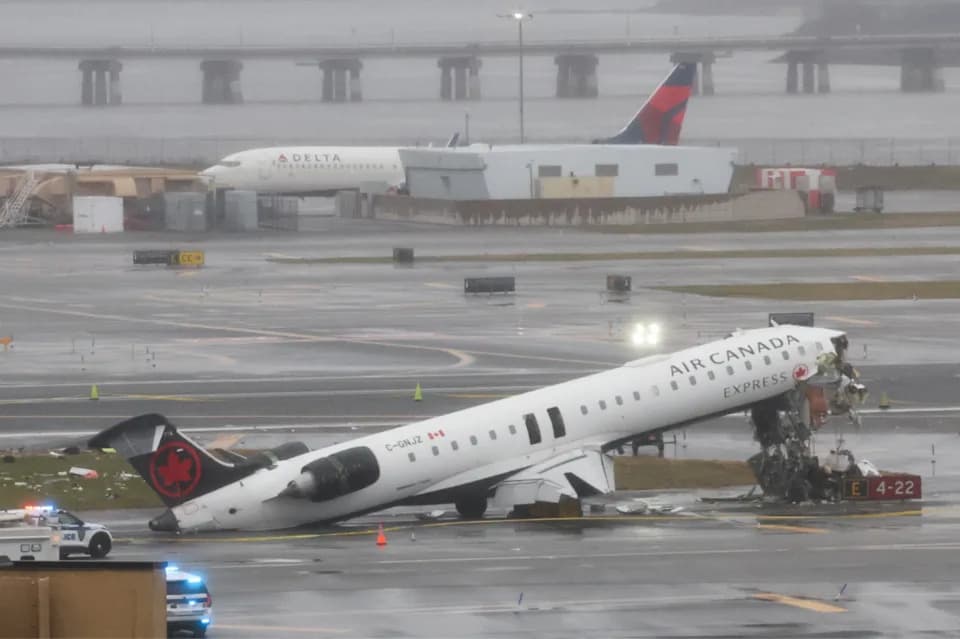
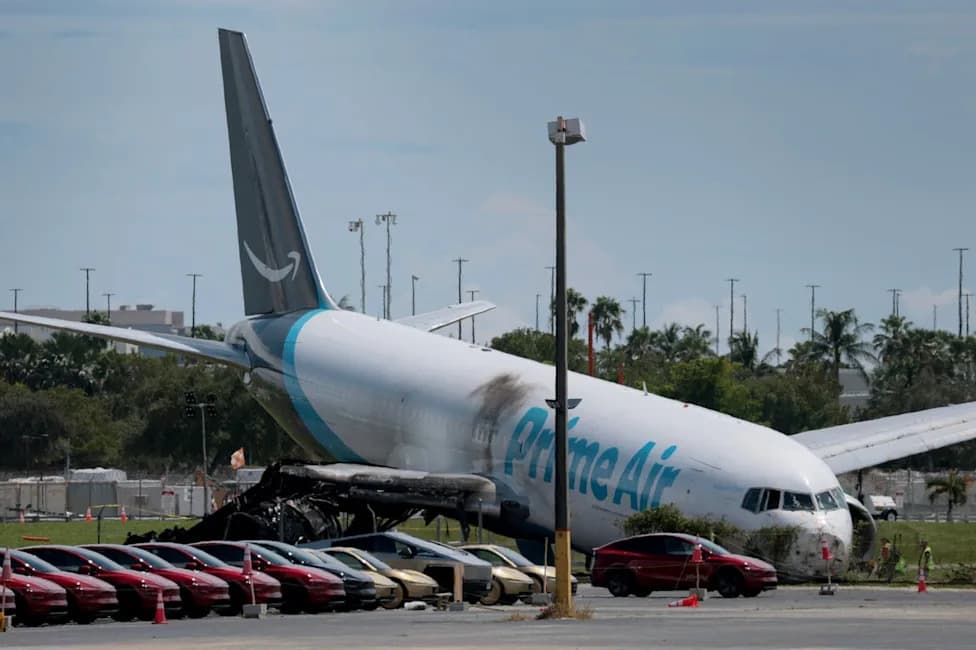
Debris hangs from an Air Canada jet Monday at New York's LaGuardia Airport. - Shannon Stapleton/Reuters
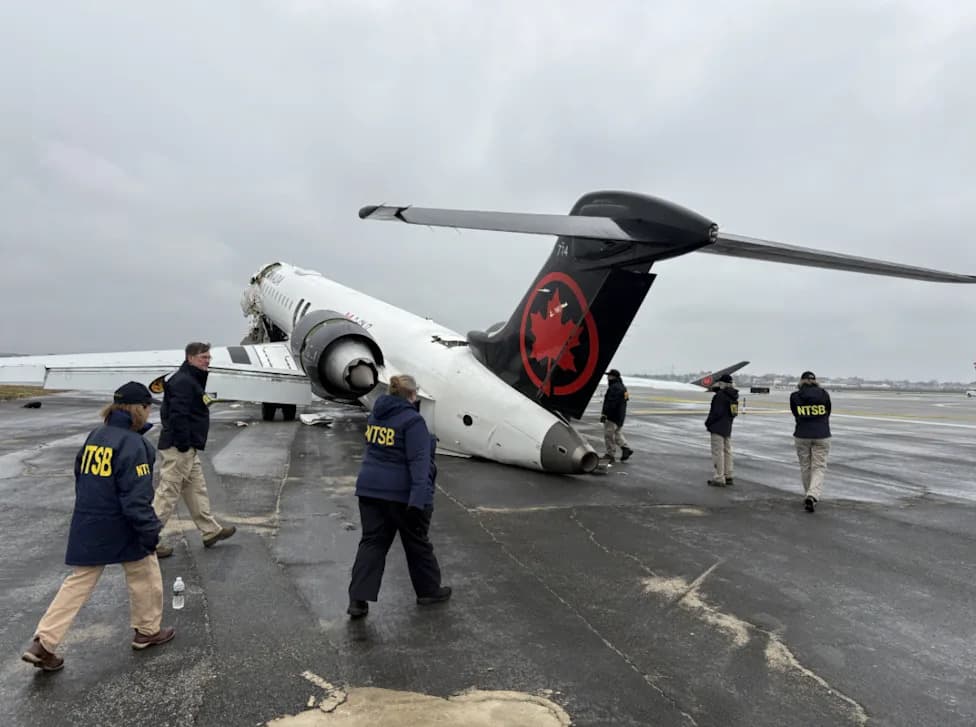
An Air Canada CRJ-900 (Flight 8646) returning to LaGuardia Airport struck a Port Authority firefighting vehicle on Runway 4 late Sunday, killing two people in the aircraft’s flight deck and injuring dozens of passengers and crew. Investigators from the National Transportation Safety Board (NTSB) and Canadian authorities have opened probes into the collision, which forced the airport to close for more than 13 hours.
Timeline of Events
The regional jet departed Montreal’s Pierre Elliott Trudeau International Airport shortly after 10 p.m. for a roughly one-hour flight to New York. Captain Antoine Forest and First Officer Mackenzie Gunther were at the controls.
Shortly after 11 p.m., LaGuardia tower received a separate radio call from United Flight 2384 reporting a de-icing malfunction and a “weird” odor on board; the United pilot declared an emergency and requested fire service. As Port Authority rescue crews responded, controllers cleared Air Canada Flight 8646 to land on Runway 4 at about 11:35 p.m.
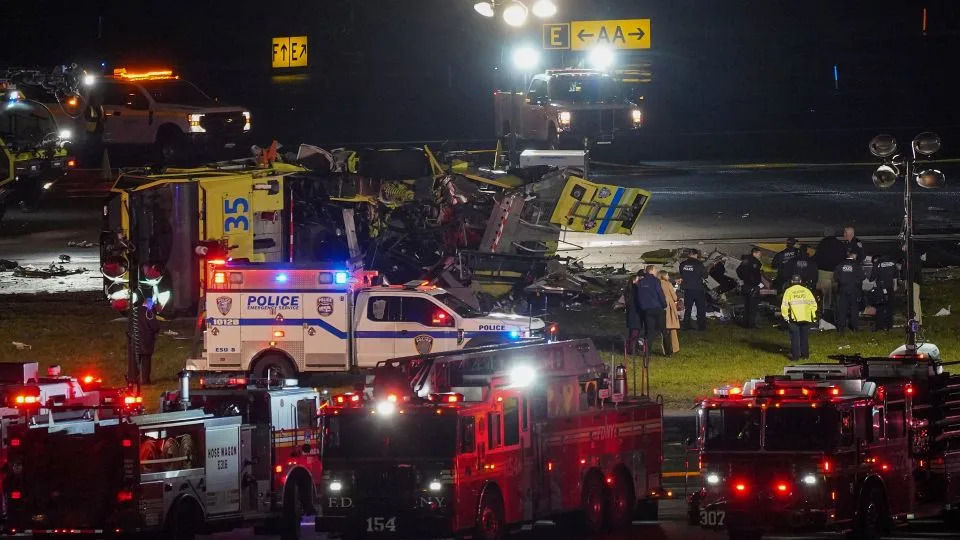
A Port Authority aircraft rescue firefighting vehicle lays on its side off Runway 4 after colliding with an Air Canada flight landing at LaGuardia. - Ryan Murphy/AP
Minutes later, the tower cleared the responding firefighting vehicle to cross Runway 4. Seconds after that clearance, audio recordings show a controller urgently ordering the rescue truck to stop. The Air Canada jet had already touched down and collided with the vehicle while rolling at over 100 mph.
Immediate Aftermath
The impact sheared off the aircraft’s forward fuselage and left the nose crumpled. Passengers described a violent jolt, a grinding braking noise and then a massive impact. Dozens were hurt and at least one flight attendant strapped into a jump seat was ejected onto the runway. Passengers evacuated using emergency exits and a wing escape; many credited the flight crew’s actions with preventing a worse outcome.
“We hit a very rough landing… and after that, you hear the pilot try to brake, and it was like a grinding noise,” passenger Rebecca Liquori told CNN. “The pilots saved our lives.”
What Investigators Are Examining
Key issues under review include air traffic control staffing and procedures, communications in the tower that night, and airport technology. The rescue vehicle did not have a transponder, a device that helps controllers track ground vehicles on radar-like systems. NTSB Chair Jennifer Homendy noted LaGuardia’s surface detection system did not provide an alert prior to the collision because nearby vehicles were merging and unmerging, preventing the system from producing a high-confidence track.
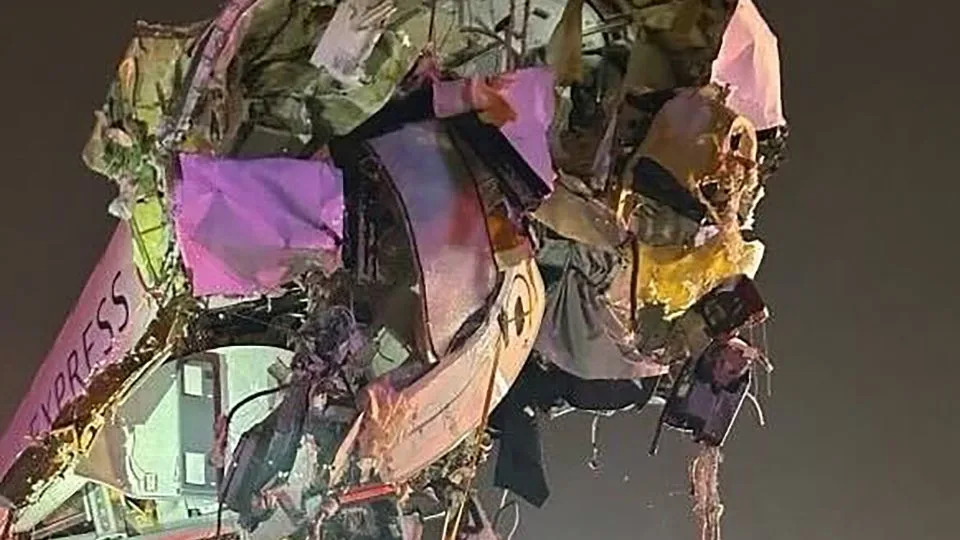
The wreckage of an Air Canada plane hovers Monday at LaGuardia. - Obtained by CNN
The tower had two controllers on duty that night — the local controller and the controller-in-charge — a configuration NTSB officials said is routinely used overnight at LaGuardia and many other U.S. airports. Transportation Secretary Sean Duffy confirmed staffing that night was slightly below the facility’s target (33 employed, seven in training, target 37), though he called LaGuardia “well-staffed as airports go.”
Investigators are also reviewing whether combined duties in the tower, heavy controller workload, or communication gaps contributed to the sequence of events. The NTSB has previously warned about risks when tower positions are combined; similar issues were cited in last year’s midair collision near Washington, D.C.
Recovery and Ongoing Inquiry
LaGuardia remained closed for more than 13 hours; the FAA said Runway 4 is expected to remain closed for recovery and investigative work through at least Friday. The NTSB cautioned that aviation accident investigations typically span many months and often identify multiple contributing factors.
The NTSB and Canadian transportation safety authorities continue to gather evidence, review tower and aircraft recordings, and interview personnel. Officials have underscored the many unknowns that remain and warned that a definitive cause likely will take extensive analysis to determine.
Help us improve.