Genetic analysis of 124 women from San Antonio de los Cobres, Argentina, identifies a cluster of variants near the AS3MT gene that appear to improve arsenic metabolism by promoting conversion to easily excreted forms. Before filtration in 2012, the town's water had about 200 µg/L of arsenic — roughly 20× the WHO guideline of 10 µg/L. Researchers conclude long-term exposure likely drove selection for protective AS3MT variants, though carriers are not immune to arsenic-related health risks.
Andean Residents May Have Evolved a Genetic Defense Against Arsenic

(Edsel Querini/iStock/Getty Images)
For millennia, inhabitants of the high Argentinian plateau around San Antonio de los Cobres have drunk groundwater laced with arsenic at concentrations far above international safety guidelines. New genetic research suggests that, over generations, natural selection favored variants that help this population process and excrete arsenic more safely.
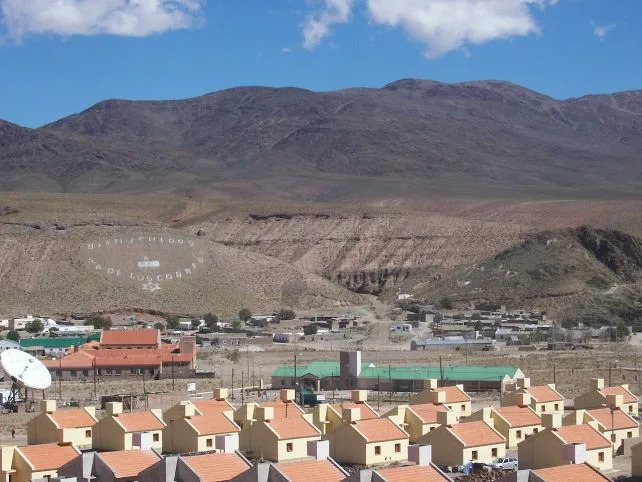
The Argentinian town of San Antonio de los Cobres sits at an altitude of about 3,775 meters (12,385 feet). (Roberto Ettore/Wikimedia Commons,CC BY 3.0)
Genetic Clues Point to AS3MT
Researchers led by Carina Schlebusch and Lucie Gattepaille (Uppsala University) analyzed DNA from 124 women in San Antonio de los Cobres and compared millions of genetic markers with public data from Peru and Colombia (including the 1000 Genomes Project). They found a cluster of genetic variants near the AS3MT gene that are significantly more frequent in the Argentine population and strongly associated with differences in arsenic metabolism.

The Puna de Atacama plateau in northern Argentina, where groundwater naturally contains high levels of arsenic. (jarcosa/iStock/Getty Images Plus)
When arsenic enters the body it is transformed by enzymes through several chemical states. One intermediate, monomethylated arsenic (MMA), is especially toxic; a later product, dimethylated arsenic (DMA), is easier to excrete. Urine profiles from the San Antonio de los Cobres residents showed lower levels of MMA and higher levels of DMA, matching the genetic signal linked to enhanced AS3MT activity.

Subscribe to ScienceAlert's free fact-checked newsletter
"Adaptation drives genomic changes; however, evidence of specific adaptations in humans remains limited," the authors wrote. "Our data show that adaptation to tolerate the environmental stressor arsenic has likely driven an increase in the frequencies of protective variants of AS3MT, providing the first evidence of human adaptation to a toxic chemical."
Environmental Context and Health
The World Health Organization's guideline for arsenic in drinking water is 10 micrograms per liter. Before a filtration system was installed in 2012, San Antonio de los Cobres' drinking water contained roughly 200 micrograms per liter — about 20 times the WHO guideline. Archaeological evidence indicates people have occupied the region for at least 7,000 years and possibly up to 11,000 years, providing ample time for natural selection to act.
While the AS3MT-related variants appear to reduce the buildup of the most harmful arsenic intermediates, they do not make carriers immune to arsenic's effects. Chronic arsenic exposure remains linked to cancers, skin lesions, birth defects and other serious health problems. The genetic changes likely conferred a relative survival advantage in a high-arsenic environment but do not replace the public-health benefits of clean water.
Subsequent studies have found similar genetic signals in other Andean populations with long-term arsenic exposure, suggesting the adaptation may be regionally widespread. The original study was published in the journal Molecular Biology and Evolution.
Help us improve.