The Indus Valley Civilization left behind a compact script of several hundred signs that remains undeciphered. Most surviving inscriptions average about five signs and there is no known bilingual key, which makes full decoding difficult. AI and statistical methods can detect patterns and suggest candidate sign values, but experts stress that human-guided, multidisciplinary research and new, longer finds are likely needed for a convincing decipherment.
Can the Indus Valley Script Be Deciphered? AI, Archaeology and the Road Ahead
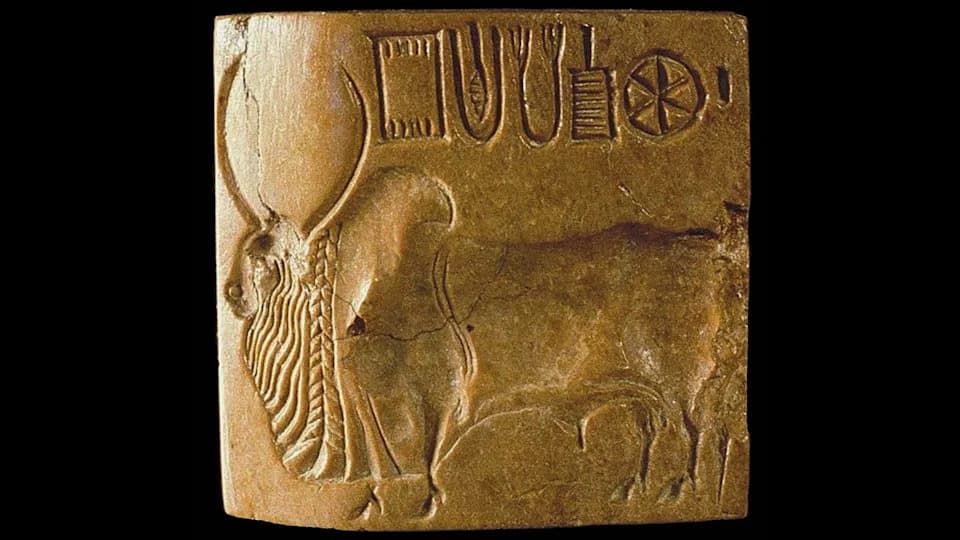
A seal with an Indus Valley Civilization script. | Credit: Heritage Images via Getty Images
Around 4,000 years ago a sophisticated society arose across the river plains that are now parts of Pakistan, western India, eastern Iran and Afghanistan. Alongside planned cities and standardized weights, its people left behind a compact written system — commonly called the Harappan or Indus Valley script — made up of several hundred distinct signs that remain undeciphered.
Life's Little Mysteries logo with a question mark in a magnifying glass
What We Know
The surviving corpus of inscriptions is large in number but short in length: the average inscription contains only about five signs, and most texts are inscribed on durable materials such as clay and stone. There is no known bilingual inscription — no Rosetta Stone — to map Harappan signs to a known language. Scholars also disagree about the script's nature: some view it as encoding a spoken language, while others see many signs as nonlinguistic emblems or labels that identify people, places or goods.
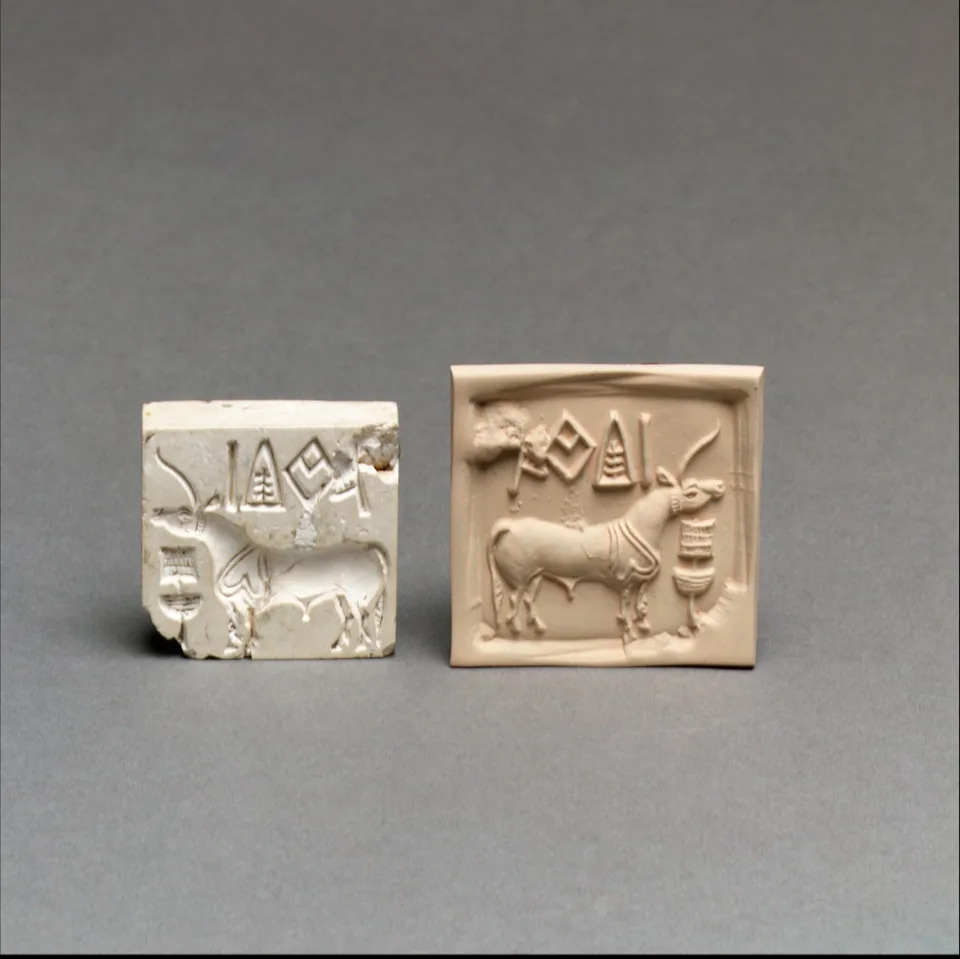
A stamp seal containing Indus Valley Civilization script, along with a modern day impression of it. | Credit: Dodge Fund, 1949; The Met; Public Domain
Why Decipherment Is Difficult
Short, repetitive inscriptions make it hard to establish stable sign values or grammatical patterns. Estimates of the sign inventory vary, but experts generally count signs in the hundreds. With no long texts or bilingual parallels, conventional decipherment strategies are severely constrained.
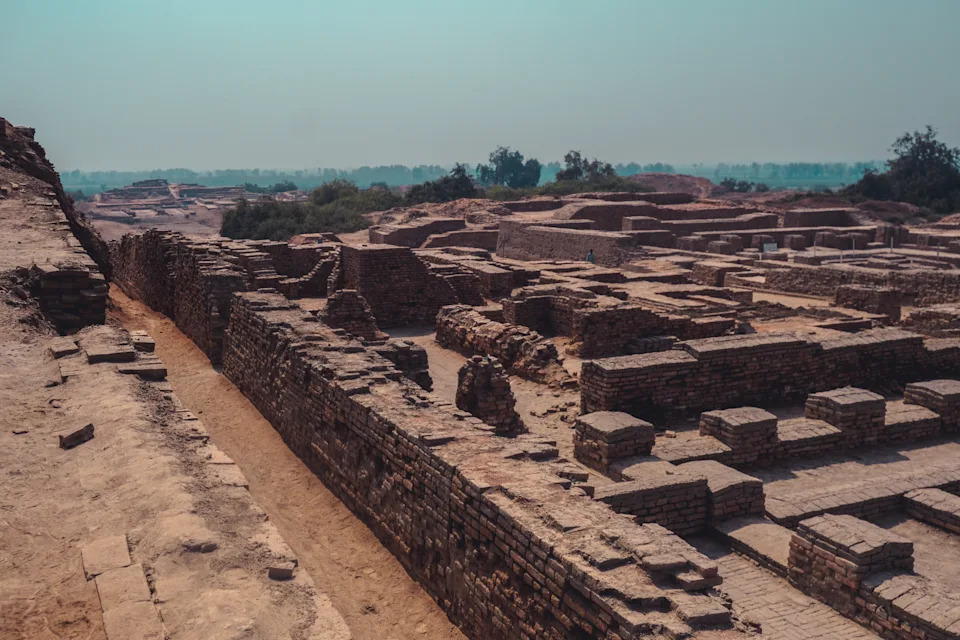
Mohenjo-daro, a city of the Indus Valley Civilization. | Credit: Jawwad Ali via Shutterstock
Partial Progress and Competing Views
"I think that the Indus Valley Script is already partially deciphered, but that recognition of that fact is severely lagging," said Steve Bonta, an independent linguist who argues that certain signs and canonical groupings indicate notations of assets and weights. His claims — and other proposed decipherments — have not won broad consensus.
Other researchers report more cautious progress. Michael Philip Oakes (computational linguist) and teams led by Rajesh Rao and Peter Revesz have applied statistical analysis and data mining to the corpus. Rao's early work found statistical patterns consistent with an underlying language, while Revesz's group has used computational methods to cluster signs that likely share related functions or meanings.
Can AI Solve It?
Artificial intelligence and statistical tools are powerful for pattern-finding: they can propose candidate sign groupings, suggest probable sign values, and highlight recurring structures. But experts emphasize these results must be interpreted within archaeological, palaeographic and linguistic frameworks. As Steve Bonta put it, "AI is an extension of human intellect and intuition, albeit an extraordinarily powerful one." Computational methods are best seen as tools that require careful human guidance and a robust research design.
Where Real Breakthroughs May Come From
Some specific partial gains look achievable now. Several inscriptions include tally marks (short vertical strokes) that likely indicate numbers; paired with archaeological evidence for standardized weights using ratios of 1, 2, 4, 8, 16, 32 and 64, researchers may be able to read numerical notations and related economic records. A truly convincing full decipherment, however, probably depends on uncovering more and longer inscriptions — ideally a bilingual text or a long administrative record from unexcavated sites.
Conclusion
In short, the Indus Valley script presents one of archaeology's toughest puzzles. AI and statistical analysis have revitalized research and can accelerate hypothesis generation, but a widely accepted, comprehensive decipherment will likely require new archaeological discoveries, rigorous multidisciplinary interpretation, and careful human oversight of computational findings.
Help us improve.