Since January 2025, President Trump’s second term has tested the limits of international law and global institutions. Legal scholars say strikes on Venezuela and Iran breach the UN Charter, while many states and institutions have been reluctant to confront Washington directly. Domestic checks have been uneven, and rising energy prices and shifting Gulf investments may be the most powerful immediate constraints on his foreign policy.
How Trump’s Second Term Is Testing International Law and Global Order
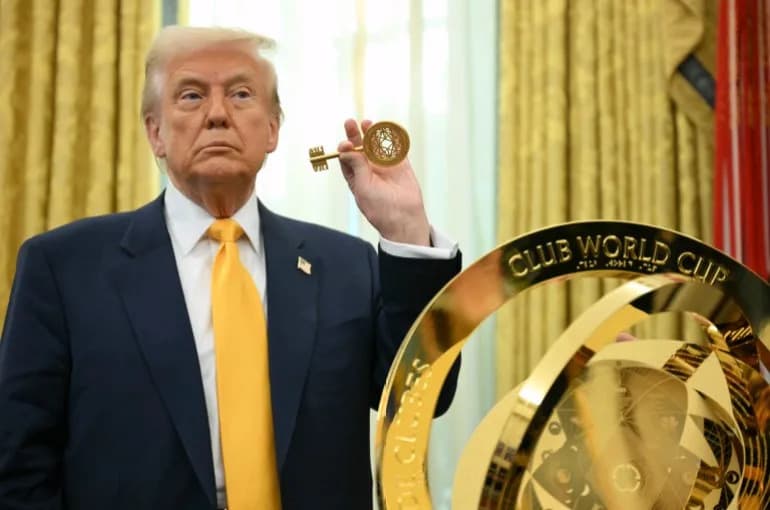
President Donald Trump holds the key to unlock the FIFA Club World Cup trophy, which he said is staying at the White House, requiring a replica to be presented to the tournament’s winners, Chelsea, in July 2025 [File: Pool via AP]
The decision by US President Donald Trump to order military strikes and pursue aggressive unilateral policies since his second inauguration in January 2025 has prompted fresh debate about whether post‑World War II institutions and international law can still constrain great‑power behavior.
Critics say Trump's administration has combined military action, economic coercion and diplomatic brinkmanship in ways that strain legal norms, fracture alliances and unsettle world markets. The most consequential moves include strikes against Venezuela and Iran, a threat to annex Greenland, sweeping tariffs, and repeated public statements that international law will apply only when he chooses.
Do Legal and Institutional Checks Still Work?
Legal scholars argue that the attacks on Venezuela and Iran violated the UN Charter’s prohibition on the use of force (Article 2(4)). Observers also note a growing willingness among powerful states and institutions to accommodate or avoid directly confronting Washington — a dynamic that weakens collective enforcement of international rules.
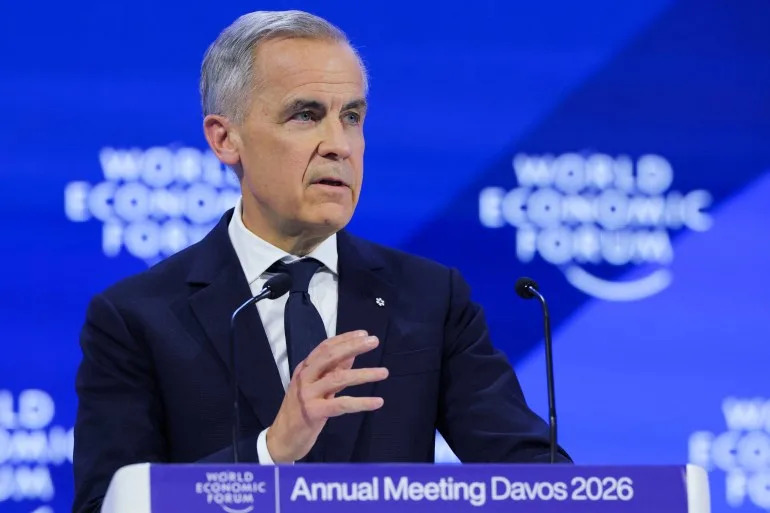
Canadian Prime Minister Mark Carney warned Trump of a ‘rupture’ in the Western alliance at the World Economic Forum in Davos, Switzerland, in January 2026 [File: Denis Balibouse/Reuters]
“In the current geopolitical climate, the capacity of international law to provide a meaningful constraint on US action under Donald Trump has proven negligible,”
Michael Becker, Professor of International Human Rights Law at Trinity College Dublin and former ICJ staffer, told reporters.
Trump has publicly suggested that he will decide when and how international law applies to the United States, a position that many legal experts call dangerous for the rules‑based order.
How Are Other States Responding?
Responses have been mixed. Several middle powers — notably Canada, the United Kingdom and France — pushed back successfully against Trump's attempt to assert control over Greenland. Yet many Western governments stopped short of condemning US strikes in Venezuela and Iran, underscoring what analysts describe as double standards in responses to conflicts in the Middle East and the Global South.
“Middle powers can generate friction but not a veto. Collective action — European governments, Gulf states — can raise costs and extract tactical adjustments. The structural imbalance remains: the US retains decisive military, financial and institutional primacy,”
HA Hellyer of the Royal United Services Institute observed.
China and Russia have publicly criticised breaches of international law while avoiding direct escalation. Many BRICS members, including India, have chosen strategic ambiguity rather than confrontation, reflecting complex regional interests and economic ties.
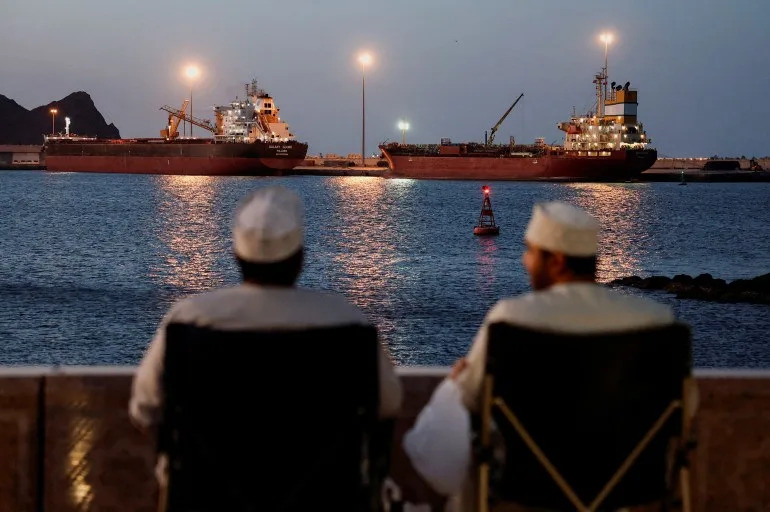
A bulk carrier and tanker at anchor in Muscat, Oman, as Iran has essentially closed the Strait of Hormuz by threatening to attack vessels transiting the waterway [File: Benoit Tessier/Reuters]
Domestic Guardrails And Market Forces
Domestically, checks have been uneven. The US Supreme Court intervened at points to block aspects of tariff policy when it appeared to discriminate between allies and adversaries, but Congress, the Department of Justice and parts of the news media have not consistently constrained executive actions. Legal scholars note that while lower federal courts have limited the administration on immigration and sanctions issues, foreign‑policy litigation remains difficult because of legal standing requirements.
“What the US is spectacularly missing is leadership to oppose Trump. Congress is not doing its constitutional job to constrain him,”
Kim Lane Scheppele, Professor of International Affairs at Princeton University, told Al Jazeera.
Market forces may offer the clearest near‑term limits. Trump’s actions have raised global oil prices: attacks on Iran, Tehran’s counterstrikes and threats to shipping in the Strait of Hormuz — a chokepoint that handles roughly 20% of the world’s oil and LNG — pushed prices higher. The International Energy Agency’s release of 400 million barrels from strategic reserves eased markets only modestly, and Iran warned that prices could spike to $200 per barrel if disruptions continue.
Outlook
Analysts say the combination of economic fallout (higher energy costs, potential investment withdrawals from Gulf states) and growing domestic disaffection with prolonged overseas military commitments may be the most effective constraints on the administration’s unilateral actions. But absent a united international front or decisive domestic political pushback, the United States currently retains the capacity to act unilaterally — with global consequences.
Key voices cited: Michael Becker (Trinity College Dublin), Richard Gowan (Crisis Group, former UN director), HA Hellyer (RUSI), and Kim Lane Scheppele (Princeton University).
Help us improve.