A couple walking their dogs at Lunan Bay, Angus, discovered footprints exposed by storm-shifted sands that were subsequently dated to the early first century A.D. Specialists from the University of Aberdeen treated the site as an archaeological emergency and worked three days under severe, sand-blasting conditions to record and stabilise the impressions. Despite the quick response and documentation, tidal and storm action washed the footprints away within a week. Experts urged the public to report newly exposed archaeological features promptly.
2,000-Year-Old Footprints Exposed at Lunan Bay Prompt Emergency Excavation — Then Were Lost to the Sea
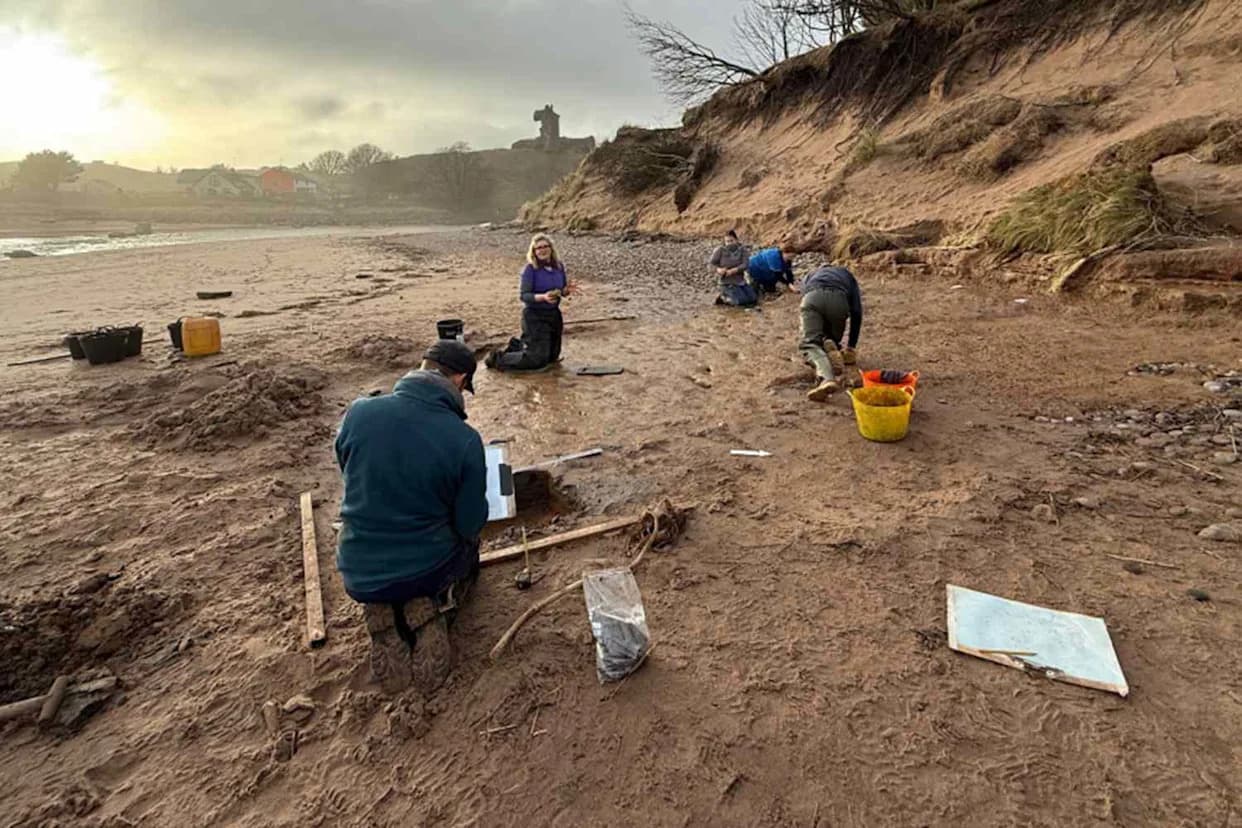
A group of people working together to preserve the 2,000-year-old footprints.Credit: University of Aberdeen
A dog-walking couple uncovered a rare archaeological find on a Scottish beach when shifting sands revealed ancient footprints at Lunan Bay in Angus. The impressions—later dated to the early first century A.D.—prompted an urgent field response from the University of Aberdeen, but heavy weather and tidal action ultimately destroyed the prints within days.
Discovery and Dating
Ivor Campbell and Jenny Snedden noticed distinct markings on the foreshore after a storm removed surface sand. They alerted local council archaeologist Bruce Mann, who quickly contacted the University of Aberdeen because the site was exposed and vulnerable to tides and storms.
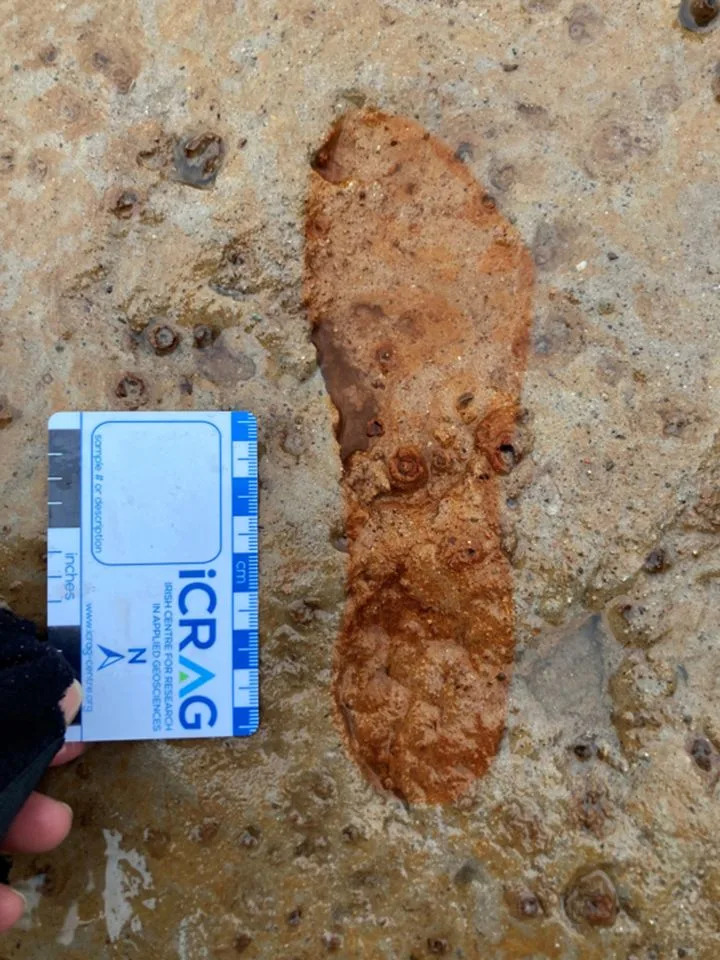
One of the 2,000-year-old footprints.Credit: University of Aberdeen
University specialists, including Professor Kate Britton, examined the impressions and recovered samples for analysis. Radiocarbon dating placed the prints in the early first century A.D.—roughly 2,000 years old—an era the university described as the time of Boudicca, Jesus and the height of the Roman Empire.
Emergency Response
The team treated the discovery as an archaeological emergency. Working in severe, sand-blasting conditions and driving winds, they documented and attempted to stabilise the site over three intensive days. Campbell and Snedden supported the effort by providing access for vehicles, hot drinks and helping carry equipment.
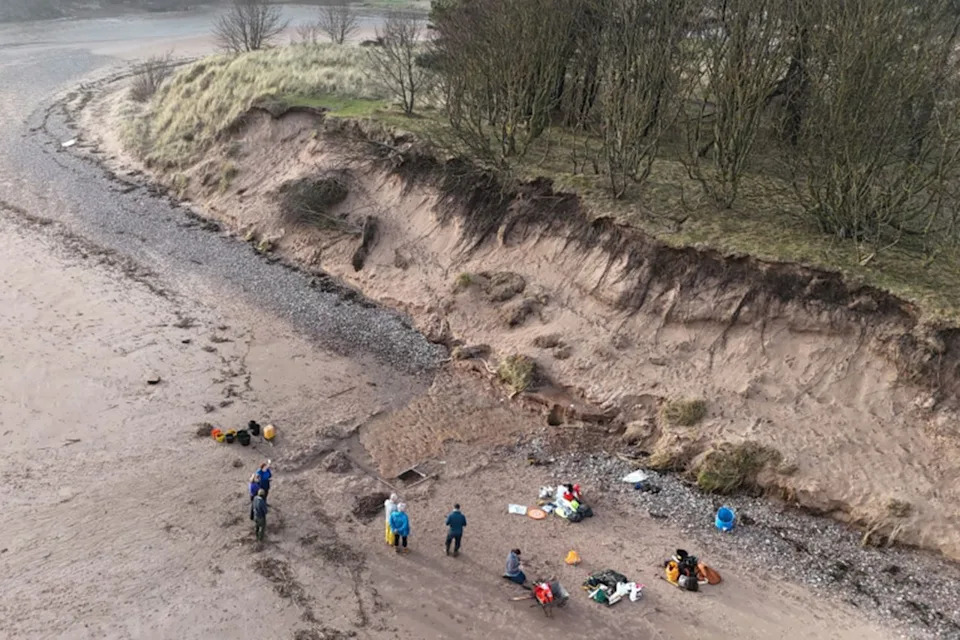
Credit: University of Aberdeen
"We were all very conscious this truly was an archaeological emergency," Professor Kate Britton said, describing the conditions as "horrendous" and likening the work to being sand-blasted.
Outcome and Appeal
Despite rapid action and thorough documentation, a return visit a week later showed the wave action had washed the footprints away. Britton emphasised the rarity of intact footprint sites—many archaeologists never encounter them in situ—and urged the public to report newly exposed archaeological features quickly so specialists can examine them before they are lost.
Why This Matters
Coastal sediments can preserve short-lived traces of past human activity, and finds like these offer a direct, visceral connection to people who lived two millennia ago. Though the physical impressions were lost, the documentation and samples collected provide valuable scientific information and highlight the urgency of rapid responses to similar discoveries.
Help us improve.