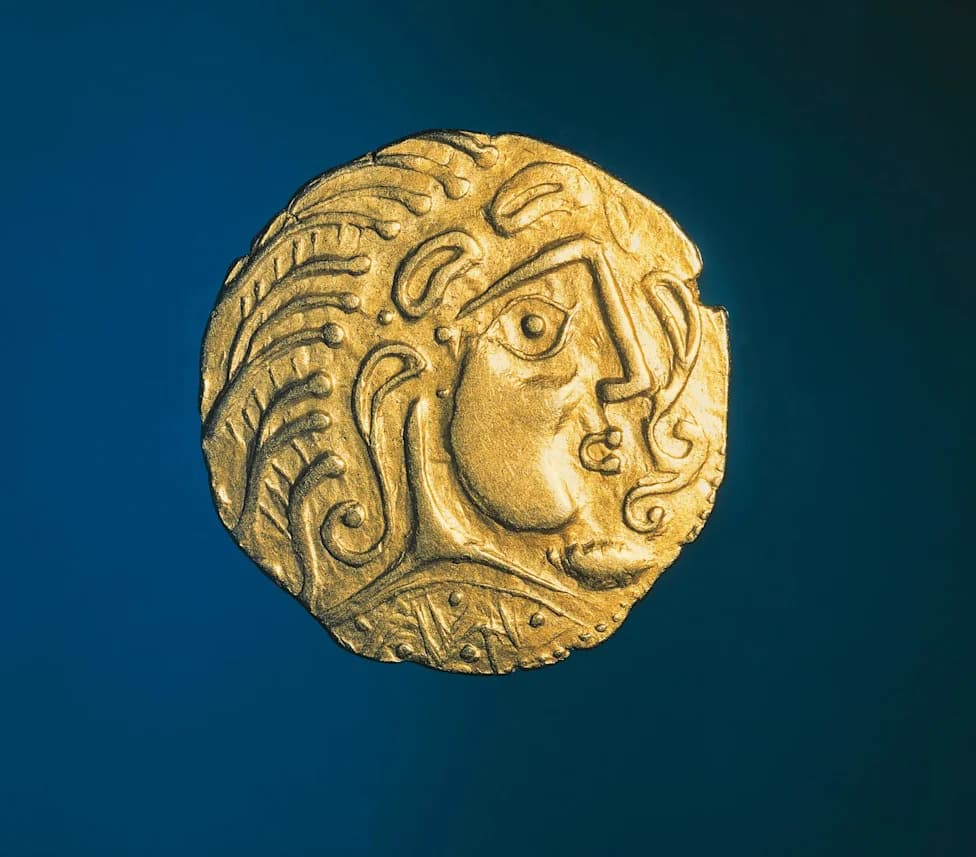
Community-led excavations on Lios Mòr (Lismore) have produced the first archaeological evidence of a significant early medieval monastery tied to Saint Mo Luóc. Finds include an extensive cemetery, early buildings and workshop areas with moulds, crucibles and a touchstone for precious-metal working. The material culture suggests considerable wealth and artistic sophistication, indicating regional to supra‑regional influence across Dál Riata between the 7th and 10th centuries. Further excavation is planned to map the full monastic enclosure and wider estate.
Archaeologists Unearth First Physical Evidence of Lismore’s Legendary 6th‑Century Monastery
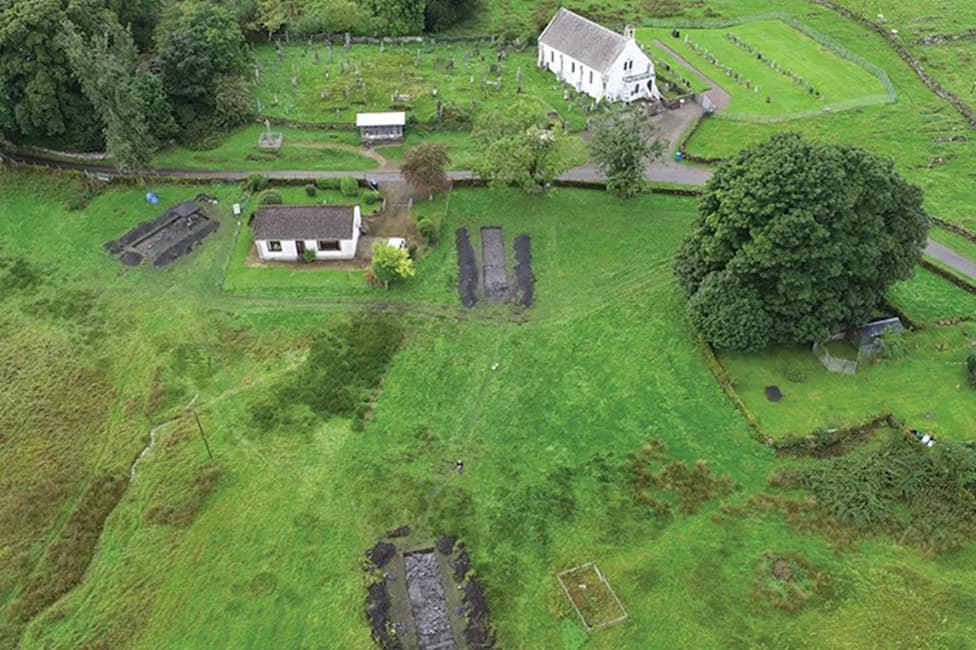
First evidence of legendary Christian monastery with ‘international importance’ found on tiny island in Scotland
Archaeologists and local volunteers have uncovered the first physical traces of a once-thriving early medieval monastery on Lios Mòr (Lismore) in Argyll, confirming long‑held historical claims about the site's importance in the first millennium AD. Community-led excavations, reported in the journal Antiquity (2026), reveal a complex centre of worship, learning and high-status craft production tied to a foundation attributed to Saint Mo Luóc in the sixth century.
Aerial image of excavations on Lios Mòr (Antiquity 2026)
Finds and Significance
The fieldwork exposed an extensive early medieval cemetery and a cluster of structures around the later parish church, together with clear evidence for precious-metal working. Archaeologists recovered moulds and crucibles likely used to produce brooches and other metalwork, fragments of finely chip-carved motif pieces, an early touchstone for testing gold, and fragments of intricately carved stone sculpture.
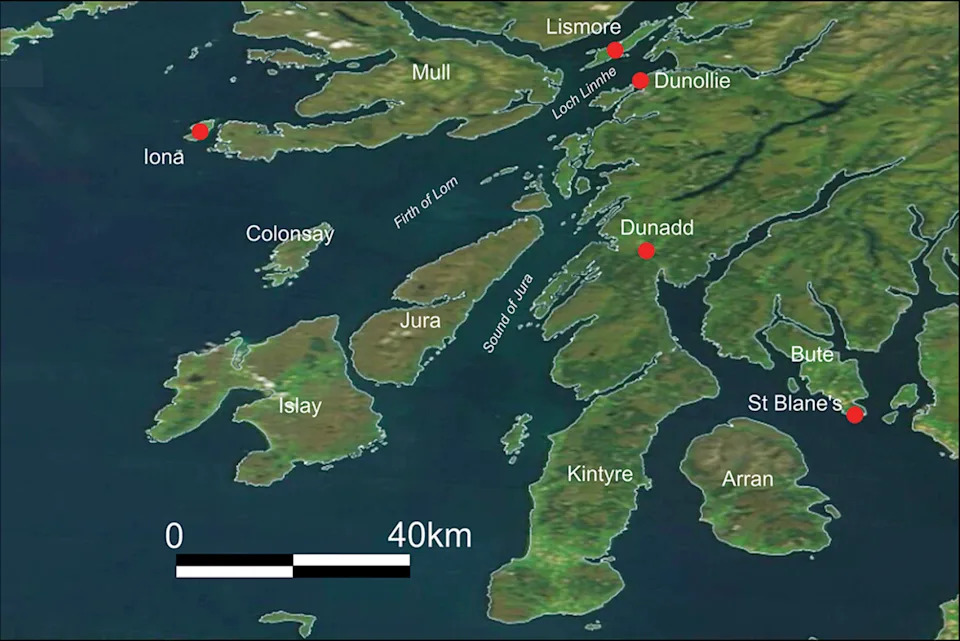
Map showing the maritime geography of Argyll (Nasa/Antiquity 2026)
According to the study authors, some motif pieces have no close parallels in Scotland and only a few similar examples are known from Ireland. Combined with evidence for yew woodcraft and other high-status production, the finds indicate that Lios Mòr functioned as more than a local chapel: it was a wealthy, artistically sophisticated monastic centre with regional — and possibly supra-regional — connections across Dál Riata and the Irish Sea world between roughly the 7th and 10th centuries AD.
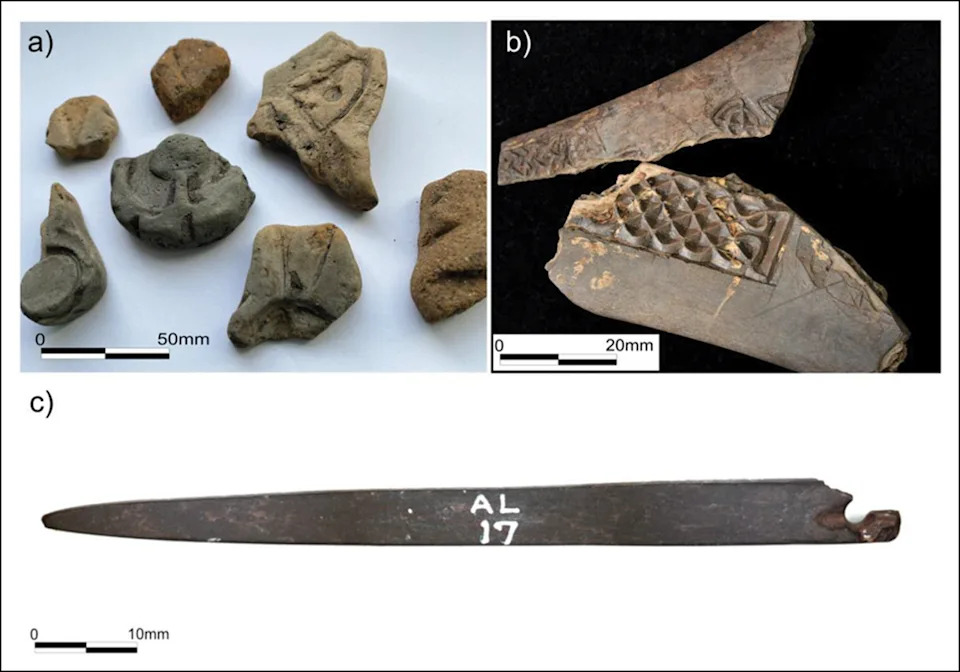
Brooch mould fragments; motif pieces with fine chip-carved designs; and early medieval touchstone for testing gold (National Museums Scotland via Antiquity 2026)
Voices From the Project
Gordon Noble, a co-author of the paper, said: "For centuries, Lismore's early monastery was known mainly from written records and local tradition. We can now see that it was a thriving centre of worship, craftsmanship and learning, whose importance may have rivalled some of the best-known monasteries in early medieval Britain."
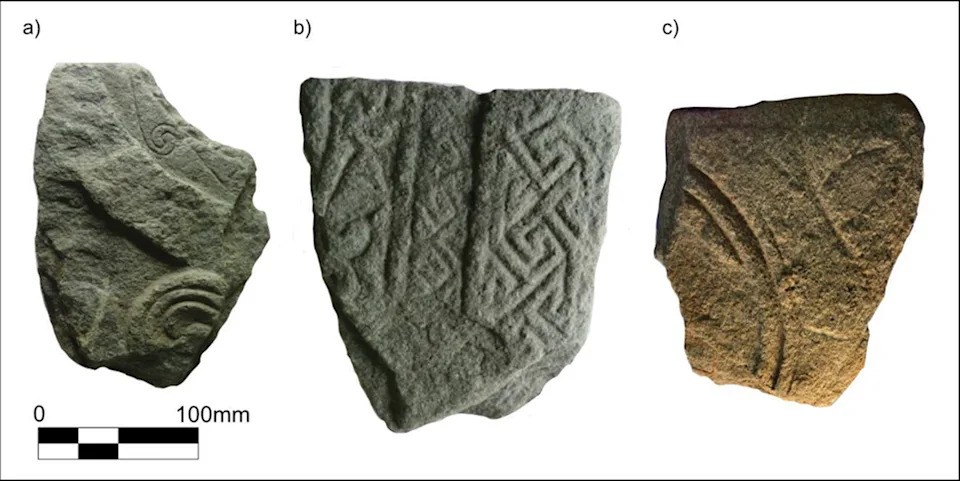
Intricate early medieval sculpture fragments from Lios Mòr (Antiquity 2026)
Clare Ellis of Argyll Archaeology, who led the excavations, explained that the project tested whether the later medieval cathedral stood within the same enclosure as Mo Luóc's early monastery and aimed to assess the site's scale, character and status. Bob Hay, a former island resident who organised funding and volunteers, emphasised the essential role of the Lismore Historical Society and community members in the discoveries.
Next Steps
The research team recommends further work to delineate the full monastic enclosure, investigate the upper cemetery and map the wider ecclesiastical estate to clarify the monastery's extent, economic reach and role within contemporary networks across northwestern Europe.
Why it matters: The discoveries transform Lismore from a place known mainly through texts and tradition into a site with tangible archaeological evidence of international‑level craft production and cultural influence during the early medieval period.
Help us improve.