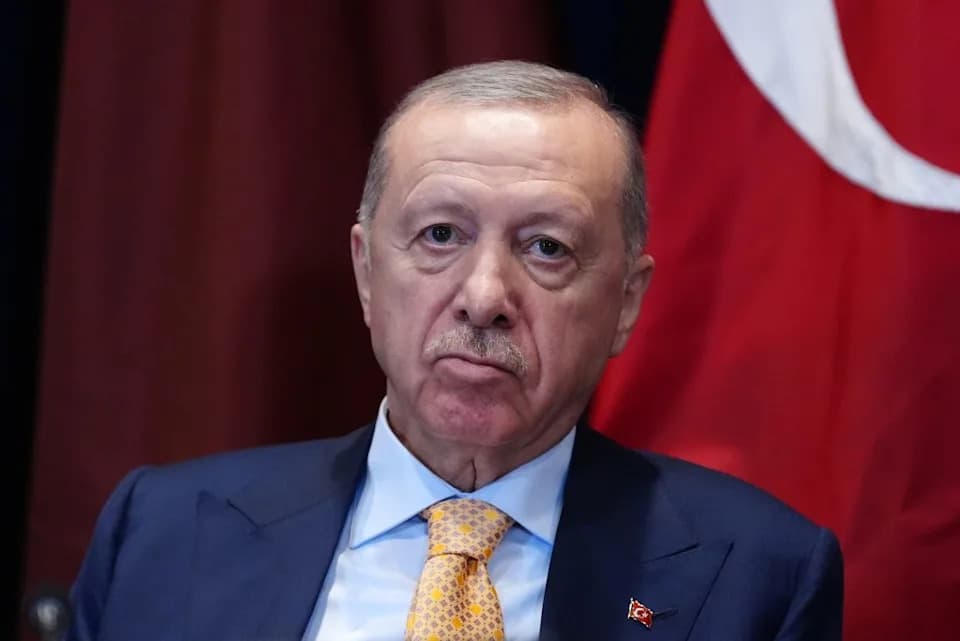
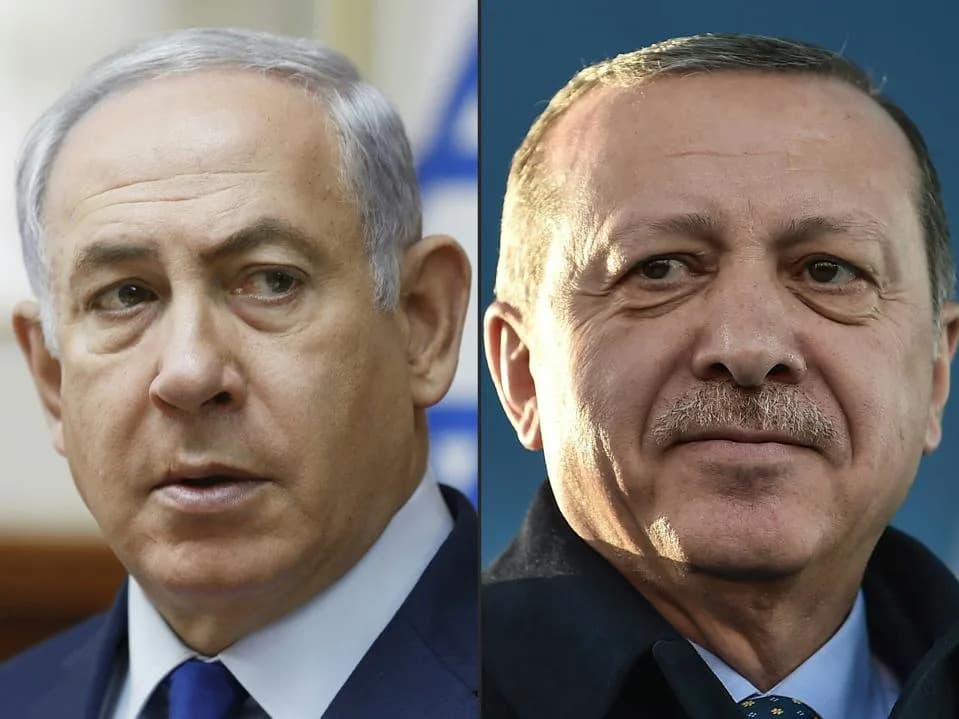
Turkey’s foreign minister Hakan Fidan told the AP there is no active effort to resume direct U.S.‑Iran negotiations, but he believes Iran may be open to discreet back‑channel talks. Ankara is striving to remain neutral as the conflict expands and urged Tehran to halt strikes on Gulf states. NATO intercepted missiles over southern Turkey, and Fidan ruled out a Turkish military response while stressing the importance of avoiding escalation. He also warned that Iran’s leadership transition created a power gap now filled by the Revolutionary Guards and reiterated Turkey’s push for regional talks and a 15‑member Gaza administrative committee.
Turkey’s FM: Diplomacy Strained but Back-Channel Talks Possible as Middle East War Expands
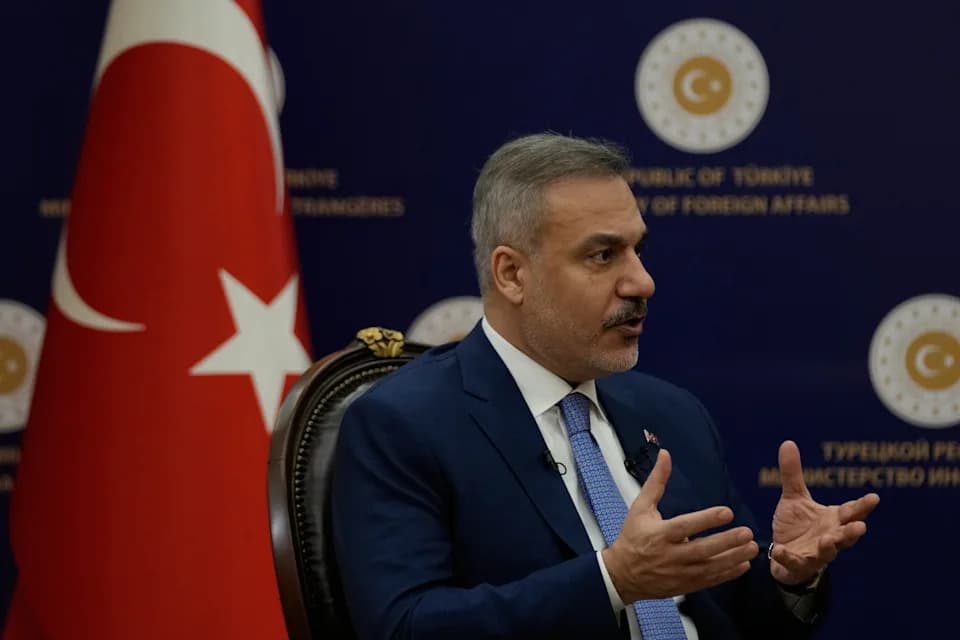
Turkey's Foreign Minister Hakan Fidan speaks during an interview with The Associated Press, in Ankara, Turkey, Saturday, March 14, 2026. (AP Photo/Khalil Hamra)(ASSOCIATED PRESS)
In an exclusive interview with The Associated Press in Ankara, Turkey’s foreign minister, Hakan Fidan, said there is currently no active, serious effort to resume direct negotiations between the United States and Iran, though he believes Tehran remains receptive to discreet back‑channel diplomacy.
Fidan, 57, who led Turkey’s intelligence service for more than a decade before becoming foreign minister in 2023, spoke as Ankara seeks to keep clear of a widening regional conflict triggered two weeks after U.S. and Israeli strikes on Iran. Turkey maintains relations with both Washington and Tehran and had been working to mediate between them prior to the attacks.
“The conditions are not very much conducive” to open diplomacy now, Fidan said, noting that Iranians “feel betrayed” after being struck a second time while engaged in talks with the United States over their nuclear program. He added that “I think they are open to any sensible back‑channel diplomacy.”
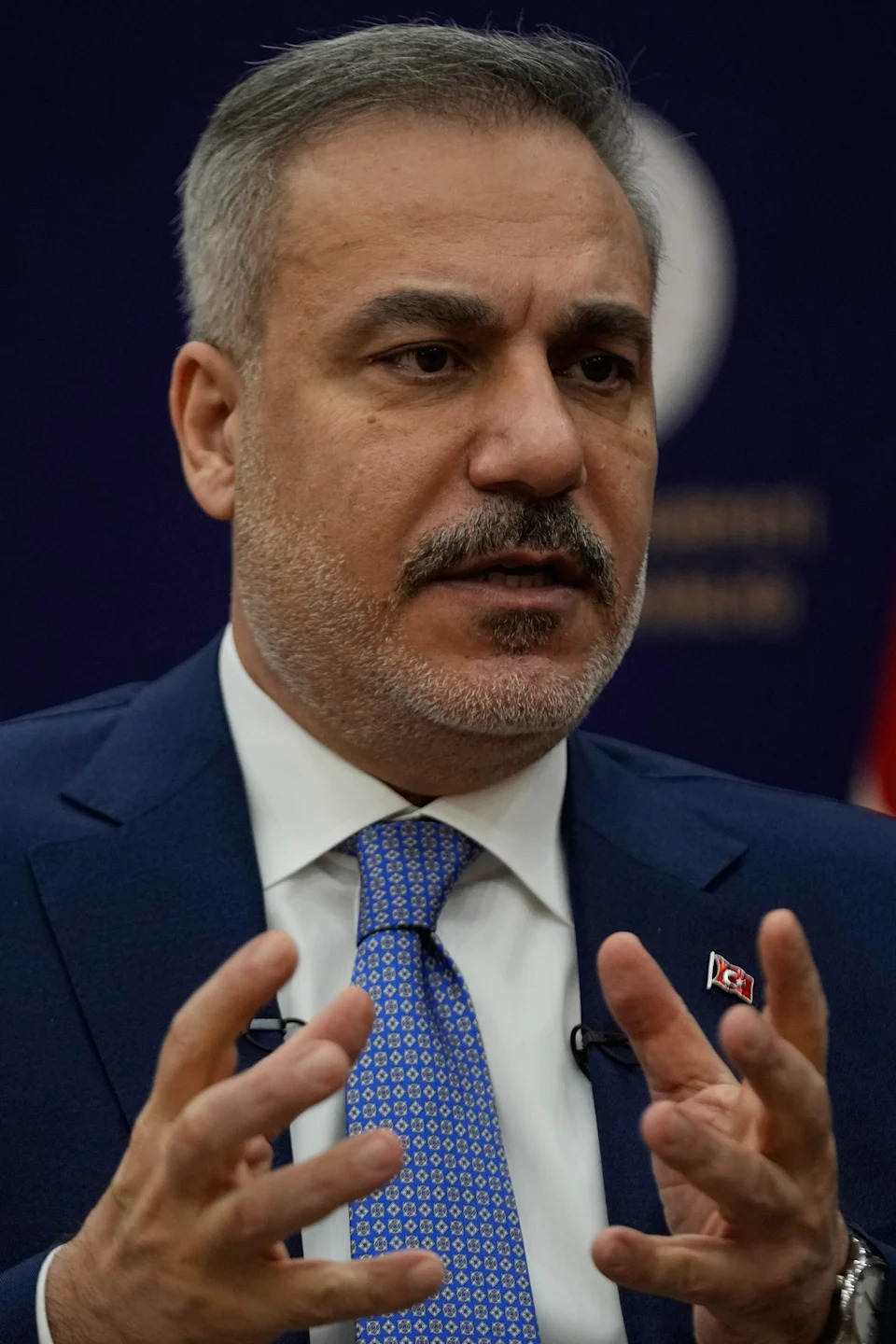
Turkey's Foreign Minister Hakan Fidan speaks during an interview with The Associated Press, in Ankara, Turkey, Saturday, March 14, 2026. (AP Photo/Khalil Hamra)(ASSOCIATED PRESS)
“I know that we are being provoked and we will be provoked, but this is our objective. We want to stay out of this war.”
Turkey has tried to present itself as a neutral actor, criticizing both U.S. and Israeli strikes on Iran as well as Iran’s subsequent attacks on Gulf states that host U.S. bases. Fidan said he has urged Iranian leaders to stop assaults on countries hosting U.S. forces.
Turkey’s top priority, he said, is to remain outside the fighting. That stance held even after three missiles believed to have come from Iran were intercepted over southern Turkey by NATO air defenses. Turkey is a NATO member and hosts bases used by allied forces, including U.S. troops.
Although Iranian officials have denied firing at Turkey, Fidan said available data points to Iran as the source of the missiles. He ruled out a Turkish military response at this stage, citing NATO’s effective defenses and Ankara’s desire to avoid escalation.
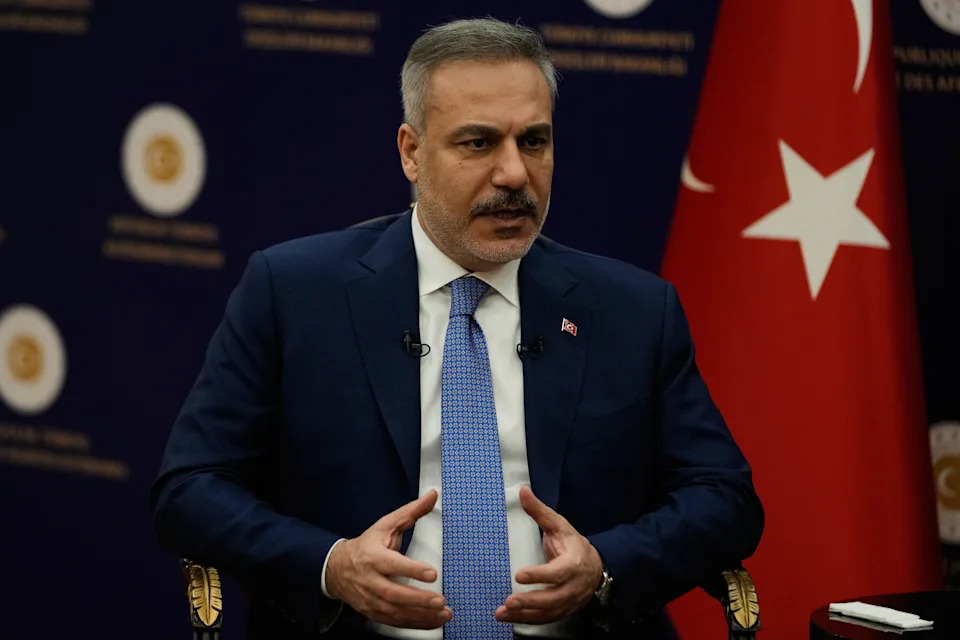
Turkey's Foreign Minister Hakan Fidan speaks during an interview with The Associated Press, in Ankara, Turkey, Saturday, March 14, 2026. (AP Photo/Khalil Hamra)(ASSOCIATED PRESS)
Fidan, who maintains regular contact with Iranian officials, confirmed he did not know the full extent of wounds reportedly suffered by Iran’s newly appointed Supreme Leader, Ayatollah Mojtaba Khamenei, in an earlier strike but said, “what we know is that he is alive and functioning.” Mojtaba Khamenei was appointed after his father, Ayatollah Ali Khamenei, was killed Feb. 28 during the conflict’s opening salvo.
He warned that the temporary uncertainty around Iran’s leadership “created a gap” in Tehran’s power structure, and suggested that gap has been filled by the high command of the Islamic Revolutionary Guard Corps, the paramilitary force that answers to the Supreme Leader.
Before the outbreak of hostilities, Turkey offered to host talks in Istanbul to bring the United States, Iran and regional actors together. Iran later chose Oman as a mediator for narrowly focused nuclear talks, a process that failed to address broader regional security concerns. According to Fidan, Iran refused to discuss its missile program and its backing of proxy groups such as Lebanon’s Hezbollah and several Iraqi militias.
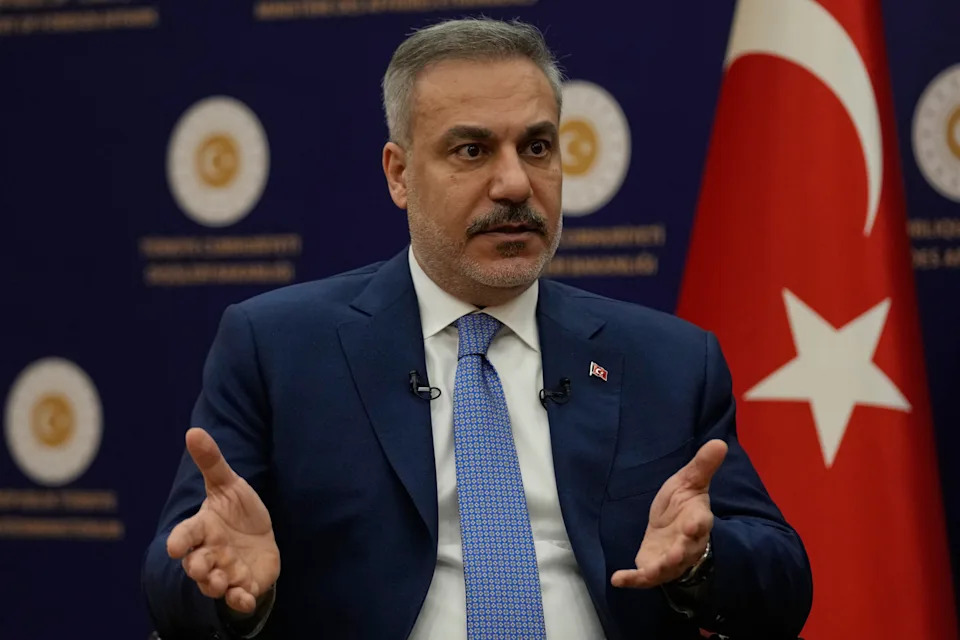
Turkey's Foreign Minister Hakan Fidan speaks during an interview with The Associated Press, in Ankara, Turkey, Saturday, March 14, 2026. (AP Photo/Khalil Hamra)(ASSOCIATED PRESS)
Turkey had proposed dividing the agenda: allow the Americans and Iranians to tackle the nuclear dispute while regional countries discuss missiles and proxy forces to build mutual confidence.
Relations between Turkey and Israel remain strained. President Recep Tayyip Erdogan has been an outspoken critic of Israel’s actions in Gaza; Ankara has reduced trade ties and repeatedly condemned Israeli operations. Israel, for its part, accuses Turkey of supporting Hamas, which carried out the Oct. 7, 2023 attack in southern Israel.
Some analysts suggested Turkey could be the next target after strikes on Iran, a claim Fidan dismissed while acknowledging the conflict has increased Ankara’s urgency to expand domestic weapons production and air defenses. He warned that Israeli leaders have incentives to identify external threats to advance political aims.
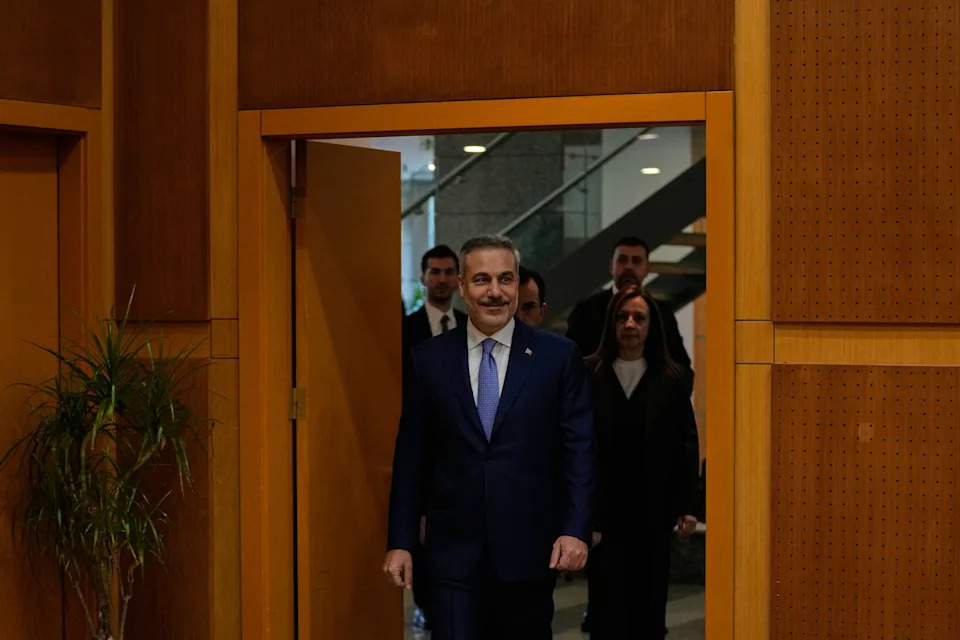
Turkey's Foreign Minister Hakan Fidan arrives prior to an interview with The Associated Press, in Ankara, Turkey, Saturday, March 14, 2026. (AP Photo/Khalil Hamra)(ASSOCIATED PRESS)
Fidan also criticized Israeli operations in Syria, where Ankara supports the interim government in Damascus led by Ahmad al‑Sharaa, a former Islamist rebel leader. Since Al‑Sharaa’s government took power in December 2024, Fidan said Israeli strikes and territorial moves in southern Syria have gone beyond security objectives.
On Gaza, Turkey seeks an active postwar role. Ankara has joined the U.S. Board of Peace and offered troops for an international stabilization force, although no formal Turkish deployment request has been received. Fidan said Israeli opposition has complicated those plans but that he believes the United States is quietly negotiating with Israel to allow Turkish participation.
Turkey’s immediate priority for Gaza, Fidan said, is the formation and deployment of an administrative committee of 15 politically independent Palestinian administrators to oversee initial stabilization and public services. “We expect them to go into Gaza and start their work,” he said, adding that a clear start point is still needed.
What This Means
Fidan’s comments underscore Ankara’s delicate balancing act: preserving ties with both the United States and Iran, preventing spillover into Turkish territory, and advocating for regional, confidence‑building measures even as high tensions limit open diplomacy.
Help us improve.