Iranian state media says two players and a technical staff member from Iran's women's national football team have withdrawn asylum requests made in Australia and are heading to Malaysia. Seven delegation members had originally sought sanctuary after remaining silent during the national anthem — an act seen as a protest. Australian officials say one woman who reversed her claim exposed the location of others, forcing a safe-house move. Rights groups warn Iran pressures athletes abroad, while Tehran accuses Australia of coercion.
Two More Iranian Women Footballers and Staffer Withdraw Australian Asylum Requests, State Media Says
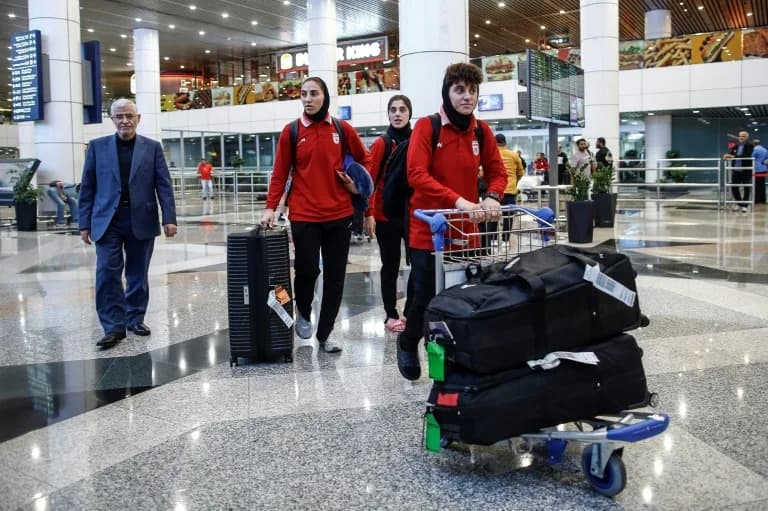
The members of Iran's women's football team who did not claim asylum in Australia arrived at the Kuala Lumpur International Airport on March 11, 2026 (ARIF KARTONO)(ARIF KARTONO/AFP/AFP)
Iranian state media reported on Saturday that two additional players from Iran's women's national football team, together with a member of the team's technical staff, have withdrawn asylum applications they lodged in Australia and are en route to Malaysia.
State broadcaster IRIB said the three — described as "two players and a member of the technical staff of the women's national football team" — were pictured wearing the Islamic hijab as they prepared to board a flight to Malaysia. IRIB's account framed the move as a reversal of earlier decisions to seek sanctuary overseas.
The episode follows reports that seven members of the visiting delegation — six players and one backroom staffer — initially sought asylum in Australia after coming under harsh criticism at home for remaining silent during the Iranian national anthem at an Asian Cup match. The silence was widely interpreted as a gesture of protest amid broader tensions involving Iran, the United States and Israel.
Iranian media and Australian officials previously said one player had already withdrawn her asylum request earlier in the week and rejoined teammates preparing to return to Iran via Malaysia. Several reports say five players, including captain Zahra Ghanbari, slipped away from the team hotel under cover of darkness to lodge asylum claims in Australia, while two other members filed claims before the squad departed Sydney.
Australian authorities told media that the first player who reversed her asylum claim reportedly contacted Iran's embassy in Australia and disclosed the location of other asylum seekers; officials say that forced them to move the players to a different safe house. Human rights groups have alleged that Iranian authorities pressure athletes abroad by threatening relatives or seizing property if they try to defect or speak out.
Australia's prime minister, Anthony Albanese, praised the players' courage and said those seeking refuge would be welcomed. Iranian football authorities, by contrast, have accused Australia of coercing or "kidnapping" the players — claims the Australian government denies.
The dispute has heightened concerns about the safety of the athletes. On Iranian state television some presenters called the players "wartime traitors," stoking fears that they could face persecution if returned. At the same time, the players' silence during the anthem has been described by many observers as an act of dissent against Iran's government and an expression of solidarity with domestic protest movements.
At this stage, Iranian state media say three of the delegation have abandoned asylum claims and are travelling to Malaysia; other team members are believed to be in Kuala Lumpur awaiting arrangements. Independent verification of each individual's motives and circumstances remains limited, and reports differ between Iranian state outlets and Australian authorities.
Help us improve.