Crocodylus lucivenator is a newly described giant crocodile from the Pliocene of Ethiopia that likely preyed on early hominins such as Australopithecus afarensis. The species reached 12–15 ft (3.5–4.5 m) and weighed roughly 270–590 kg. The identification is based on 121 museum specimens and Hadar site fossils; a distinctive snout hump may have been used in male display.
Newly Described 'Lucy's Hunter' — A Half‑Tonne, 15‑Foot Prehistoric Crocodile Found in Ethiopia
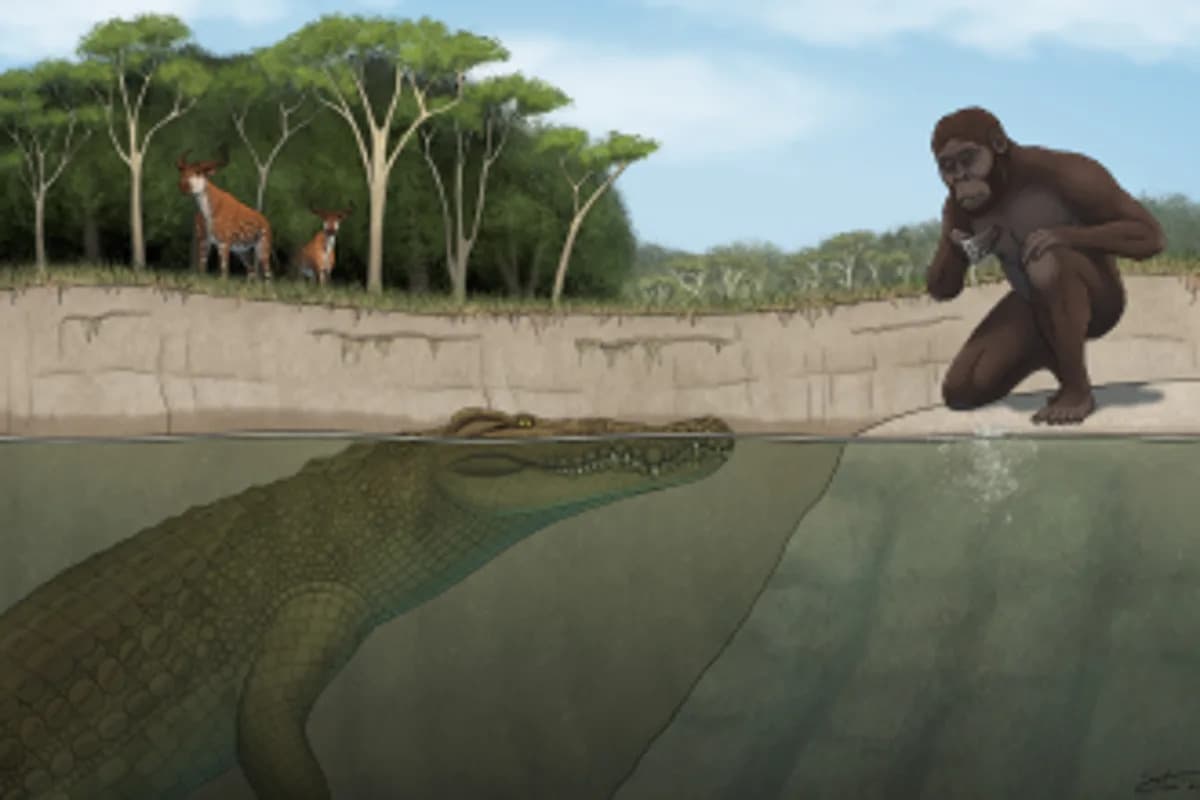
'Lucy's hunter' illustration (Tyler Stone/University of Iowa)
Scientists have described a previously unknown species of giant prehistoric crocodile, Crocodylus lucivenator — nicknamed “Lucy’s hunter.” The species lived more than three million years ago in what is now Ethiopia and would have been the largest ambush predator in its environment.
Researchers named the animal Crocodylus lucivenator because it likely preyed on early hominins such as Australopithecus afarensis, the species that includes the famous 3.2‑million‑year‑old skeleton known as Lucy. The conclusion is based on fossils excavated at the Hadar site in Ethiopia’s Afar region and on museum specimens catalogued in Addis Ababa in 2016.
Size, Shape and Behavior
According to the study published in the Journal of Systematic Palaeontology, individuals of C. lucivenator reached between about 12 and 15 feet (3.5–4.5 m) in length and are estimated to have weighed roughly 270–590 kg (600–1,300 lb). Like modern crocodiles, it was an ambush predator that would have lain submerged at water’s edge, springing on animals that came to drink.
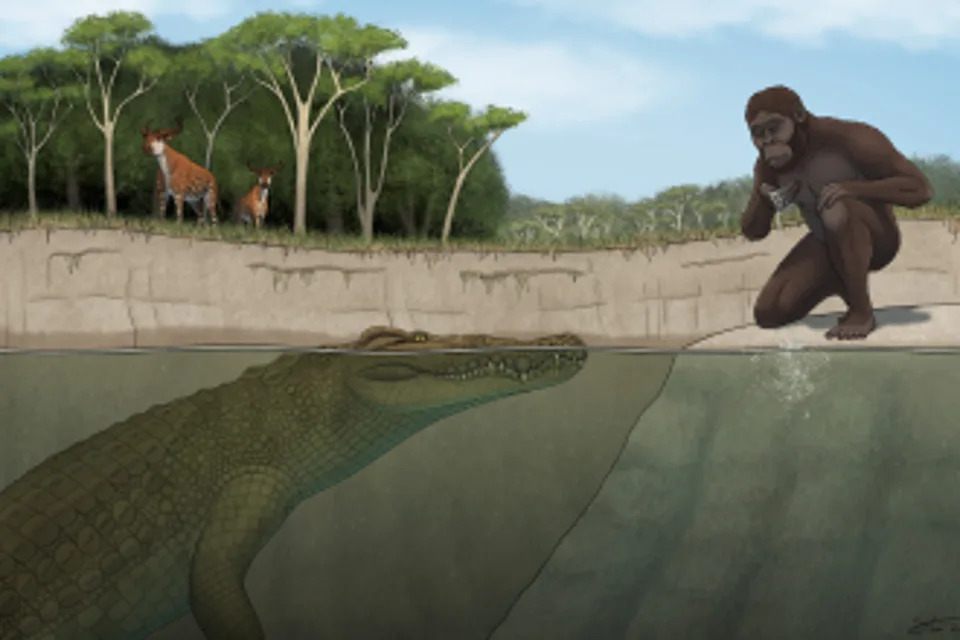
'Lucy's hunter' illustration (Tyler Stone/University of Iowa)
Evidence and Distinctive Features
The team analysed 121 catalogued remains — including skulls, teeth and jaw fragments — representing dozens of individuals. One specimen showed multiple healed jaw injuries, suggesting intraspecific fights. The species is notable for a pronounced hump or bump on the middle of the snout, a trait similar to the American crocodile but not typical of the modern African Nile crocodile.
“It was the largest predator in that ecosystem, more so than lions and hyenas, and the biggest threat to our ancestors who lived there during that time,” said Christopher Brochu of the University of Iowa, an author of the study. “It’s a near certainty this crocodile would have hunted Lucy’s species.”
Scientists propose the snout hump may have been a display structure used by males during courtship, a behavior seen in some living crocodile species.
Environment and Context
Fossils from Hadar indicate a Pliocene landscape of lakes, rivers and a patchwork of habitats — open and closed woodlands, gallery forests, wet grasslands and shrublands. Within that mosaic, C. lucivenator appears to have been one of only a few large predators able to persist across changing environments.
Study source: Journal of Systematic Palaeontology. Specimens examined were catalogued in Addis Ababa (2016) and recovered from the Hadar locality, Afar region, Ethiopia.
Help us improve.