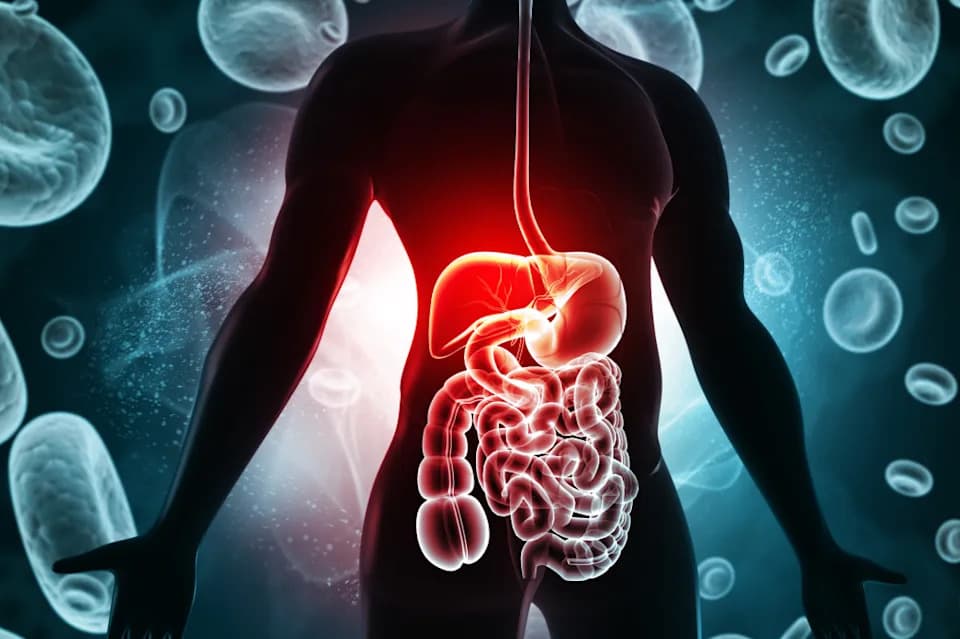
Emory researchers found that mice fed a high-fat, high-cholesterol diet for nine days developed intestinal permeability that allowed live gut bacteria to migrate to the brain along the vagus nerve, without detectable bacteria in the blood. An engineered Enterobacter strain was identified in the vagus nerve and brain after antibiotics cleared normal gut microbes. Returning mice to a balanced diet reduced brain bacterial levels. The findings highlight the gut as a potential target for studying neurological disease, but human relevance remains to be established.
High-Fat Diets May Let Gut Bacteria Travel to the Brain via the Vagus Nerve, Mouse Study Finds

Eating too many high fats? It could cause your gut bacteria to invade your brain
Researchers at Emory University report that a short-term, high-fat, high-cholesterol diet allowed live gut bacteria to move into the brain of mice by traveling along the vagus nerve — the major neural link between the brainstem and organs such as the heart, lungs and gut.
Study Design and Key Findings
In the study, mice ate Paigen’s Diet — a high-fat, high-cholesterol regimen similar in composition to a Western-style diet (about 45% carbohydrates and 35% fats) — for nine days. The researchers observed increased intestinal permeability (“leaky gut”) in these animals. That disruption appeared to permit bacteria from the gut to migrate toward the brain along the vagus nerve, even though researchers did not detect bacteria in the blood or other organs.

Researchers say bacteria from the gut is entering the brain, with potential impacts to our neurological health. A new study in mice shows eating a diet high in fat could be to blame (Getty Images)
In a complementary experiment, mice treated with antibiotics to clear normal gut microbes were exposed to an engineered strain of Enterobacter cloacae (a species capable of causing bacteremia). That strain was later identified in the vagus nerve and the animals’ brains, supporting a direct neural route for bacterial translocation in these conditions.
Reversibility and Disease Models
When mice were returned to a balanced, standard diet, levels of bacteria in the brain declined, suggesting the effect can be at least partially reversed by dietary change. The team also detected low levels of bacteria in brains from mouse models of Alzheimer’s and Parkinson’s disease, a finding the researchers say may have implications for understanding neurological conditions.
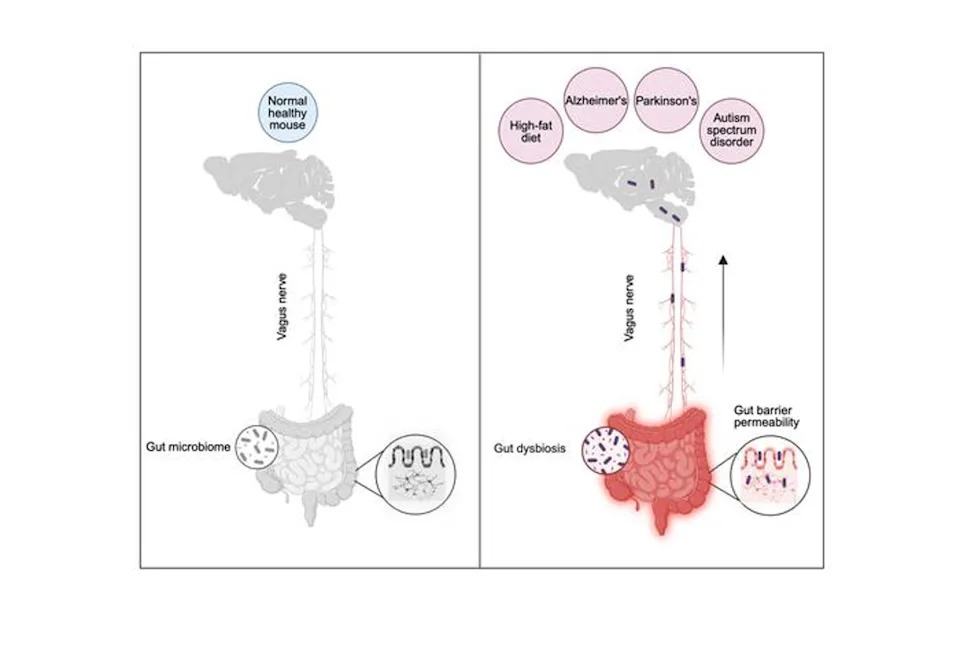
This graphic shows how gut bacteria travels to the brain using the vagus nerve in mice eating a high fat diet compared to healthy mice (left) (Created in BioRender. Arash Grakoui (CC-BY 4.0, https://creativecommons.org/licenses/by/4.0/))
“One of the biggest translational aspects of this study is that it suggests that the development of neurological conditions may be initiated in the gut,” said Dr. David Weiss, professor at the Emory Vaccine Center and the Emory School of Medicine’s Division of Infectious Diseases.
“This may shift the focus of new interventions for brain conditions with the gut as the new target of the therapy,” added Dr. Weiss. Dr. Arash Grakoui, a coauthor, noted the findings underscore the need for further research on how diet influences neurological health.
Context and Caveats
Previous research has linked Western-style and ultra-processed diets to higher risks of cardiovascular disease, cancer, stroke, cognitive decline and other health problems. The new Emory study adds a possible mechanism by which diet-induced microbiome changes could affect the brain. However, these results come from mouse experiments and cannot be directly extrapolated to humans without further study.
Bottom line: In mice, a short-term high-fat, high-cholesterol diet promoted intestinal permeability and enabled gut bacteria to reach the brain via the vagus nerve; returning to a balanced diet reduced brain bacterial levels. More research is required to determine whether and how these findings apply to human neurological disease.
Help us improve.