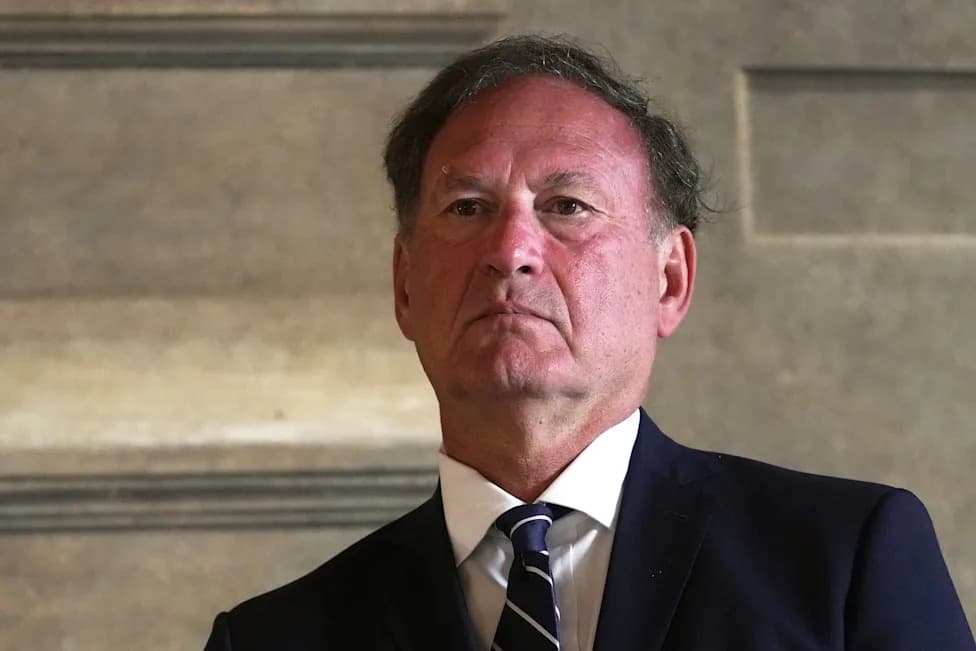
The latest NBC News poll shows public confidence in the U.S. Supreme Court has fallen to a record low, with just 22% of registered voters reporting a high level of trust. Confidence has declined across party lines, though Republicans remain more supportive than Democrats (35% vs. 9%). The drop follows a series of high-profile rulings — from overturning Roe v. Wade to decisions on presidential immunity and tariffs — and experts warn a sustained decline could threaten the court’s perceived legitimacy. The poll of 1,000 voters was fielded Feb. 27–March 3 (±3.1%).
Public Trust In Supreme Court Drops To Record Low, NBC Poll Finds
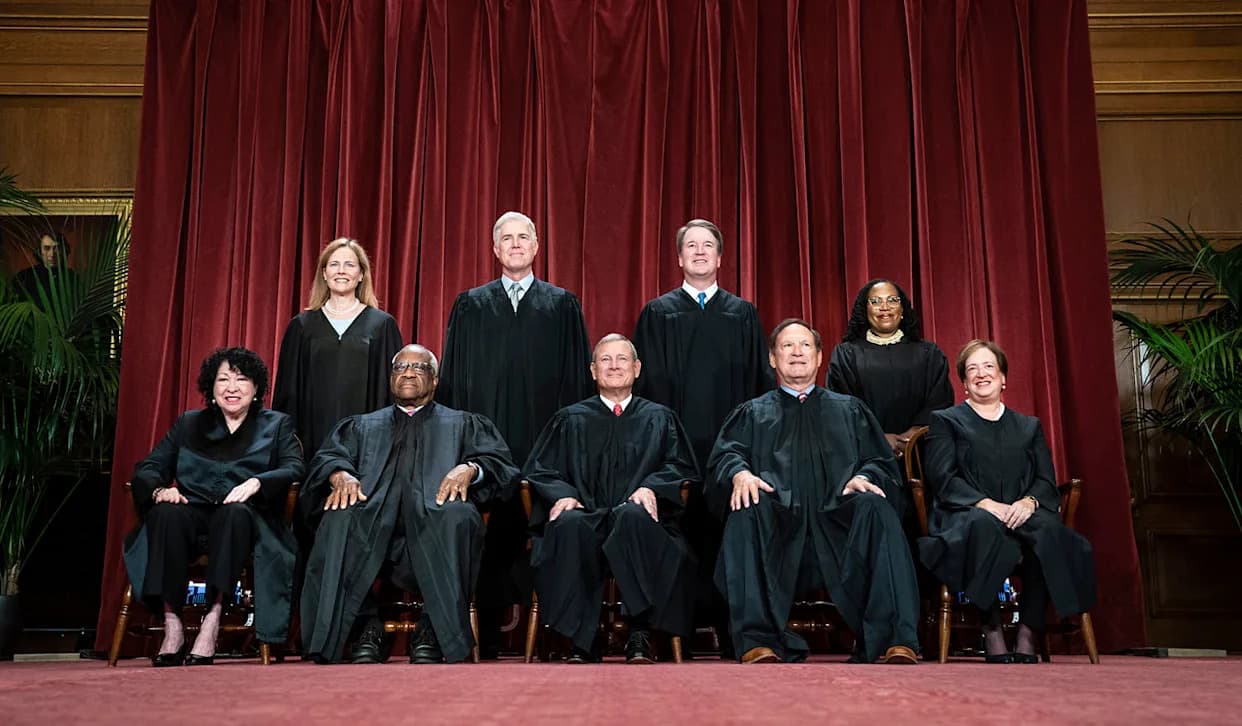
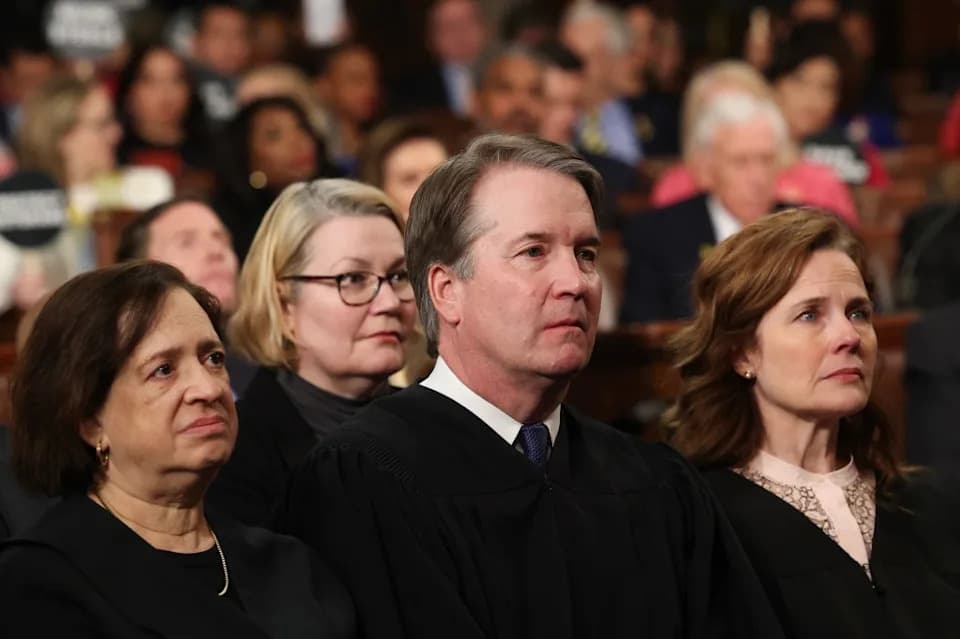
The Supreme Court justices in Washington, D.C. (Jabin Botsford / The Washington Post via Getty Images file)(Jabin Botsford)
The share of U.S. registered voters reporting substantial confidence in the Supreme Court has fallen to the lowest level since NBC News began tracking the question in 2000, according to the network’s latest survey.
Key Findings
The NBC News poll found that 22% of registered voters nationwide said they have a "great deal" or "quite a bit" of confidence in the high court. Another 40% said they had "some" confidence, while 38% reported "very little" or "no" confidence at all.
The previous low for public confidence came after the court’s decision overturning Roe v. Wade in 2022, when 27% of respondents expressed a high level of confidence. By contrast, the court’s peak in NBC News tracking was 52% in December 2000, shortly before the Bush v. Gore ruling.
Partisan Divide And Recent Trends
Confidence is down for both parties, but Republicans remain more likely than Democrats to express strong confidence (35% of Republicans vs. 9% of Democrats in the new poll). Polling after the Supreme Court’s 2024 ruling that President Donald Trump had broad criminal immunity found 55% of Republicans and just 4% of Democrats expressing a high level of confidence.
The court currently sits with a 6-3 conservative majority that has issued high-profile rulings on issues including abortion, voting rights, presidential immunity and, most recently, a decision striking down President Trump’s sweeping tariffs. That tariffs decision, which diverged from a recent string of rulings favoring the president, drew sharp criticism from Mr. Trump and mixed reactions from the public.
What Experts Say
"It’s one thing to make controversial rulings that one party may or may not like but maintain respect and confidence. What we are seeing is quite the opposite, where the court is making controversial rulings but not being respected and in fact confidence is being eroded," said Democratic pollster Jeff Horwitt of Hart Research Associates.
"High-profile decisions tend to shape public opinion, but a single ruling won't usually reverse broader trends," said Maya Sen, a political scientist at the Harvard Kennedy School. She added that a string of rulings unfavorable to one administration could shift partisan support in either direction.
Public Reaction To The Tariffs Ruling
The poll found 54% of voters approved of the Supreme Court’s tariffs ruling while 27% disapproved. On the economic impact of the tariffs themselves, 55% said they are hurting the economy versus 33% who said they are helping.
Why This Matters
Supreme Court justices hold lifetime appointments and are insulated from some short-term political pressure, but sustained erosion of public confidence can create challenges. The Court has no independent enforcement power and relies on public and political faith in its legitimacy to ensure compliance with its decisions.
"When courts become extensions of the political process...when people see them as just trying to impose personal preferences on society, irrespective of the law, that’s when there’s a problem," liberal Justice Elena Kagan warned in 2022.
Chief Justice John Roberts added in 2022: "Simply because people disagree with an opinion is not a basis for questioning the legitimacy of the court."
Methodology
The NBC News poll surveyed 1,000 registered voters Feb. 27–March 3 via a mix of telephone interviews and an online survey sent via text message. The poll’s margin of sampling error is ±3.1 percentage points.
This article was originally published on NBCNews.com.
Help us improve.