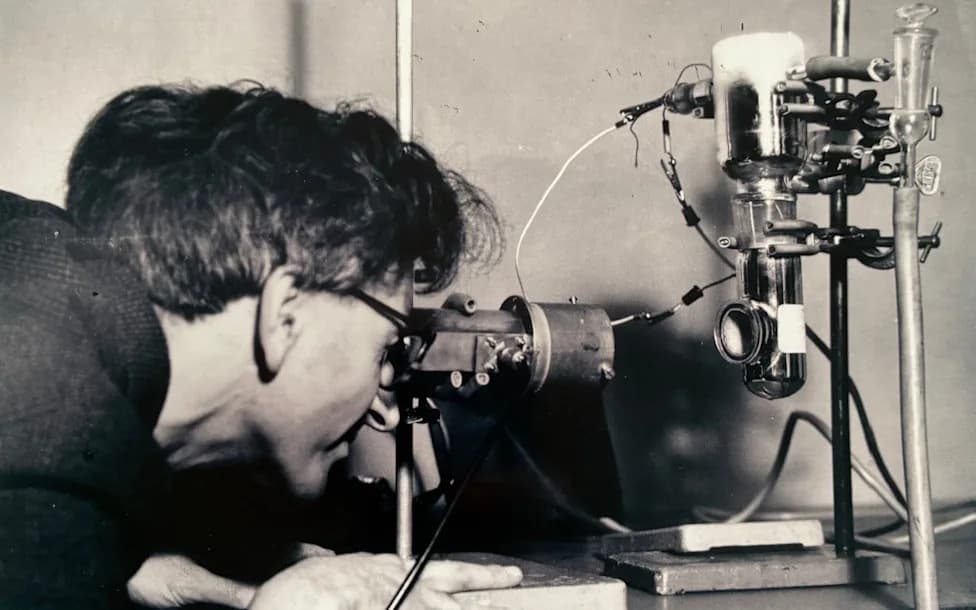
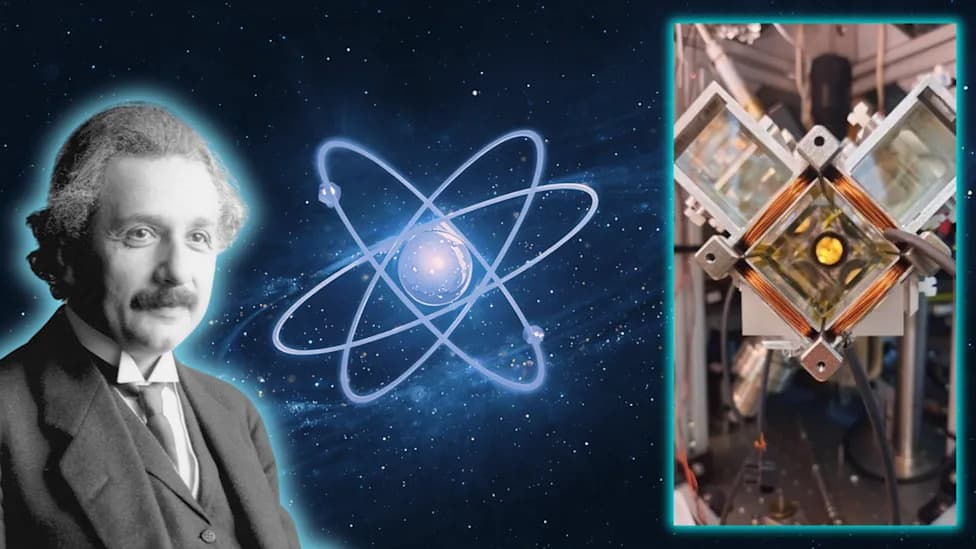
Professor Sir Anthony Leggett, awarded the 2003 Nobel Prize in Physics, has died aged 87. He is best known for explaining how Helium-3 atoms pair to form a superfluid, a fundamental advance made while at Sussex University in the 1970s. His work connected superfluidity to superconductivity, influenced studies of turbulence and neutron stars, and shaped modern views of macroscopic quantum behaviour.
Sir Anthony Leggett, Nobel-Winning Physicist Who Explained Superfluid Helium-3, Dies Aged 87
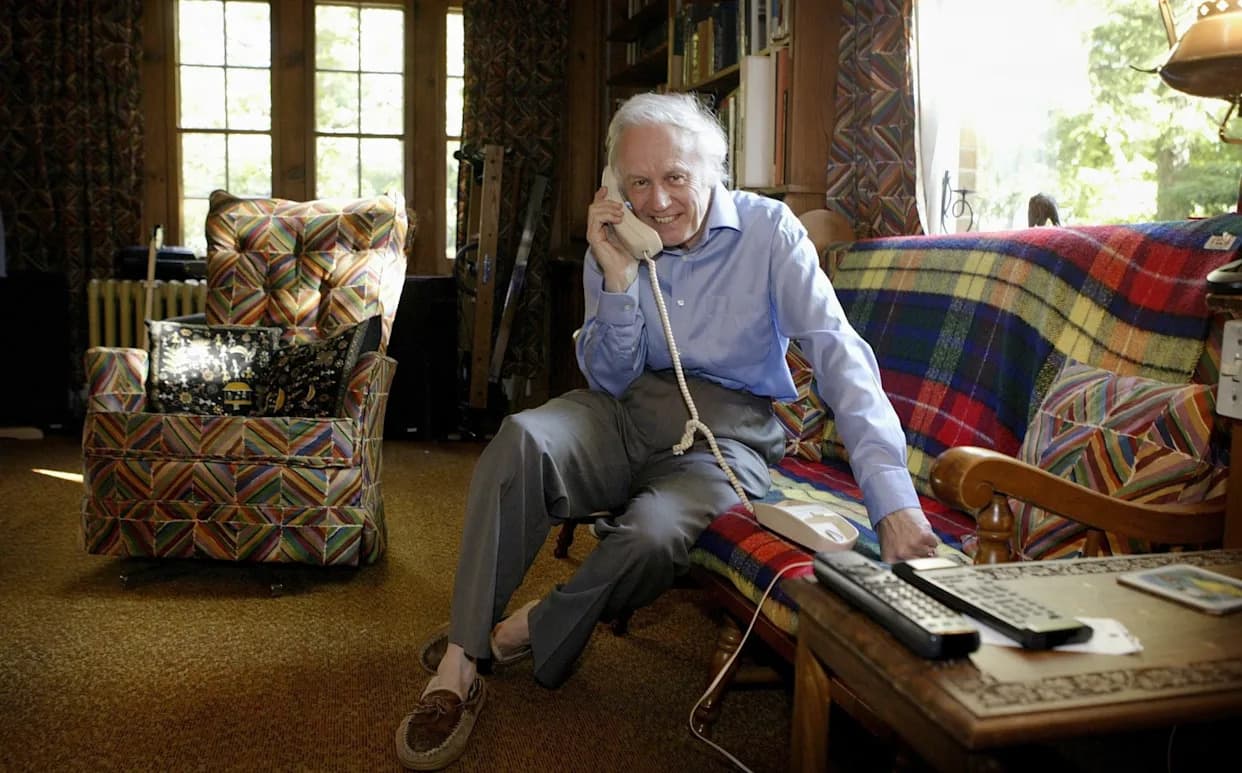
Anthony Leggett on the day of the announcement of his Nobel Prize - Scott Olson/Getty Images
Professor Sir Anthony J. Leggett, the theoretical physicist awarded the 2003 Nobel Prize in Physics, has died aged 87 on March 8, 2026. He was celebrated for providing the theoretical explanation for superfluidity in Helium-3 — a discovery that deepened understanding of quantum behaviour on macroscopic scales and linked superfluidity with superconductivity.
What Are Superfluids—and Why Leggett's Work Mattered
Superfluids are liquefied gases that show astonishing properties at temperatures near absolute zero: they can flow without viscosity, boil without forming bubbles, climb container walls and sustain persistent currents when spun. The first superfluid observed was liquid Helium-4. Early theory by Lev Landau explained Helium-4 by invoking correlated states of its atoms.
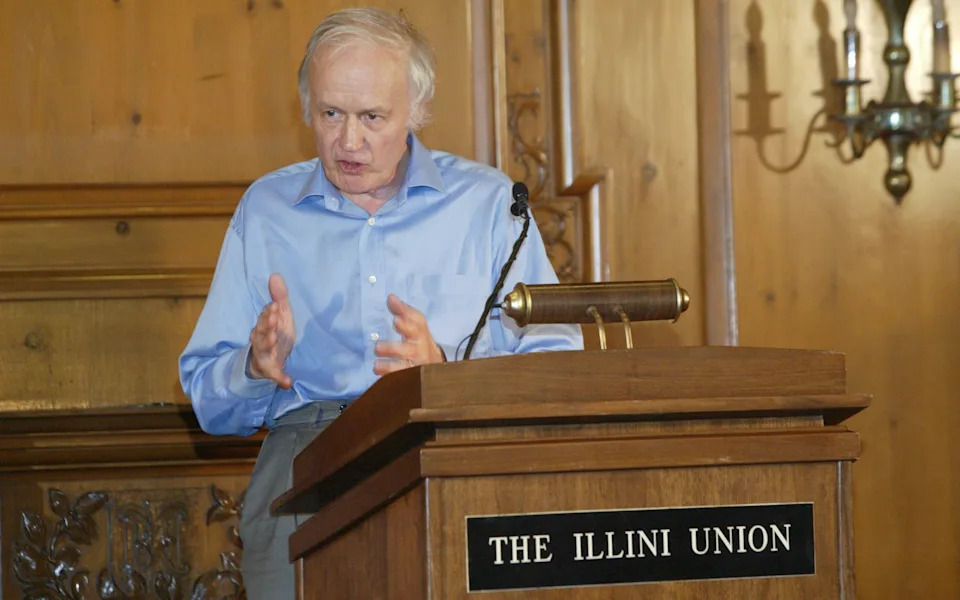
Leggett addresses a press conference following the Nobel Prize announcement - Clark Brooks/EPA/Shutterstock
In 1972, experiments at Cornell demonstrated that Helium-3 — an isotope with an odd number of nucleons — also becomes superfluid. Explaining how the comparatively unwieldy Helium-3 atoms could pair and condense into a superfluid state was a major theoretical challenge. While at Sussex University in the 1970s, Leggett showed that Helium-3 atoms form pairs that behave like single quantum entities able to occupy the same quantum state, a mechanism that underpins the superfluid phase and bears conceptual similarity to electron pairing in superconductors.
Career and Contributions
Anthony Leggett was born in London on March 26, 1938. He studied the humanities at Balliol College, Oxford (reading Greats) before switching to physics, completing a physics degree at Merton College and a doctorate at Magdalen College. After a postdoctoral period at the University of Illinois, he joined Sussex University as a lecturer in 1967. He became Reader in 1971 and Professor of Physics in 1973. In 1983 he moved to the United States as MacArthur Professor of Physics at the University of Illinois. From 2007 he served as a professor at the Institute for Quantum Computing, University of Waterloo.
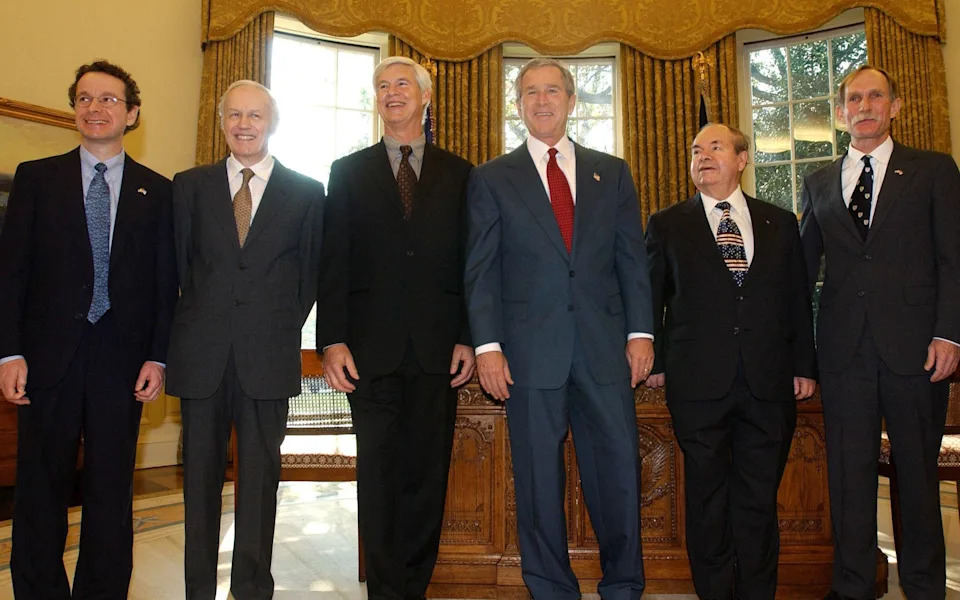
President George W Bush, third right, with 2003 Nobel laureates, l-r, Roderick MacKinnon (winner in chemistry), Leggett, Robert Engle (economic sciences), Alexei Abrikosov (physics) and Peter Agre (chemistry) - UPI/Alamy
Leggett's work extended beyond superfluidity to foundational questions about how quantum mechanics applies to everyday, macroscopic phenomena. His theoretical insights have had broad impact across condensed-matter physics and informed research into turbulence, quantum coherence, and even astrophysical systems such as neutron stars, whose interior dynamics may reflect superfluid behaviour.
Honours and Personal Life
Leggett received numerous honours, including election as a Fellow of the Royal Society and fellowships of the American Physical Society and the American Institute of Physics. His prizes included the Wolf Prize in Physics, the Maxwell Medal and Prize, and the Simon Memorial Prize. He was knighted in 2004. Leggett married Haruko Kinase in 1973; the couple had one daughter.
One former student at Sussex remembered him as: "If you speak to him, he will speak twice as quickly as you, think twice as fast and twice as deeply." Colleagues described him as modest, philosophical, and intuitively insightful.
Legacy
Leggett's theoretical breakthrough on Helium-3 is widely regarded as a milestone in condensed-matter physics. By clarifying how microscopic pairing can produce macroscopic quantum order, his work helped bridge concepts between superfluidity and superconductivity and continues to influence research into quantum fluids, turbulence, and the quantum-to-classical transition.
Anthony Leggett, Born March 26, 1938 — Died March 8, 2026.
Help us improve.