Professor Cyril Hilsum, who has died aged 101, was a pioneering physicist whose leadership at RSRE Malvern in the late 1960s helped create the first stable liquid-crystal displays. His 1970 partnership with George Gray produced cyanobiphenyls—room-temperature liquid crystals commercialised in the 1970s that powered the first LCD watches and calculators. Hilsum also advanced gallium arsenide semiconductor devices, contributed to the theory behind the Gunn diode, and continued inventing into his late 90s, holding over 70 patents.
Professor Cyril Hilsum, Pioneer Of Liquid-Crystal Displays And Semiconductor Devices, Dies Aged 101
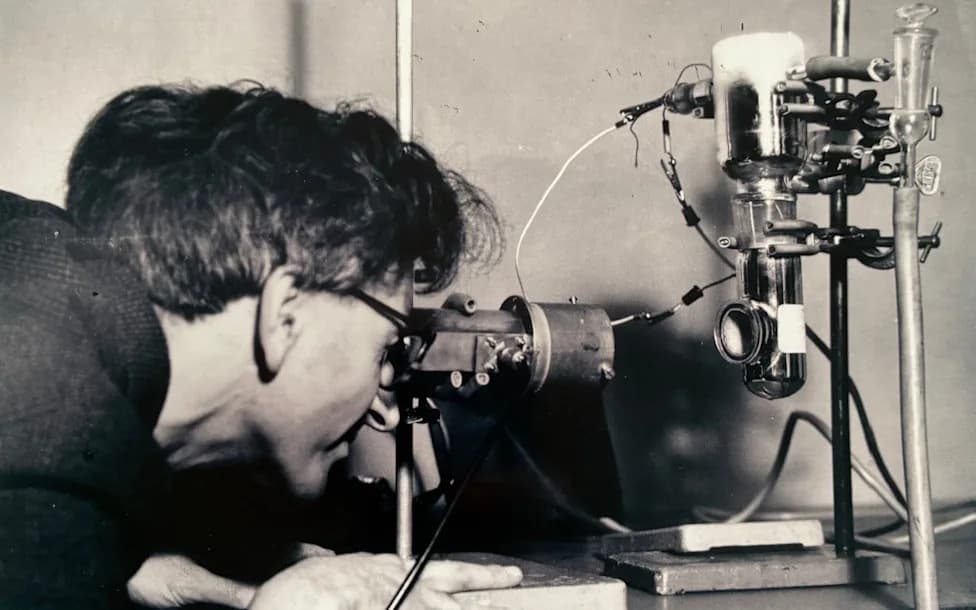
Hilsum inspecting gallium arsenide laser output, at the Services Electronics Research Laboratory (SERL), Baldock, 1962
Professor Cyril Hilsum, the physicist and materials scientist whose research helped create the first stable liquid-crystal displays and paved the way for modern flat-screen televisions, computers and smartphones, has died aged 101.
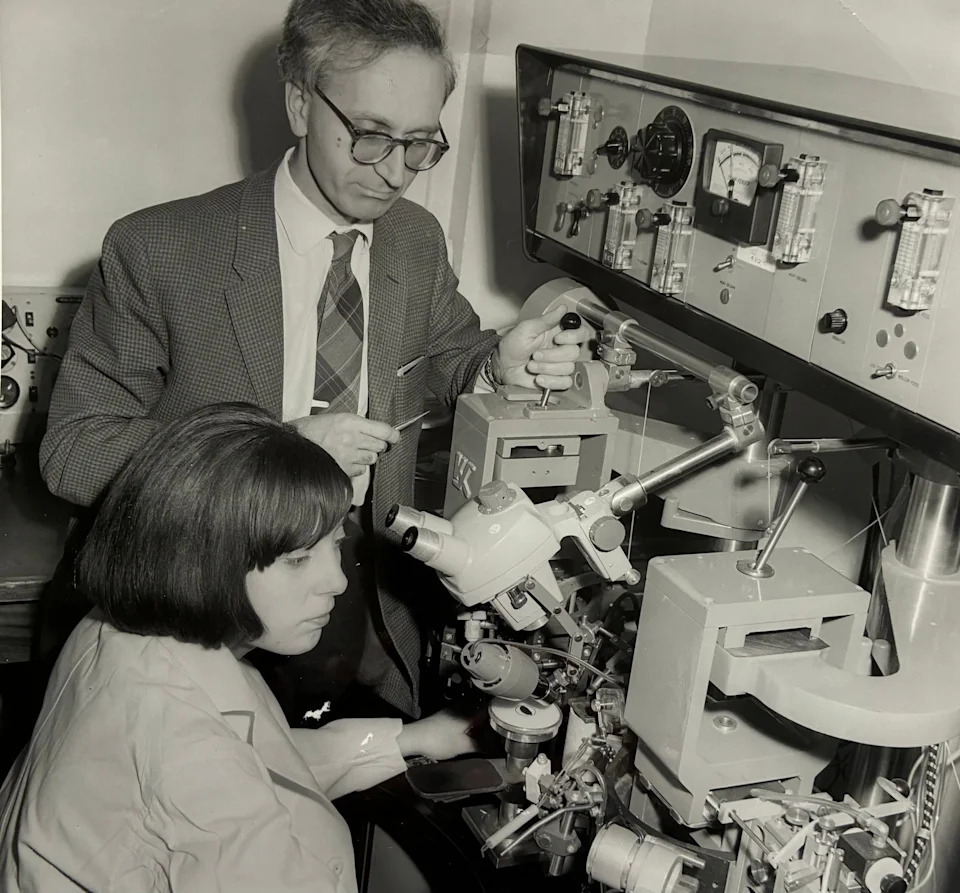
Making a Gunn Diode at the Royal Signals and Radar Establishment, Malvern, 1966
Liquid-Crystal Breakthrough
In the late 1960s at the Royal Signals and Radar Establishment (RSRE) in Malvern, Hilsum led the team that developed the first stable liquid-crystal displays suitable for practical flat screens. Concerned by the military's dependence on bulky, expensive cathode ray tubes (CRTs), he spearheaded a government-backed effort to find a domestic flat-screen alternative. The work ultimately generated more than £100 million in royalties for the UK government.
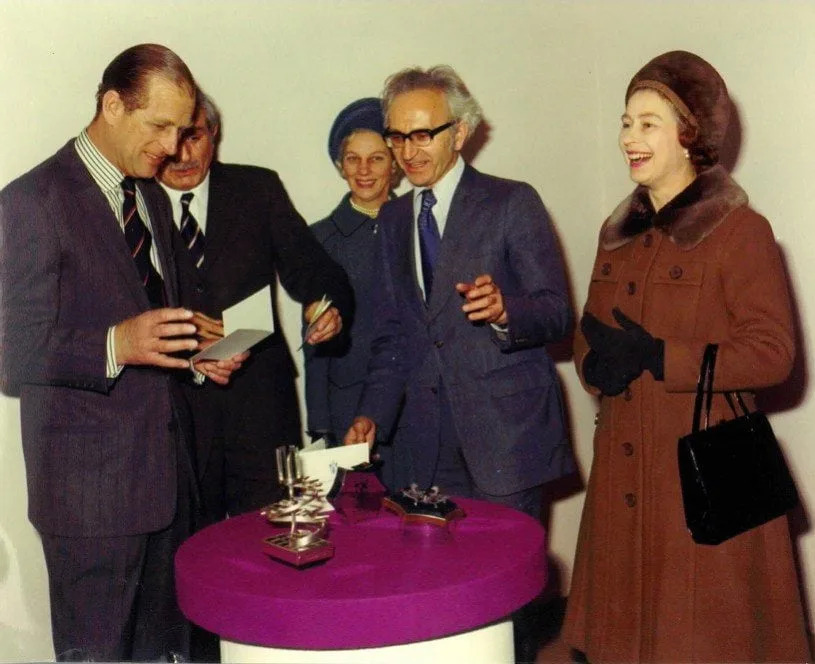
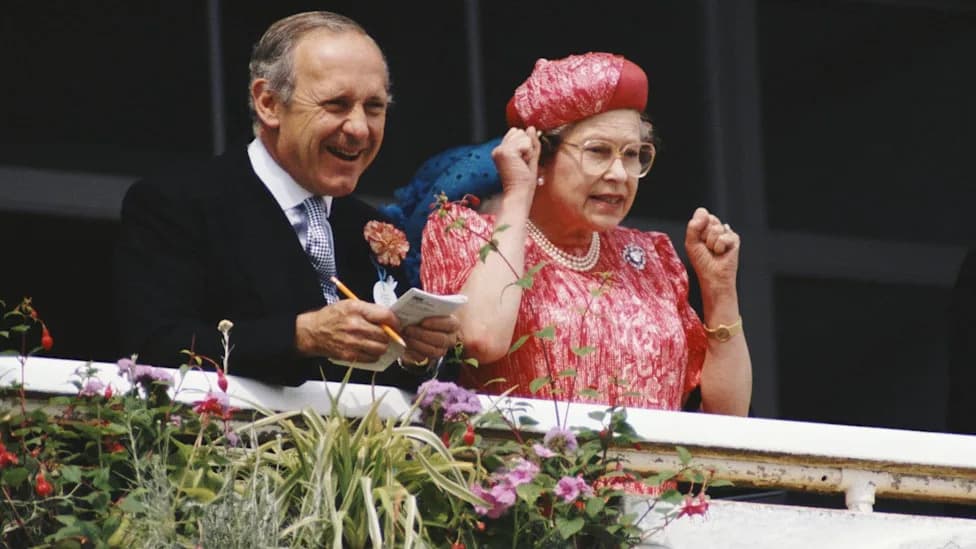
Elizabeth II and Prince Philip visiting RSRE in Malvern in 1976: Hilsum is next to the Queen, making her laugh
Partnership That Changed Consumer Electronics
In 1970 Hilsum formed a key partnership with Professor George Gray of Hull University, whose group specialised in liquid-crystal chemistry. Gray, with Peter Raynes and others, synthesised and patented the cyanobiphenyl family of liquid-crystal compounds: robust materials that operate at room temperature. Commercialised by BDH Chemicals (now part of Merck) in collaboration with the Ministry of Defence, these materials made the first consumer LCDs—watches and calculators—possible in 1974 and launched a multi-billion-dollar flat-screen industry.
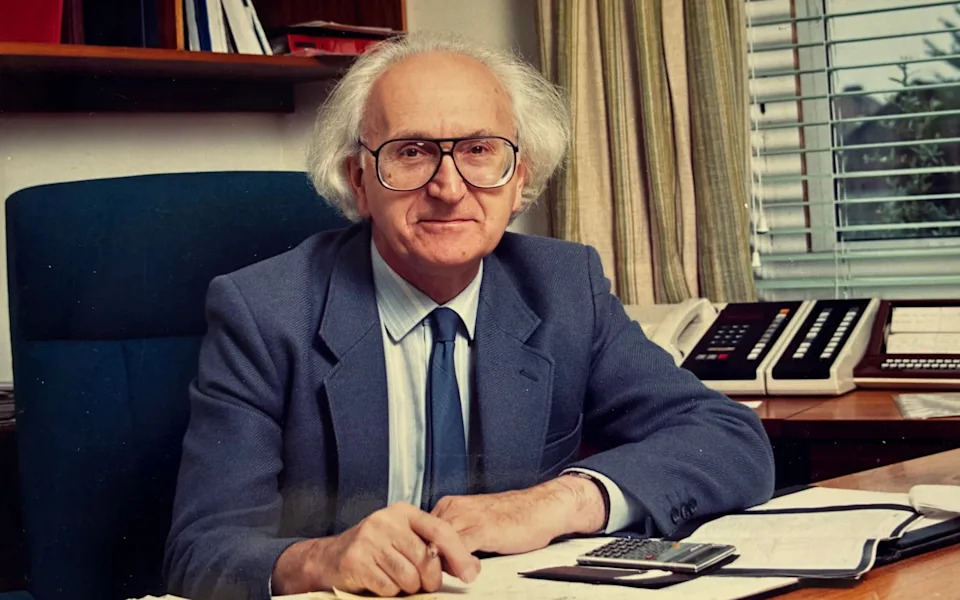
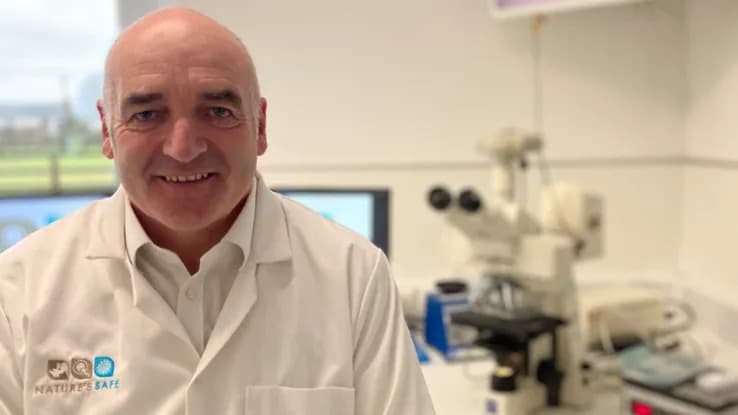
Hilsum in his office at GEC
Other Scientific Contributions
Hilsum also made foundational advances in semiconductor physics. While at Malvern he researched gallium arsenide, building Britain’s first semiconductor laser and helping develop the theory behind what became known as the Gunn diode—a device now widely used in motion sensors and radar speed guns. His work on compact radar produced devices such as "Claribel," deployed to detect supersonic bullets and locate snipers.
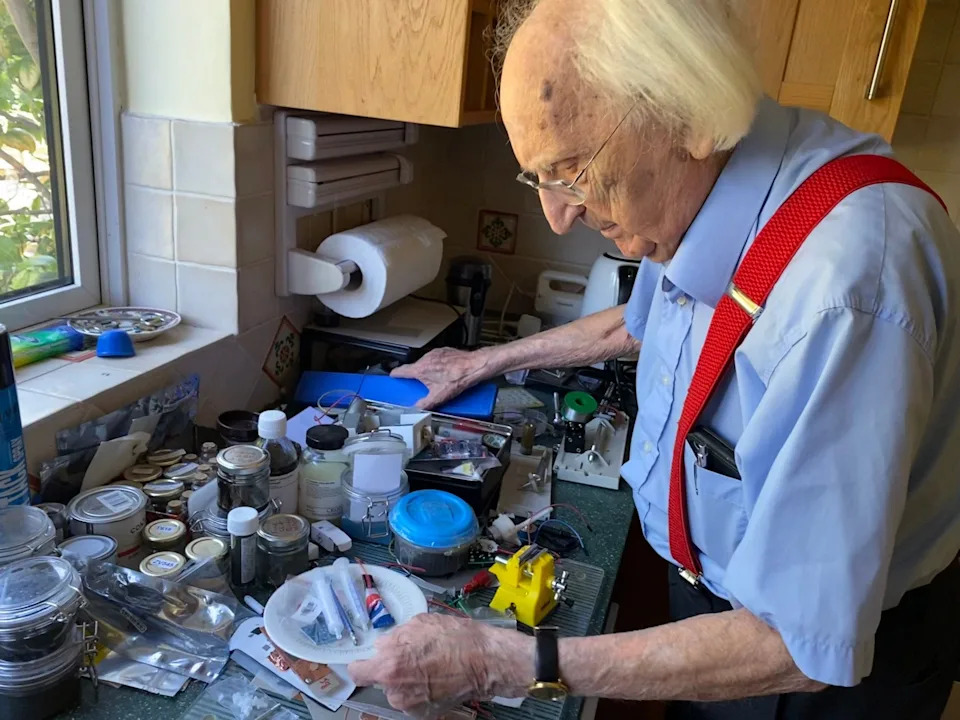
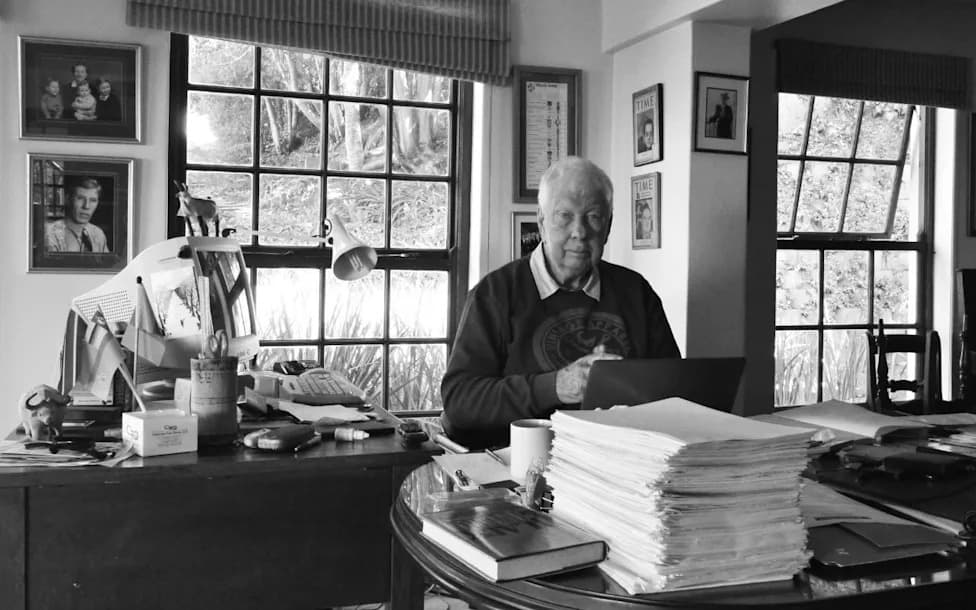
The laboratory crept into Hilsum's kitchen: Pinner, 2020
Career, Roles And Recognition
Hilsum spent much of his career at RSRE Malvern, where he rose to Chief Scientific Officer and remained until 1983. He then joined GEC as chief scientist at the Hirst Research Centre, leading programmes in high-temperature superconductivity, nanotechnology and other advanced areas while running a small lab for his own projects.
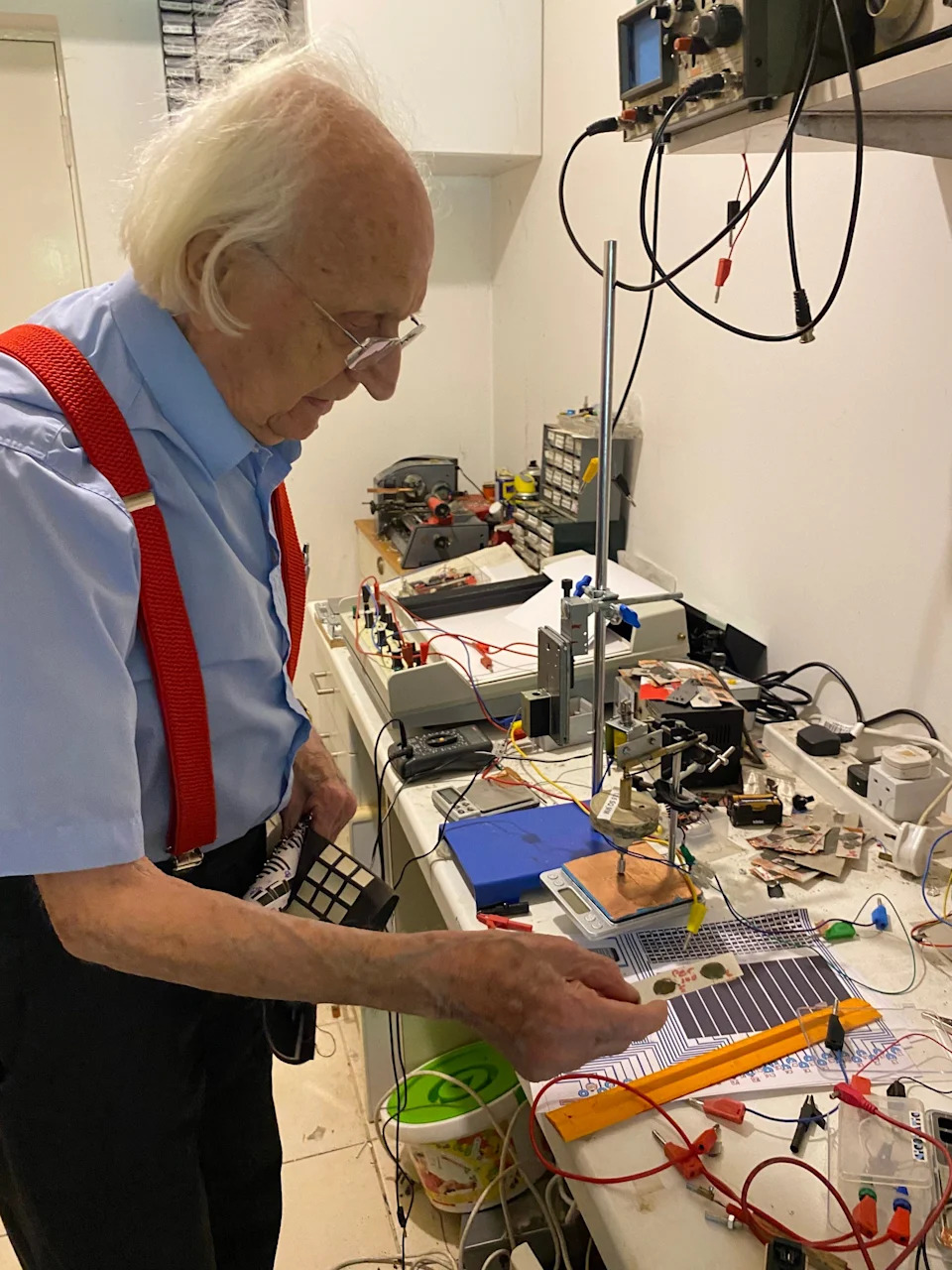
The lab in the scullery
He was elected a Fellow of the Royal Society in 1979, appointed CBE in 1990, served as President of the Institute of Physics (1988–1990) and received the Royal Medal from the Royal Society in 2007. He taught intellectual property at Imperial College, was a visiting professor at UCL, and consulted widely for industry and government.
Inventor To The End
Never content to stop inventing, Hilsum filed more than 70 patents across his lifetime. Though he formally retired as research director at GEC in 1995, he continued experimental work in a small home laboratory in Pinner that slowly crept from the scullery into the kitchen. His final patent, for an ink with conductive sensor properties, was granted in 2022 when he was 97.
Early Life And Personal Details
Cyril Hilsum was born on 17 May 1925 in the East End of London, the second of three sons of Benjamin and Ada Hilsum. A precocious child who learned to read by age three, he loved dismantling toys to see how they worked. He attended Raine's Grammar School and won a scholarship in 1943 to study physics with mathematics at University College London.
While transferred to the Admiralty Research Laboratory in Teddington in 1947, he recalled playing chess against Alan Turing at the nearby National Physical Laboratory and later became a county chess champion.
In 1947 he married Betty Cooper; they had two daughters. Their younger daughter, Lindsey Hilsum, is international editor for Channel 4 News. His elder daughter, the late Karen Burt, was a prominent UK engineer; in her memory he endowed the Women's Engineering Society's Karen Burt Memorial Award for newly chartered women engineers.
Legacy
Hilsum’s contributions span fundamental physics, applied materials science and practical engineering. From the first room-temperature liquid crystals that enabled everyday LCD devices to advances in semiconductor lasers and microwave devices, his work shaped modern electronics and display technology. The British Liquid Crystal Society awards the Cyril Hilsum Medal annually to recognise distinguished contributions to the field.
Cyril Hilsum, born 17 May 1925, died 23 September 2026.
Help us improve.