Faith leaders nationwide are fighting for more reliable access to immigration detention centers, especially during Lent and Ramadan, as detainee populations increase. Some clergy have secured limited access—such as a Muslim chaplain in Texas and a court‑ordered Ash Wednesday service near Chicago—while others have filed lawsuits alleging religious‑freedom violations. Advocates and bishops are calling for clear, uniform policies to guarantee pastoral care, religious items and culturally appropriate food for detainees.
Faith Leaders Push for Greater Religious Access to ICE Detention Centers During Lent and Ramadan
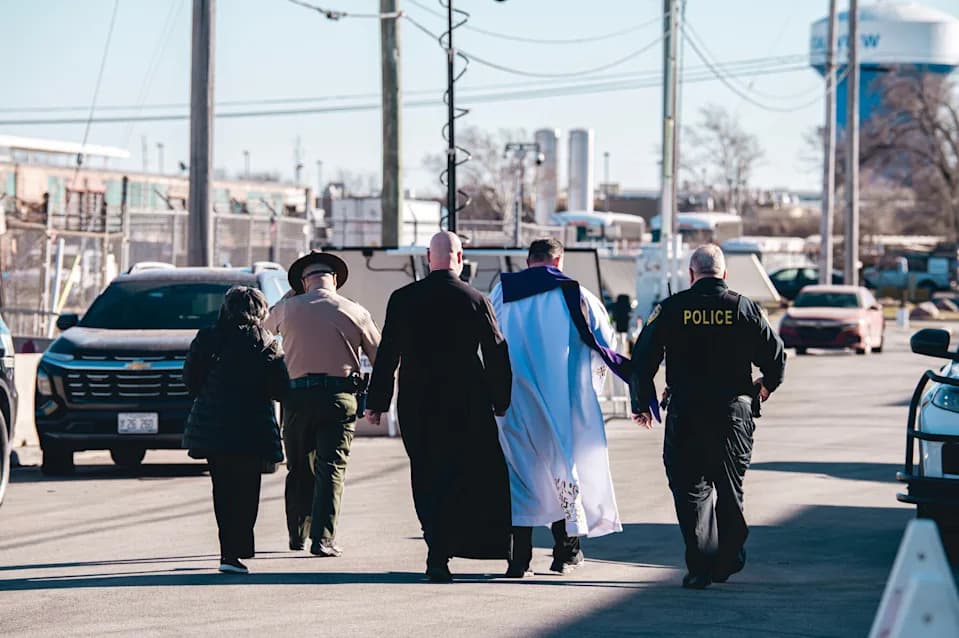
In this photo provided by the Coalition for Spiritual and Public Leadership, Father Leandro Fossá, CS, Fr. Paul Keller, CMF, and Sr. Alicia Gutierrez, SH, are escorted by police officers into the Broadview detention center in Broadview, Ill., on Ash Wednesday, Feb. 18, 2026. (Derek Carter/Coalition for Spiritual and Public Leadership via AP)(ASSOCIATED PRESS)
Faith leaders across the United States are pressing immigration authorities for more consistent access to detention facilities—an effort that has taken on added urgency during the overlapping holy seasons of Lent and Ramadan. As detention populations grow amid expanded enforcement, clergy and volunteers say spiritual care, culturally appropriate food and religious items are essential to detainees’ dignity and well‑being.
Clergy Seek Regular Visits During Holy Seasons
After celebrating an Ash Wednesday service with four newly arrived migrants at a detention center near Chicago, local clergy began negotiating with officials to set up regular visits. In Texas, a Muslim chaplain was recently permitted to visit two women in the Dallas–Fort Worth area, bringing dates to break the Ramadan fast and softcover Qurans; she hopes to return repeatedly throughout the month.
“In systems that are made to break them, it is very important that they not only get that care, but they also get adequate care with someone that can help them make meaning of their situation by bringing God,”
— Chaplain Nosayba Mahmoud
Lawsuits and Access Disputes
In other cases, faith leaders had to turn to the courts. After clergy said they were denied entry in the Chicago area, a lawsuit secured permission for a Catholic delegation to hold an Ash Wednesday service at the Broadview facility in the Chicago suburbs. A separate suit filed in Minnesota alleges clergy were “categorically denied” access to minister in a federal building where migrants were held during enforcement surges.
Advocates say these cases raise religious‑freedom and due‑process concerns and underscore the need for clearer, uniform policies governing pastoral access to detention sites.
Detention Numbers, Policies, and Practical Constraints
As capacity expanded, ICE detention numbers climbed to as many as 75,000 people from roughly 40,000, dispersed across more than 225 sites. The largest site cited is Camp East Montana in El Paso, Texas, which has averaged about 3,000 residents per day. Observers note the centers have faced increasing scrutiny over living conditions, access to legal counsel and how leadership changes at the Department of Homeland Security might affect operations.
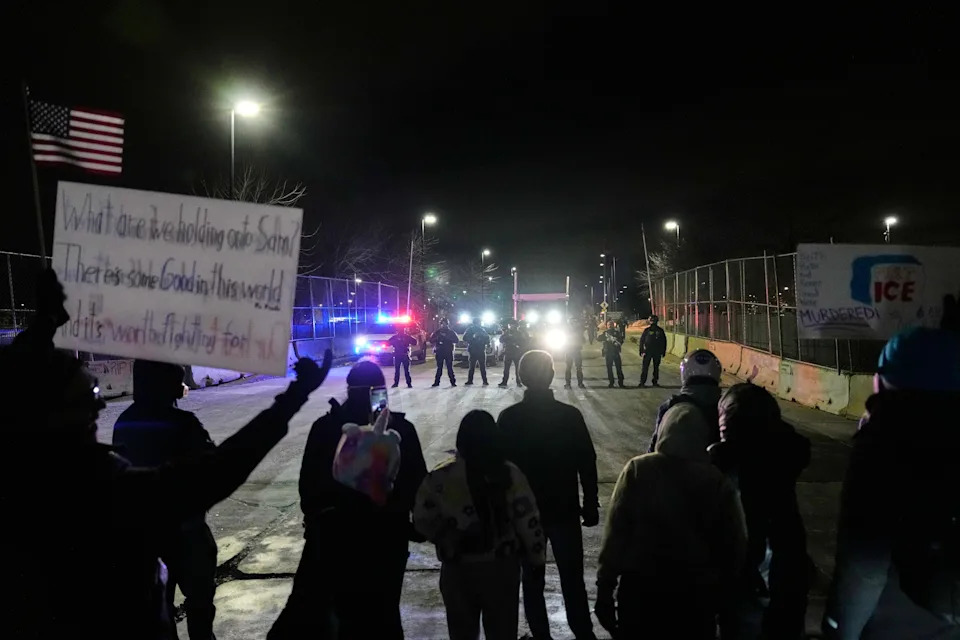
FILE - Federal immigration officers confront protesters outside Bishop Henry Whipple Federal Building in Minneapolis, on Thursday, Jan. 15, 2026. (AP Photo/Yuki Iwamura, File)(ASSOCIATED PRESS)
ICE tells reporters that facilities holding detainees for more than 72 hours are required to have a chaplain or a "religious services coordinator" and dedicated space for services. The agency also requires advance notice and background checks for clergy and faith volunteers who want to provide pastoral visits, counseling and religious services.
Longstanding Ministry and Inconsistent Access
Faith groups and volunteers from many traditions have long ministered inside immigration detention. For about 15 years, the U.S. branch of the Jesuit Refugee Service has contracted with the Department of Homeland Security to supply in‑house chaplains at roughly half a dozen centers. Still, volunteers report inconsistent access; many remain committed to ministry because of its importance to detainees’ spiritual lives and personal dignity.
Simran Singh, a Sikh volunteer who has visited Indian detainees at the Mesa Verde facility in Bakersfield for a decade, says he is often the only outside contact some detainees receive. He brings vegetarian meals from a gurdwara and turbans—items that detainees otherwise sometimes lose upon detention.
“That’s part of your identity. So not only are you stripped of your name, but you’re also stripped of who you are,”
— Simran Singh
Calls For Clearer Guidance
In a letter to Congress, the U.S. Conference of Catholic Bishops urged "consistent access to religious and pastoral services for all immigration detainees," asking for clear guidelines and uniform procedures. Other faith leaders echoed that call, arguing that reliable pastoral access protects the right to worship and affirms the humanity of people in custody.
Clergy who won court access in some locations describe cautious optimism that regular visit schedules—allowing for prayers, sacraments and religious items such as rosaries, Bibles or prayer cloths—can be arranged. At the same time, detention centers point to staff and space limits that can restrict visits even when they are permitted.
Reporting: Associated Press reporting from multiple regions contributed to this story.
Help us improve.