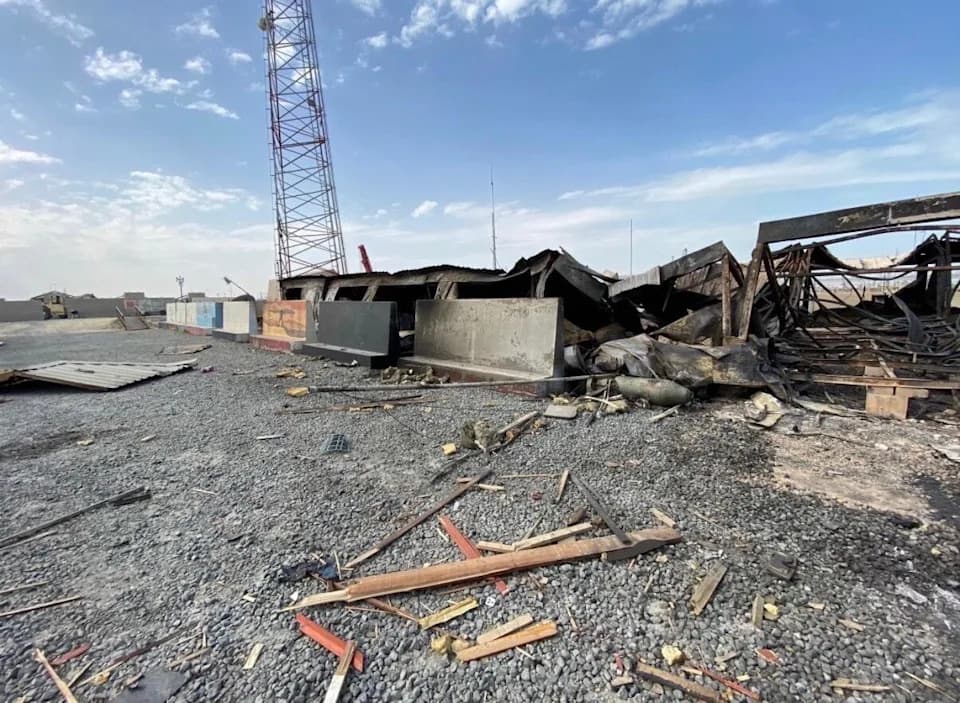
Six U.S. service members were killed when an apparent Iran-linked kamikaze drone struck a makeshift tactical operations center at Shuaiba port in Kuwait. Officials told CBS News the site was a triple-wide trailer protected only by T-walls, which provide little defense against a direct overhead impact. Sources reported no U.S. C-RAM at the site, unfulfilled requests for drone-defeat capabilities, and at least 18 other service members seriously wounded during the operation.
Questions Raised Over Fortifications After Drone Strike Kills Six U.S. Troops in Kuwait
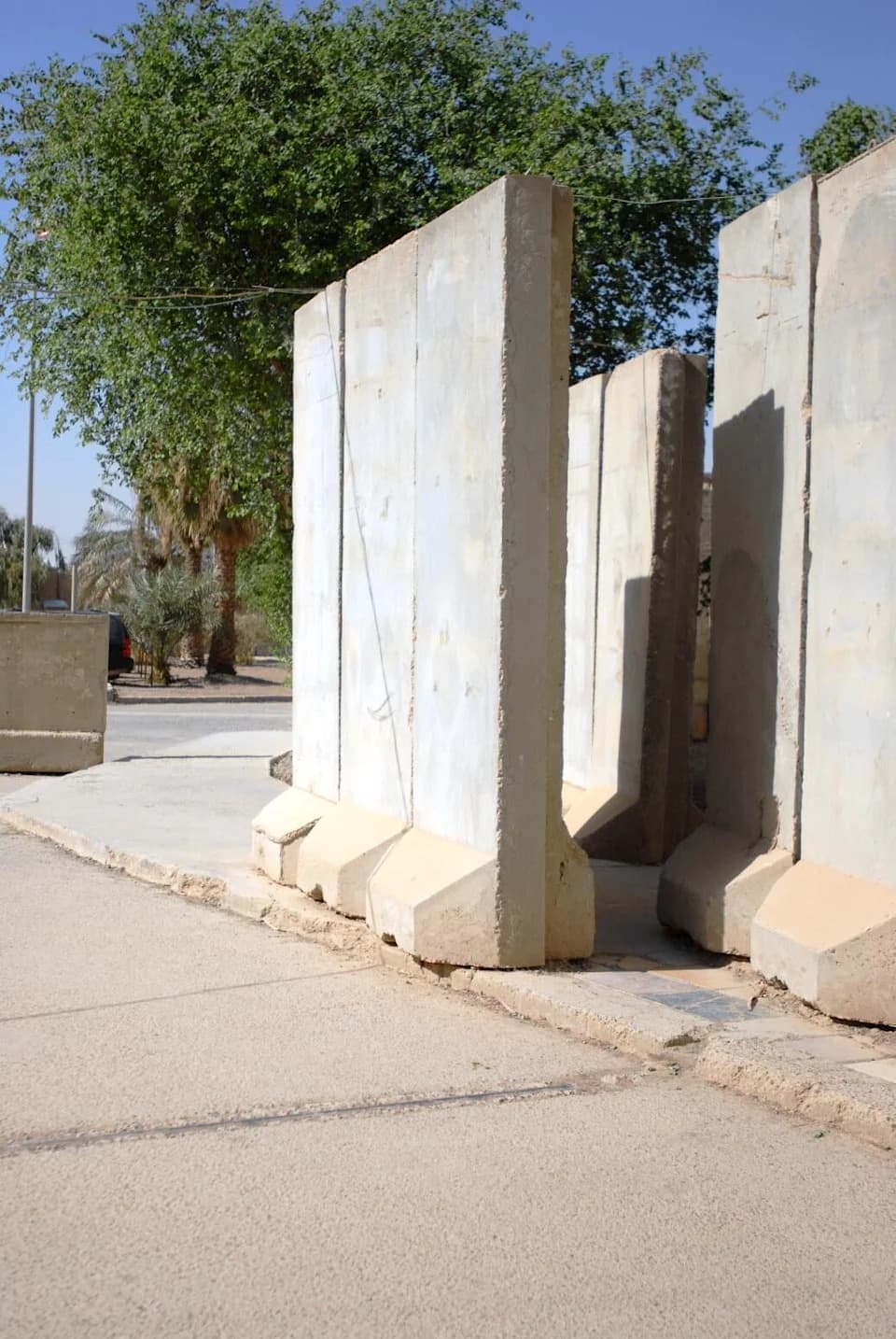
T-walls outside the Multinational Division Center headquarters at Camp Liberty, Iraq. / Credit: U.S. Army photo
Six U.S. service members were killed when an apparent Iranian kamikaze drone struck a makeshift tactical operations center at Shuaiba port in Kuwait, U.S. Central Command has confirmed. Three U.S. military officials who spoke to CBS News said the facility was a triple-wide trailer converted into office space and protected only by T-walls — 12-foot concrete barriers that offer limited defense against a direct overhead strike.
What Officials Say
According to the officials, preliminary battle-damage assessments indicate the weapon was a one-way "kamikaze" drone, consistent with Iran's use of Shahed-136–style munitions. Two officials told CBS News the strike appeared to hit dead-center on the trailer's roof, and flames quickly engulfed the structure, complicating recovery of the fallen.
“You have air defenses, and a lot's coming in, and you hit most of it. Every once in a while, you might have one, unfortunately, we call it a squirter, that makes its way through,” Defense Secretary Pete Hegseth said at the Pentagon, adding that powerful weapons can defeat fortifications.
Concerns About Defenses
Several U.S. personnel on the ground questioned whether the trailer should have been used at all because it concentrated many troops in a location vulnerable to air attack. Two officials said there was no U.S. Counter-Rocket, Artillery, and Mortar (C-RAM) system at Shuaiba to intercept incoming drones or munitions. They also said warning sirens commonly tied to counter-battery systems did not appear to sound for this strike, though the siren had been functional earlier in the week.
Requests Unfulfilled
Sources told CBS News that requests for additional drone-defeat capabilities were made but not granted. Kuwaiti interceptor assets were reportedly in the region, but it was unclear whether they were employed to protect the base.
Casualties and Wider Context
U.S. Central Command confirmed six service members were killed in the attack; at least 18 others were reported seriously wounded during the same combat operation, dubbed Operation Epic Fury. The strike occurred amid a broader period of missile and drone strikes in the Persian Gulf region following escalatory strikes by the U.S. and Israel against Iran.
The Pentagon referred reporters to CENTCOM statements when asked for further comment. Reporting on the fatalities was first published by CNN; CBS News reported on the likely ordnance and the concerns about the operations center's defenses.
Help us improve.