This genomic study in Scientific Reports concludes that a strong human-feeding preference in part of the Anopheles leucosphyrus group likely evolved once, between about 2.9 million and 1.6 million years ago in Sundaland. Analyses of 40 genomes (2,657 nuclear genes) reveal nuclear–mitochondrial discordance consistent with introgression and support a two-step shift: from canopy primate feeding to ground-level hosts, then to anthropophily. The timing overlaps proposed early Homo erectus presence and highlights implications for vector evolution and malaria control, while acknowledging dating and sampling uncertainties.
Ancient Taste For Humans: Mosquitoes May Have Evolved Human-Biting 1.6–2.9 Million Years Ago
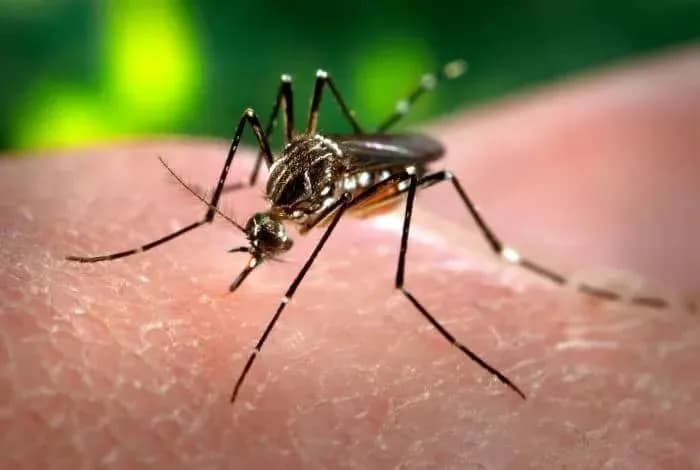
Malaria remains a major global health burden, with an estimated 249 million cases and 608,000 deaths worldwide in 2022. (CREDIT: James Gathany / CDC)
A subset of Southeast Asian malaria mosquitoes may have evolved a strong, specific attraction to humans far earlier than previously thought. New genomic analyses suggest that members of the Anopheles leucosphyrus group developed persistent human-feeding behavior sometime between about 2.9 million and 1.6 million years ago, most likely in Sundaland (the Malay Peninsula, Borneo, Sumatra and Java).
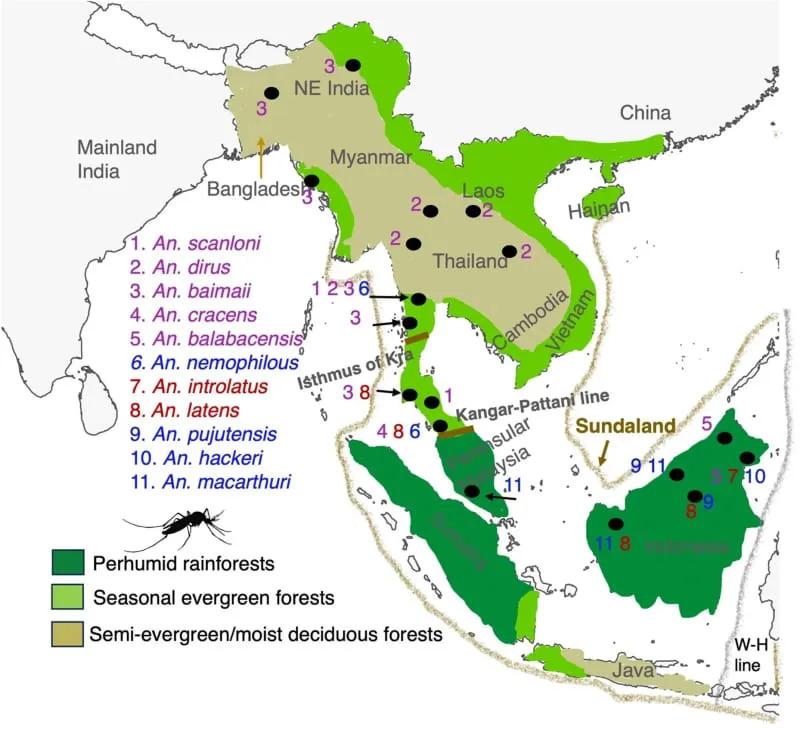
Map representing the distributions of specimens collected in Southeast Asia. Shading indicates the present-day distributions of forest types in mainland and insular Southeast Asia. (CREDIT: Scientific Reports)
What the Study Did
Researchers led by Upasana Shyamsunder Singh (Vanderbilt University) and Catherine Walton (University of Manchester) sequenced DNA from 38 mosquito specimens collected across Southeast Asia between 1992 and 2020, representing 11 of roughly 20 recognized species in the Leucosphyrus group. They supplemented those with two public genomes for a total of 40 genomes and identified 2,657 high-confidence, single-copy nuclear genes for analysis.
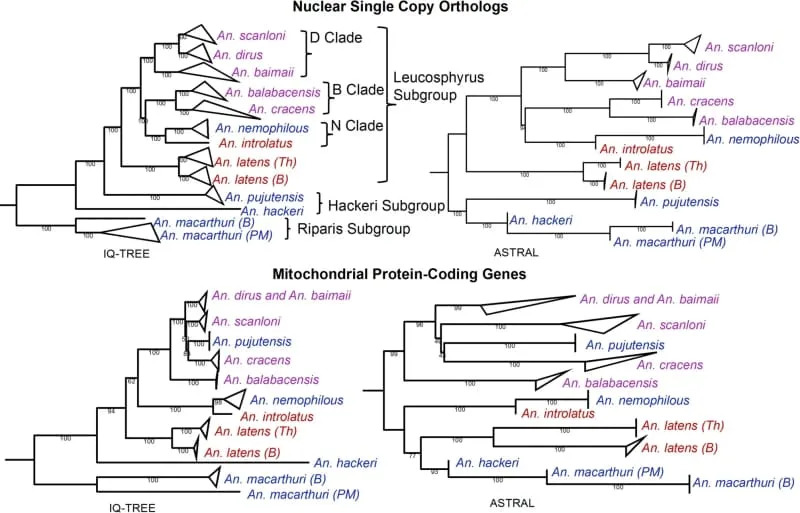
Genome-scale phylogenies of the Leucosphyrus Group. Trees were constructed using concatenation-based (IQ-TREE) (right) and ASTRAL (left) approach. The nuclear trees (top) were constructed using 2,657 single copy orthologs. The mitochondrial trees (bottom) were constructed using 13 protein-coding genes. (CREDIT: Scientific Reports)
Key Findings
Using nuclear and mitochondrial phylogenies, the team reconstructed evolutionary relationships, tested for introgression, and estimated divergence times with molecular clocks. Their main conclusions:
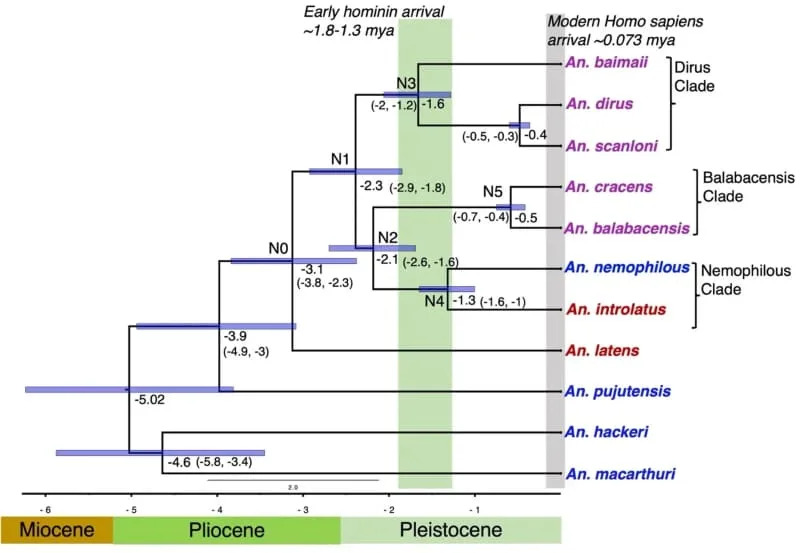
Chronogram of the Leucosphyrus Group using a Bayesian approach. The divergence dating analysis was carried out using 25 clock-like genes and the coalescent species tree estimation method. (CREDIT: Scientific Reports)
- The best-supported model indicates a single origin of strong anthropophily (human-biting preference) in this subgroup between ~2.9 and 1.6 million years ago.
- Phylogenetic conflicts between nuclear and mitochondrial trees point to mitochondrial introgression and possible adaptive gene flow among lineages, which the authors explored with phylogenetic networks that allow reticulations (branch crossings).
- Ancestral-state reconstructions suggest a two-step transition: (1) a shift from strict canopy primate feeding toward ground-level hosts, and (2) the later evolution of a strong preference for humans.
Methods And Dating
The authors relied primarily on nuclear data for downstream inference because mitochondrial histories showed signs of introgression. For dating, they used a multi-species coalescent approach and narrowed the nuclear set to 25 "clock-like" genes that best fit steady-rate assumptions. Lacking mosquito fossils or local geological calibration, the team applied a molecular clock based on a Drosophila melanogaster mutation rate (commonly used in Anopheles studies) and cross-checked results with a mitochondrial COI clock rate.
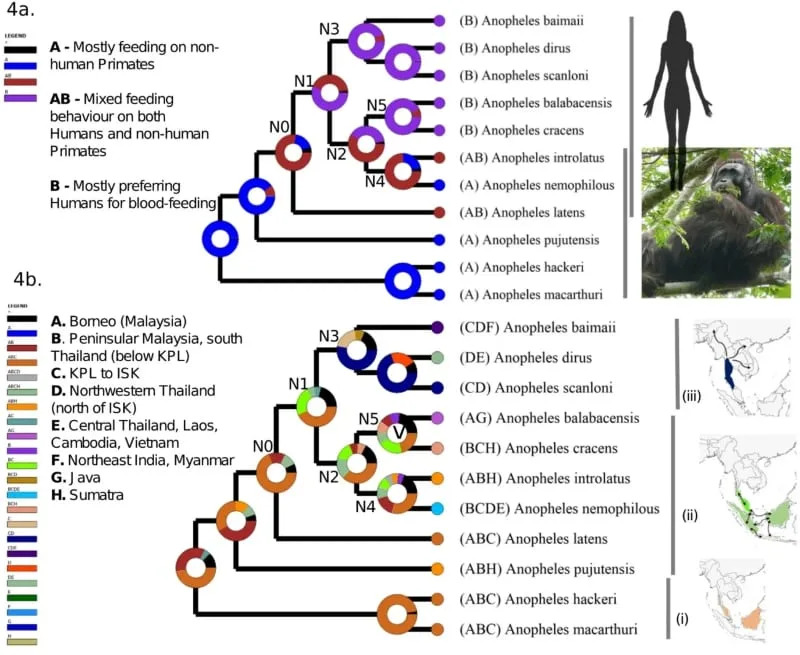
Reconstruction of ancestral states for blood-feeding behavior and biogeography. (CREDIT: Scientific Reports)
Uncertainties And Caveats
The authors are cautious about several limitations: dating depends on an assumed molecular clock rather than mosquito fossil calibrations; introgression blurs parts of the phylogeny; the sampling covers 11 of 20 recognized species (missing some species from Sumatra and the Philippines); and the study infers host-preference evolution indirectly rather than identifying the exact genes responsible. These uncertainties temper but do not negate the main inference.
Why The Timing Matters
The estimated window for anthropophily overlaps proposed early dates for Homo erectus in the region (fossil reports suggest hominins on Java between ~1.333 and 1.8 million years ago). Because anatomically modern humans arrived much later in Southeast Asia (the authors cite ~76,000–63,000 years ago), the study argues that modern humans were unlikely to have driven the original evolutionary shift toward human-feeding in this mosquito clade.
Public-Health Implications
Among ~3,500 described mosquito species worldwide, a persistent preference for humans is rare but is the strongest factor determining a species' ability to efficiently transmit human pathogens. Malaria remains a major burden — an estimated 249 million cases and 608,000 deaths worldwide in 2022 — so understanding how anthropophily evolves and spreads (including via introgression) matters for surveillance and vector-control strategies, especially where vectors coexist with primates near forest edges.
Where to Read: The full research article is available in Scientific Reports. The original news summary was published by The Brighter Side of News.
Help us improve.