The 2026 Winter Games in Italy overlap with Ramadan, highlighting a contrast between Milan's established Muslim infrastructure and the sparse prayer facilities around mountain host towns such as Cortina d'Ampezzo. Milan's Al-Wahid mosque hosts interfaith iftars and weekly Ramadan gatherings through March 14, while workers and residents near Cortina often travel to Brunico for worship. Community leaders say the Games are an opportunity to reduce prejudice even as Italy navigates migration and integration debates.
Ramadan and the Winter Games: Milan’s Open Iftars Versus Cortina’s Prayer Shortage
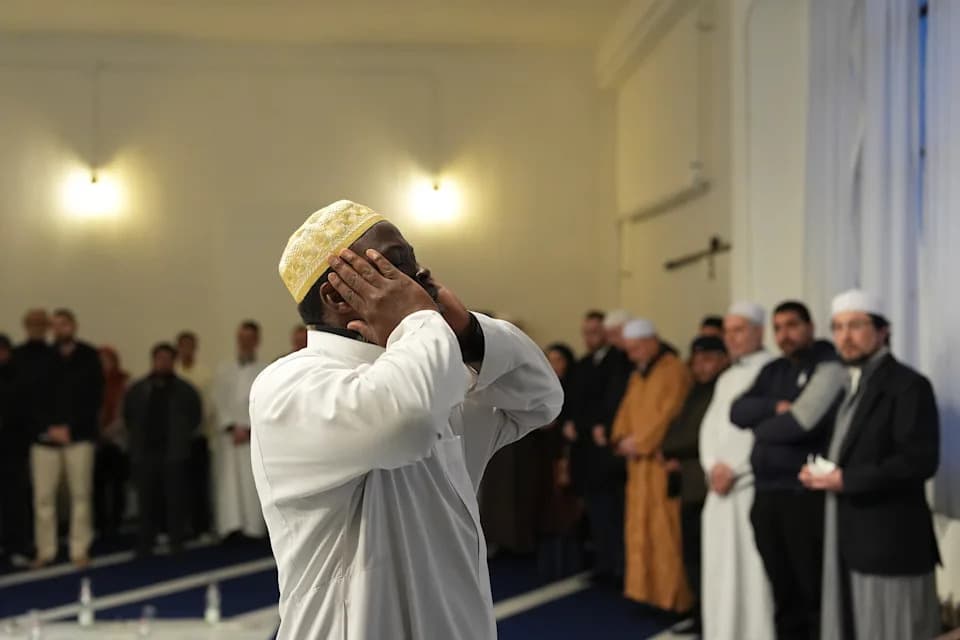
Imam Abd al-Basit calls to prayer at the Al-Wahid mosque during Ramadan in Milan, Italy, Friday, Feb. 20, 2026, as the city hosts the Winter Olympics. (AP Photo/María Teresa Hernández)(ASSOCIATED PRESS)
The 2026 Winter Olympic and Paralympic Games in Italy overlap with Ramadan, the Muslim month of dawn-to-dusk fasting, prayer and communal gatherings. The two host areas — the metropolitan hub of Milan and the mountain resort zone around Cortina d'Ampezzo — present sharply different realities for Muslims trying to observe the holy month while the Games are under way.
Milan: Infrastructure, Interfaith Iftars and Community Visibility
In Milan, Islamic centers and mosques are present across neighborhoods, and some welcome visitors of other faiths to share iftar, the evening meal that breaks the daily fast. Al-Wahid mosque, near the Navigli district and officially recognized by the city since 2000, opens its doors during Ramadan for communal iftars and evening prayers. The mosque has hosted interfaith iftars in recent years, drawing guests from municipal authorities, local institutions, the Catholic Church and other faith communities.
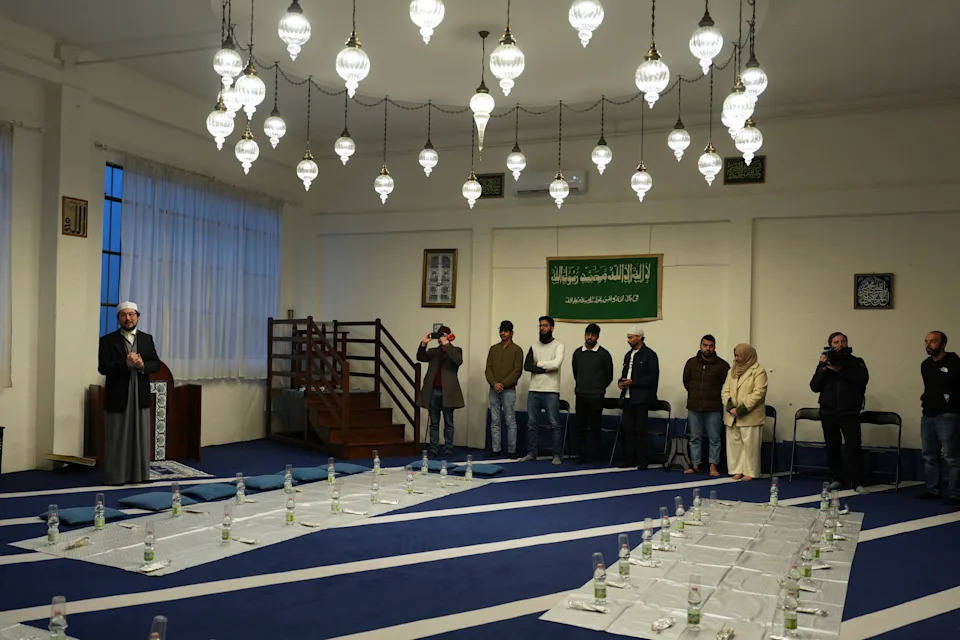
Imam Yahya Pallavicini, vice president of the Italian Islamic Religious Community, speaks at the Al-Wahid mosque during Ramadan in Milan, Italy, Friday, Feb. 20, 2026, as the city hosts the Winter Olympics. (AP Photo/María Teresa Hernández)(ASSOCIATED PRESS)
Imam Yahya Pallavicini, vice president of the national Islamic association COREIS, said the Olympics are a symbolic opportunity: "Sport, culture and art can help reduce prejudice and fear toward a particular culture or religious identity." A scene captured at one Al-Wahid iftar shows worshippers breaking their fast with dates, sharing a simple meal and praying together — an example of everyday religious life made visible during the Games.
Cortina and the Dolomites: Scarcer Prayer Spaces
By contrast, Cortina d'Ampezzo, the upscale mountain town known as the Queen of the Dolomites, offers few dedicated prayer facilities. Cortina's permanent population is a little over 5,000, with roughly half belonging to the Ladin minority. Several Muslim workers and residents told reporters they had difficulty finding places to pray near the Games sites.
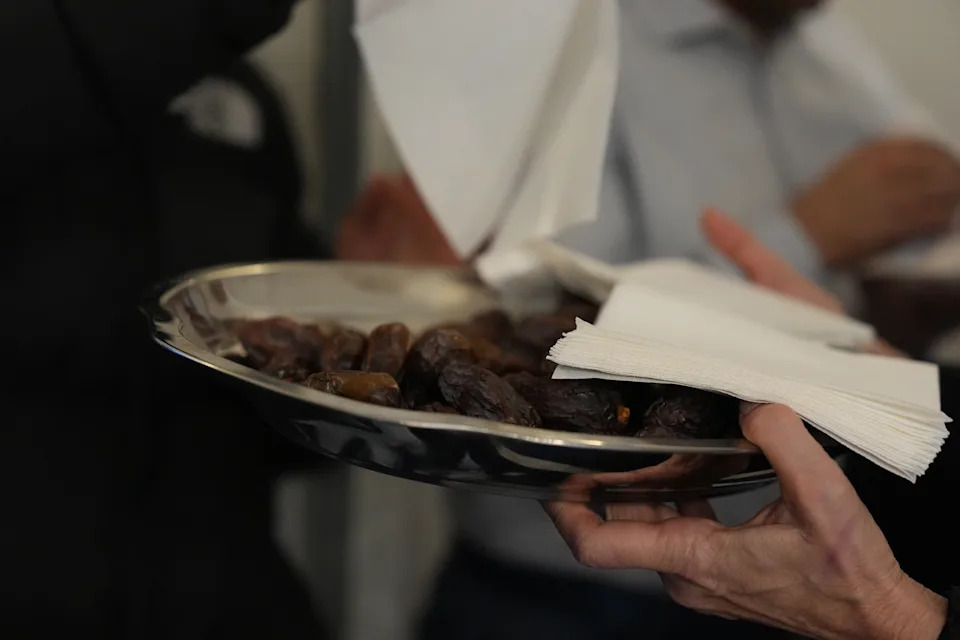
Dates are arranged on silver plates before the breaking of the fast at the Al-Wahid mosque during Ramadan in Milan, Italy, Friday, Feb. 20, 2026. (AP Photo/María Teresa Hernández)(ASSOCIATED PRESS)
Rabah Boubegtiten, who traveled to work as a driver with Qatari security, said his journey to the nearest mosque in Brunico took more than an hour on difficult roads. Many people working around the Games — including Algerians, Tunisians, other Africans and Qataris — searched for prayer spaces with limited success. While Olympic residential villages include interfaith prayer rooms for athletes, those facilities are not open to the general public.
Outside Cortina, towns such as Brunico (about 17,000 residents) have built modest Muslim community infrastructures, including prayer rooms, halal shops and butchers. Local Friday prayers there can draw sizable crowds and depend on community donations to cover rent and utilities.
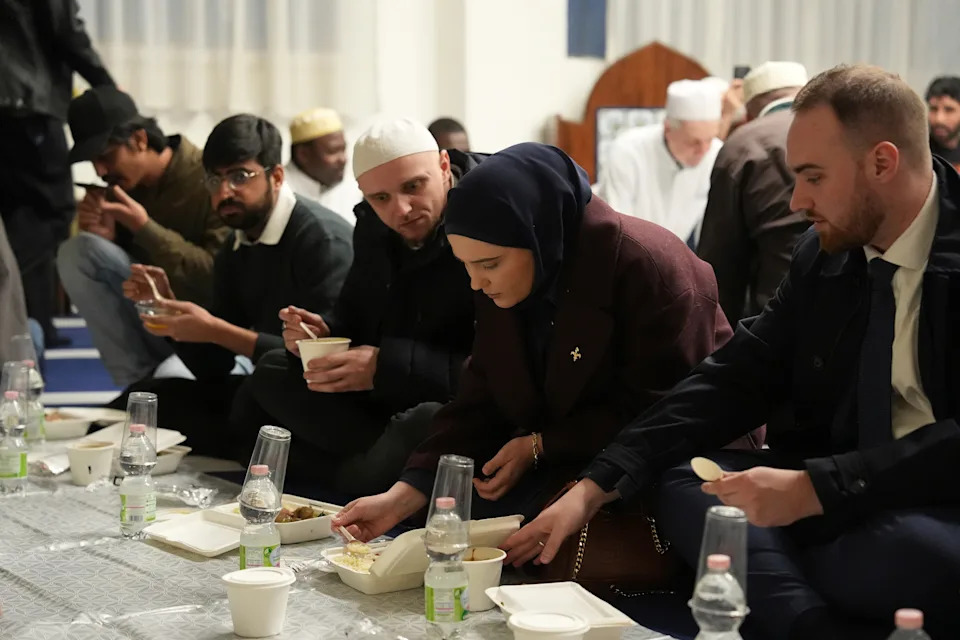
Muslim worshippers break their fast at the Al-Wahid mosque during Ramadan in Milan, Italy, Friday, Feb. 20, 2026, as the city hosts the Winter Olympics. (AP Photo/María Teresa Hernández)(ASSOCIATED PRESS)
A Broader Picture: Population, Migration and Identity
A 2025 report from Milan-based migration institute ISMU estimates nearly 400,000 Muslims live in Lombardy, the Italian region that includes Milan and has the country's largest immigrant population. Nationally, ISMU estimates about 1.7 million Muslims in Italy, representing just over 30% of the foreign resident population. While a large share of today’s Muslim population are migrants, community leaders also point to growing numbers of second-generation Italians, converts and people born in Italy.
Migration has been a contentious political issue in recent years. Italian Premier Giorgia Meloni has taken a tougher stance on migration since 2022, reflecting broader debates across Europe about borders, integration and identity. Even so, many community members see the Games as a chance to foster understanding and reduce prejudice.
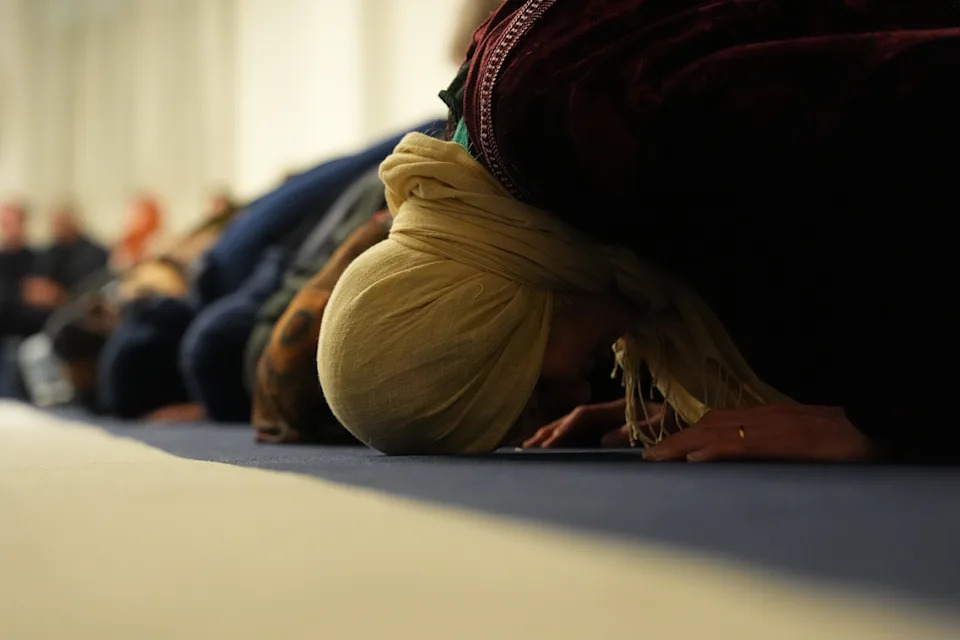
Muslim worshippers pray at the Al-Wahid mosque during Ramadan in Milan, Italy, Friday, Feb. 20, 2026, as the city hosts the Winter Olympics. (AP Photo/María Teresa Hernández)(ASSOCIATED PRESS)
Voices From the Community
"For us, it’s really difficult. Sometimes, even if we want to come, we simply can’t," said Rabah Boubegtiten, who commuted to find the nearest mosque.
"It is possible to practice Ramadan, it’s possible to pray," said Kreem Wardi, a 20-year-old student with Moroccan and Italian roots, noting that smaller mountain communities may be less likely to invite non-Muslims to iftars simply because people are less familiar or less interested.
Amina Croce, 28, whose parents converted from Catholicism to Islam, described the mosque as central to her identity and emphasized that Muslim presence is part of Europe's broader cultural heritage.
What This Means For Visitors
Visitors attending the Games during Ramadan will find very different experiences depending on location: established urban centers like Milan can offer community iftars and accessible mosques, while mountain venues may require travel to nearby towns for prayer facilities. Organizers and local communities have adapted in varying degrees, and the Games have become a focal point for conversations about religious inclusion and public accommodation.
Help us improve.