Failed rains and donor funding cuts are driving renewed hunger across northern Kenya, forcing relief agencies to reduce distributions. In Turkana County, 76-year-old Echakan Amaja now supports multiple dependents after drought and a cattle-rustling attack wiped out her family's herd. The WFP says 333,000 people in Turkana need food assistance but cannot be supported beyond next month without more funding. The drought is also deepening food insecurity across the Horn of Africa, with Somalia declaring a national drought emergency.
Drought and Aid Cuts Deepen Hunger in Northern Kenya, WFP Warns 333,000 at Risk
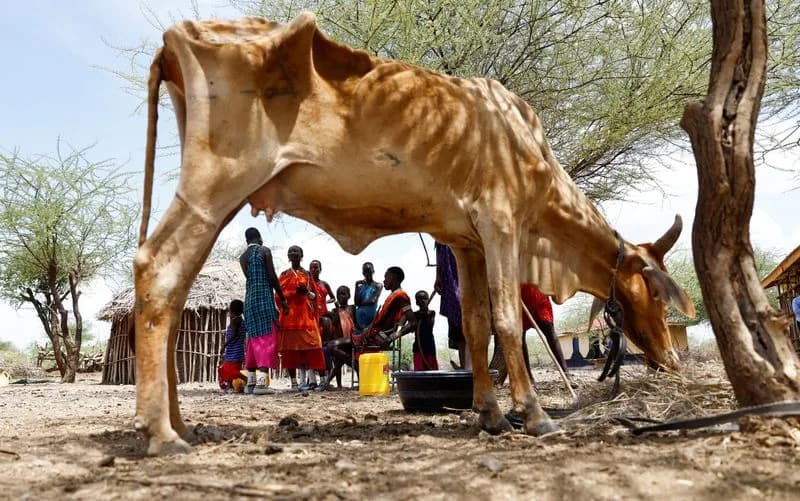
Members of the Lakaanki family from the Maasai pastoralist community gather near their emaciated cow at their manyatta homestead following worsening drought due to the failed rainy season, at a village settlement near Magadi township, along the Kenya-Tanzania border in Kajiado, Kenya, February 5, 2026. REUTERS/Thomas Mukoya
Four years after a catastrophic drought ravaged northern Kenya, failed rains and shrinking international aid are pushing communities in Turkana County back toward starvation. Relief agencies are being forced to scale back food distributions precisely as vulnerability across the region intensifies.
On the ground: In Loperot village, 76-year-old widow Echakan Amaja sits outside her mud home surviving on foraged gingerbread fruit and the small monthly rations she receives. Her situation deteriorated after her son was killed two weeks ago in a cattle-rustling attack that also stole the family's herd. Amaja now cares for five daughters and seven grandchildren on roughly 43.2 kg of monthly food rations and 3.2 litres of cooking oil supplied by the United Nations World Food Programme (WFP).
Scale of the crisis: Kenya’s National Drought Management Authority reported in December that more than nine counties—mainly in the north and east—are experiencing emerging drought conditions that threaten food security, water access and pasture. Recurrent dry seasons are increasing competition for scarce resources and raising the risk of violent conflict as drought spreads into areas previously less affected.
Sarah Ayodi, head of the WFP field office in Turkana, told Reuters that about 333,000 people in the county require food assistance but the agency will not be able to continue supporting them beyond next month because of funding shortfalls. Humanitarian organisations have already reduced specialised nutrition supplies: in August, Save the Children warned that at least four African countries, including Kenya, risked running out of therapeutic food for severely malnourished children.
Funding pressures: Donor reductions have played a major role in the shrinking response. Under former U.S. President Donald Trump, Washington cut humanitarian aid, and other Western governments have also reduced funding as part of broader budget adjustments, leaving agencies with fewer resources to respond to a worsening regional crisis.
The drought is even affecting wild foods that communities rely on during lean seasons. "This year is so bad that this is the worst drought I have ever experienced. You can't survive here because of drought ... even trees and wild fruits are nowhere to be seen," said 81-year-old Asinyen Akol. Across pastoralist landscapes, cattle carcasses bear witness to livestock losses that undermine livelihoods and push families into dependency on scarce aid.
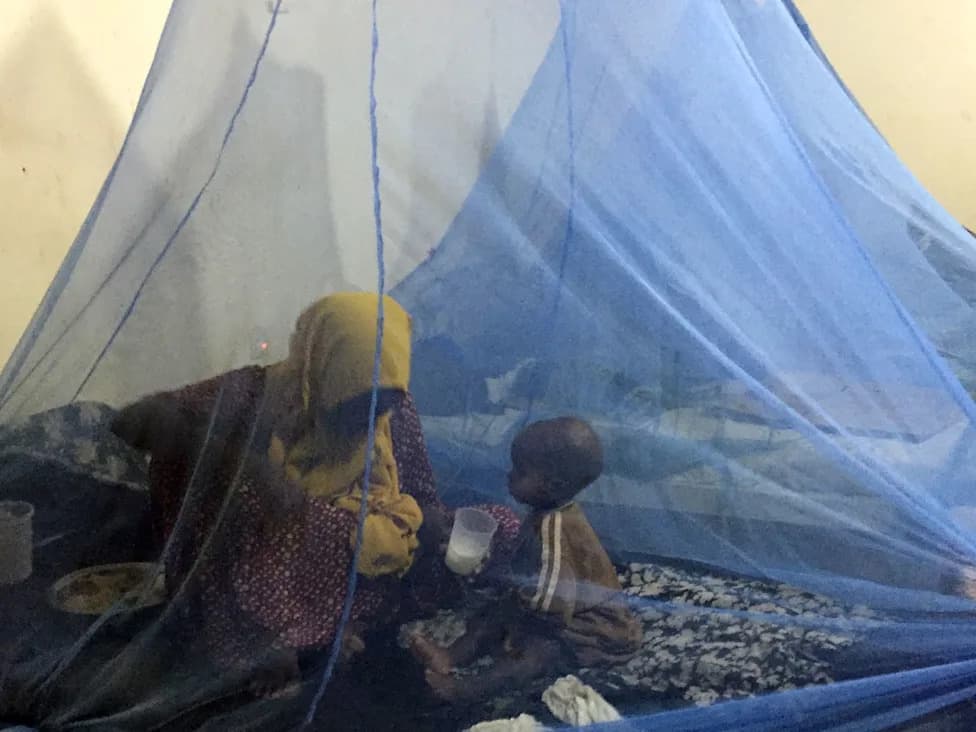
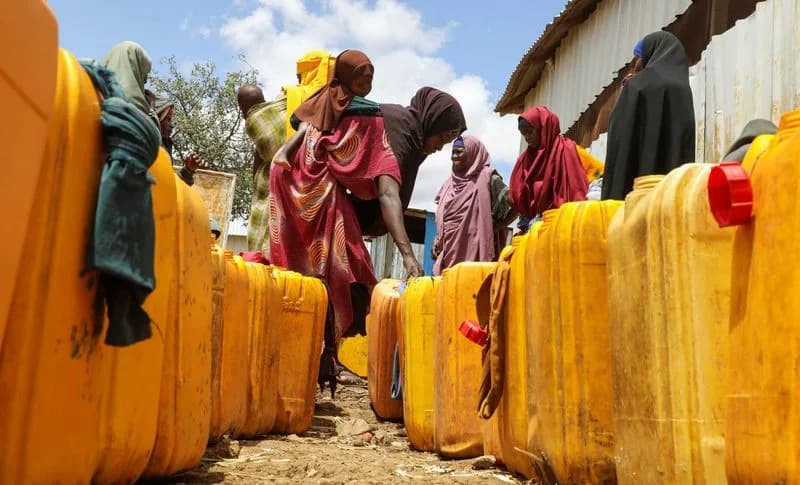
Regional impact: The crisis extends beyond Kenya. Somalia declared a national drought emergency after repeated poor rainy seasons, and WFP has warned that millions of Somalis face severe food insecurity, with nearly half of children malnourished and in urgent need of treatment.
Outlook: Without an urgent infusion of funding and a scale-up of emergency assistance, households across Turkana and the broader Horn of Africa face worsening hunger, higher malnutrition rates and greater risk of conflict over dwindling resources.
Help us improve.