Researchers and advocacy groups say predominantly Muslim Fulani militants are conducting a sustained kidnapping campaign in north-central Nigeria aimed at Christians, using ransom demands to finance violence and bankrupt communities. Open Doors reports 4,407 Christian abductions between 2020 and 2025 and finds Christians were 2.4 times more likely than Muslims to be kidnapped in that period. Witnesses describe mass abductions, clergy targeted as high-value hostages, and cases where large ransoms — such as the reported 300 million naira paid by ECWA — left families financially ruined even when captives were released.
Experts Warn Fulani Militants Are Running Systematic Kidnapping Campaign Targeting Christians in Nigeria’s Middle Belt
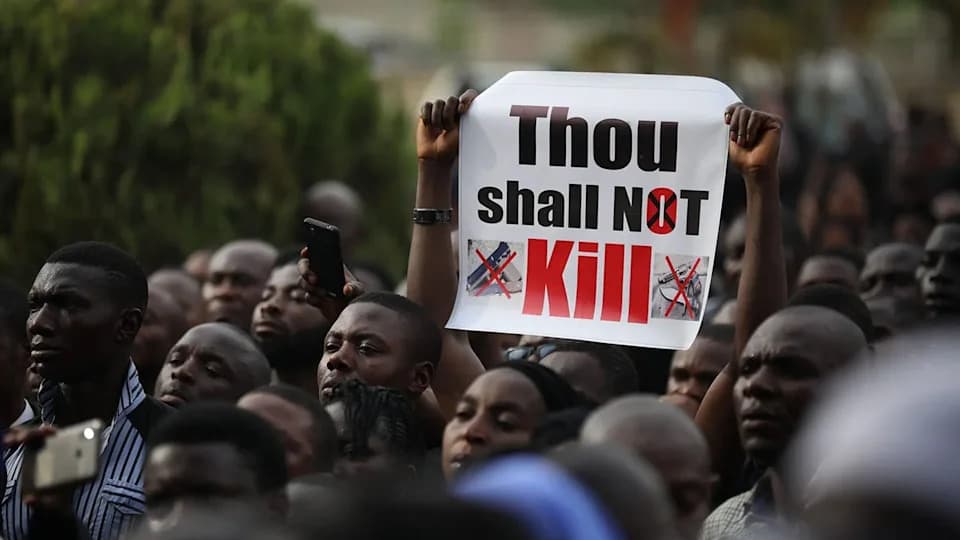
Christians march during a prayer and penance for peace and security in Nigeria in Abuja on March 1, 2020.
Researchers, advocacy groups and witnesses tell Fox News Digital that a sustained wave of kidnappings in north-central Nigeria appears to be a deliberate campaign by predominantly Muslim Fulani militants to target, impoverish and destabilize Christian communities across the country’s Middle Belt.
Targeted Ransom Strategy
Steven Kerfas, lead researcher at the Observatory for Religious Freedom in Africa (ORFA), said kidnapping for ransom serves two purposes: financing militant activity and economically weakening Christian populations. "They do it to fund their terrorism, but also to bankrupt the Christian community," Kerfas told Fox News Digital.
"You have cases where 100 Christians will be marched into the forest and kept there for months... they are forced to cough out ransoms they don't have, so they have to sell everything — including their farmland." — Steven Kerfas, ORFA
Kerfas and other sources describe incidents in which large groups have been abducted and held for extended periods. Victims are often compelled to raise ransom money by selling essential assets such as farmland, livestock and property, leaving families without the means to survive when captives are released.
Data and Patterns
Open Doors, a global Christian charity, reports that 4,407 Christians were abducted in north-central Nigeria between 2020 and 2025. When adjusted for population, the organization says a Christian in this region was approximately 2.4 times more likely than a Muslim to be kidnapped during that period.

Newspapers at a stand in Ojuelegba, Lagos, Nigeria, Nov. 2, 2025.
Clergy and Institutions as High-Value Targets
Henrietta Blyth, CEO of Open Doors UK, told Fox News Digital that kidnappers frequently raid churches and schools and single out priests and pastors as high-value hostages. Families and congregations often face impossible choices: pay ransoms to try to save lives, knowing payments may fund future attacks, or refuse and risk murder.
"Tactics by kidnappers include raids on churches and schools… priests and pastors are singled out because they represent high-value targets." — Henrietta Blyth, Open Doors UK
Documented Cases
International Christian Concern reported that Rev. James Audu Issa, a pastor abducted in August of last year in north-central Nigeria, was held for weeks and later killed despite a ransom being paid. In another reported instance, the Evangelical Church Winning All (ECWA) allegedly paid about 300 million naira (roughly $205,000) to secure the release of around 50 kidnapped members in Kaduna and Plateau states — a burden that placed severe financial strain on the church and affected families.
Impact and Outlook
Observers warn the cumulative effect of repeated kidnappings and large ransom demands risks destroying livelihoods, accelerating displacement and eroding the social fabric of Christian communities concentrated in the Middle Belt. Kerfas emphasized the moral and practical dilemma faced by victims: "If you don't pay ransom, you get killed. And sometimes, even after paying the ransom, you still get killed."
Fox News Digital reached out to the Nigerian government for comment but received no response. Experts call for greater protection of vulnerable communities, transparent investigations and stronger accountability for perpetrators to halt the cycle of violence and extortion.
Help us improve.