
Leaders of Ukraine's supporters convened in Paris to outline security guarantees that would apply if a peace deal with Russia is reached, but immediate progress was uncertain. U.S. focus appeared to shift amid developments in Venezuela, and comments about Greenland strained ties with European partners. France and the U.K. have coordinated planning around five priorities — from ceasefire monitoring to long-term defense cooperation — but key details and troop commitments remain unresolved.
Paris Talks Seek Security Guarantees For Ukraine — Progress Uncertain As U.S. Attention Shifts

Ukraine's President Volodymyr Zelenskyy, left, is greeted by French President Emmanuel Macron as he arrives for a meeting of the 'Coalition of the Willing' on Ukraine at the Elysee Palace in Paris, France, Tuesday, Jan. 6, 2026. (AP Photo/Michel Euler)(ASSOCIATED PRESS)
Leaders from countries supporting Ukraine met in Paris on Tuesday to shape long-term security arrangements that would take effect if a peace deal with Russia is ever reached. The meeting aimed to translate months of planning by a so-called "coalition of the willing" into concrete commitments, but prospects for immediate breakthroughs were uncertain as U.S. attention appeared to shift toward developments in Venezuela and comments about Greenland provoked friction with European partners. Meanwhile, Moscow showed little sign of softening its position after nearly four years of conflict.
Diplomacy and Preparations
French President Emmanuel Macron said ahead of the summit that allies would "make concrete commitments" to protect Ukraine and help ensure a just, lasting peace. Macron's office announced an unusually large number of in-person attendees — 35 participants, including 27 heads of state or government — and said U.S. envoys Steve Witkoff and Jared Kushner met with the president at the Elysée Palace for preparatory talks.
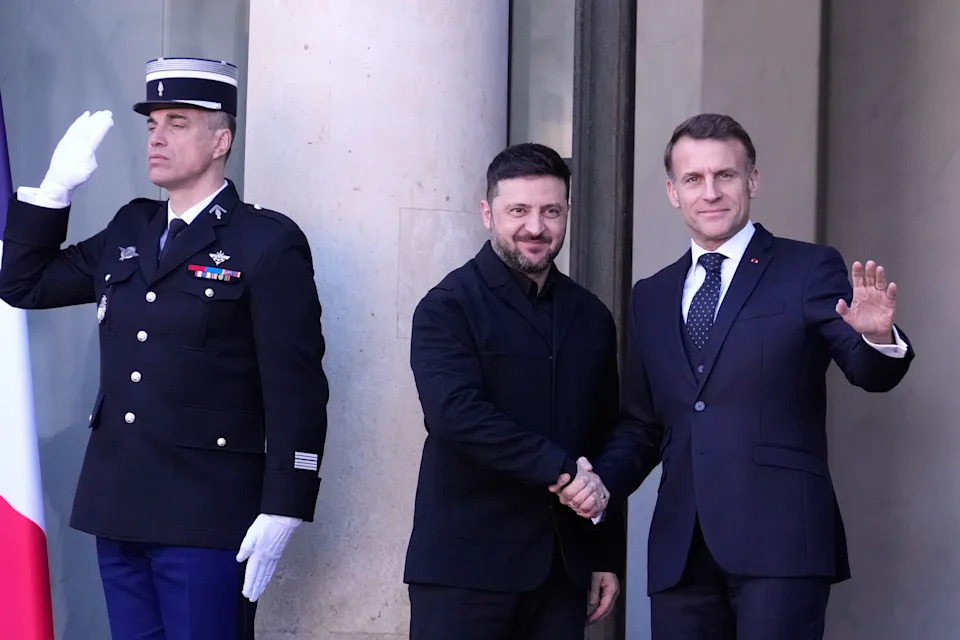
Ukraine's President Volodymyr Zelenskyy, center, is greeted by French President Emmanuel Macron, right, as he arrives for a meeting of the 'Coalition of the Willing' on Ukraine at the Elysee Palace in Paris, France, Tuesday, Jan. 6, 2026. (AP Photo/Michel Euler)(ASSOCIATED PRESS)
Russia has disclosed few specifics about its position in the negotiations. Kremlin officials have reiterated that a ceasefire is conditional on a comprehensive settlement and have rejected any deployment of NATO troops on Ukrainian soil.
Security Planning And Military Talks
A string of preparatory sessions underlined the complexity of the diplomatic effort. Ukrainian President Volodymyr Zelenskyy met Macron before the summit. Military chiefs from France, Britain and Ukraine, joined by NATO's top commander, U.S. Gen. Alexus G. Grynkewich, focused on how to implement security guarantees, while other coalition army chiefs participated by video.
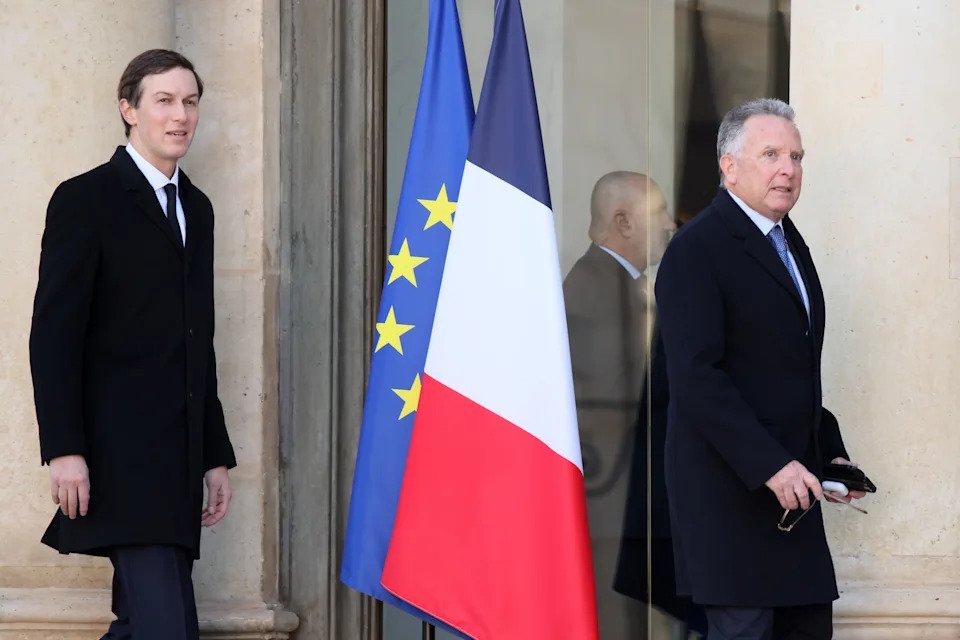
United States Mideast envoy Steve Witkoff, right, and Jared Kushner arrive for a meeting of the 'Coalition of the Willing' on Ukraine at the Elysee Palace in Paris, France, Tuesday, Jan. 6, 2026. (AP Photo/Thomas Padilla)(ASSOCIATED PRESS)
A news conference scheduled for later included Zelenskyy, Macron, British Prime Minister Keir Starmer and German Chancellor Friedrich Merz. Macron's office also said the U.S. delegation was originally expected to be led by Secretary of State Marco Rubio, who changed plans amid U.S. actions related to Venezuela.
Tension Over Greenland Remarks
Former President Donald Trump's renewed suggestion that the United States take control of Greenland — a strategic, mineral-rich island that is part of the Kingdom of Denmark — drew a swift diplomatic rebuttal. Leaders from France, Germany, Italy, Poland, Spain and the U.K. joined Danish Prime Minister Mette Frederiksen in defending Greenland's sovereignty, highlighting how remarks about the territory have become an irritant between Washington and some European capitals.
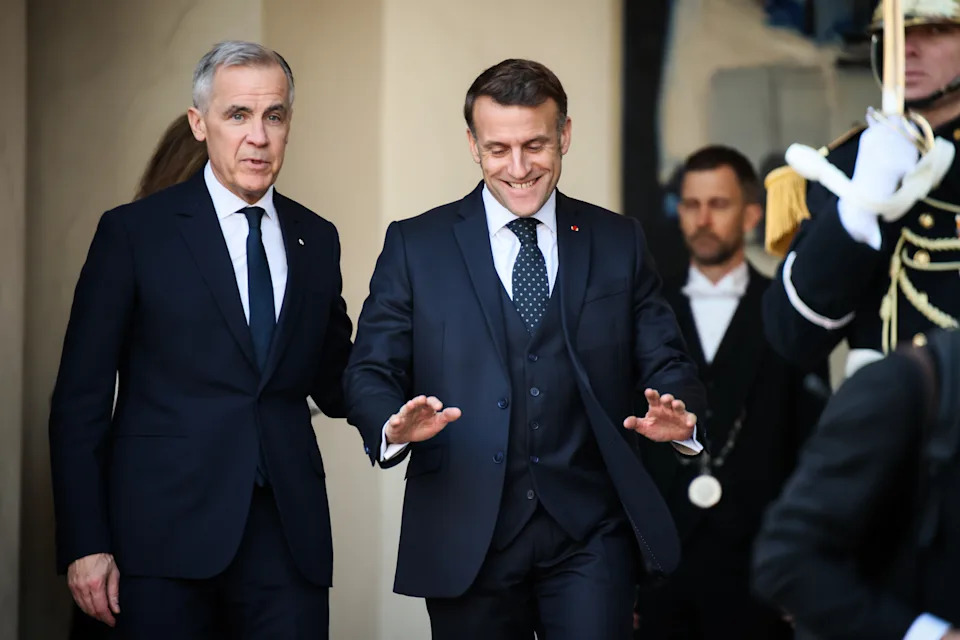
French President Emmanuel Macron, right, gestures as Canada's Prime Minister Mark Carney leaves the Elysee Palace in Paris, France, Tuesday, Jan. 6, 2026. (AP Photo/Thomas Padilla)(ASSOCIATED PRESS)
Five Priorities For Post-Conflict Security
Participants said they were aiming for tangible outcomes on five priorities to follow a cessation of hostilities: mechanisms to monitor a ceasefire; sustained support for Ukraine's armed forces; deployment of a multinational deterrent force by land, sea and air; clear commitments in the event of renewed Russian aggression; and long-term defense cooperation with Ukraine.
Ukraine has pressed for firm guarantees from Washington that it regards as essential to secure comparable commitments from other allies. Kyiv also remains wary of any ceasefire that could give Russia time to regroup.
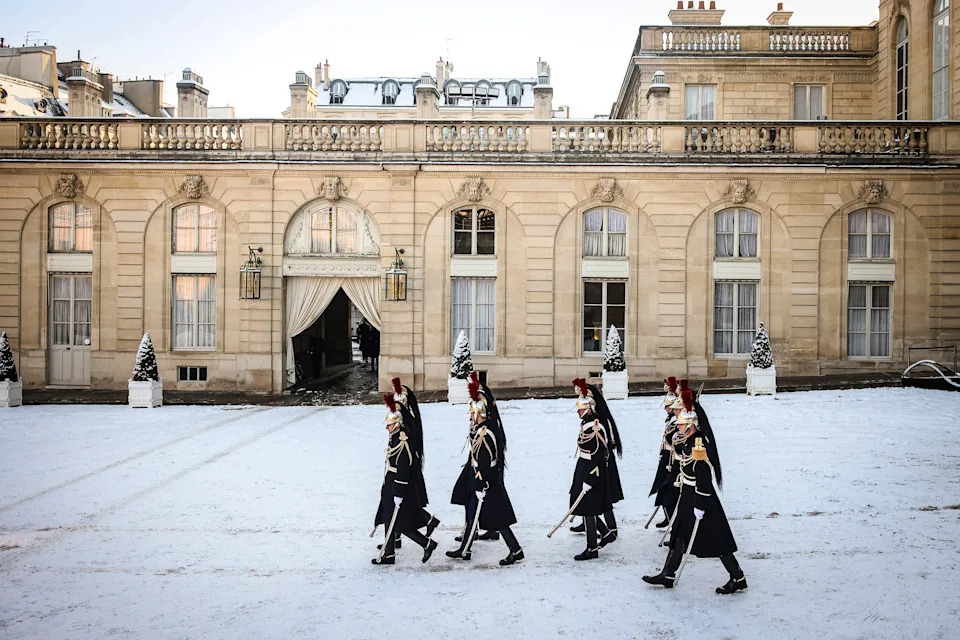
Republican Guards walk in the snow covered courtyard of the Elysee Palace in Paris, France, Tuesday, Jan. 6, 2026. (AP Photo/Thomas Padilla)(ASSOCIATED PRESS)
Progress And Unresolved Issues
U.S. envoy Steve Witkoff described recent meetings as "productive," saying discussions with U.S. and allied security advisers focused on strengthening guarantees and developing deconfliction mechanisms intended to prevent a restart of the war. France and the U.K. have coordinated much of the planning, emphasizing that Ukraine's own armed forces would remain the first line of defense, while coalition partners would provide training, equipment and other support.
President Zelenskyy cautioned that potential European troop deployments still face political and legal hurdles, with many countries requiring parliamentary approval. He also stressed that support can take multiple forms — including weapons, technology and intelligence — and said deployments by Britain and France would be particularly important.
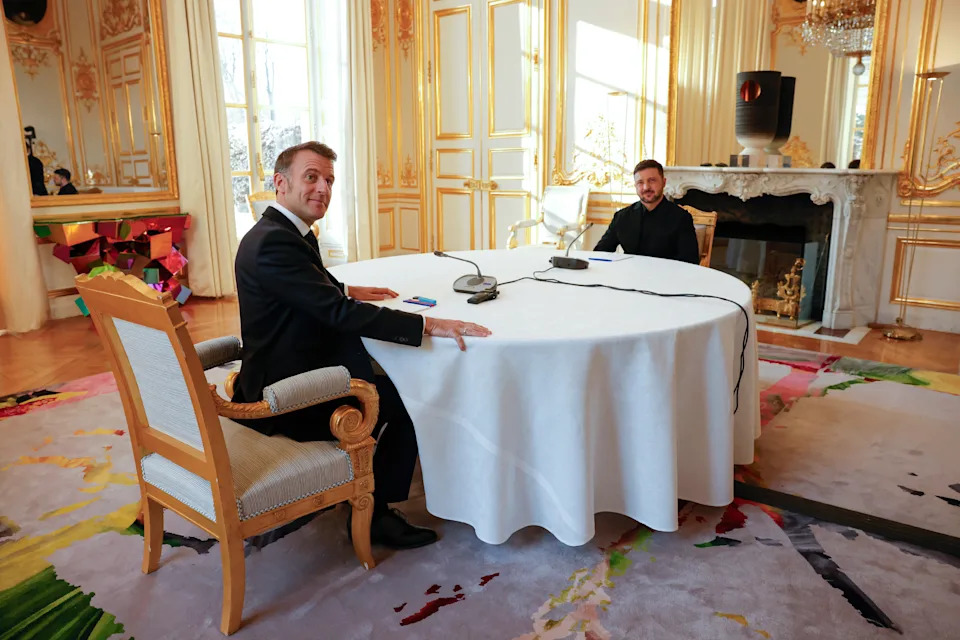
French President Emmanuel Macron, left, meets with Ukraine's President Volodymyr Zelenskyy at the Elysee Palace as part of the Coalition of the Willing meeting in Paris, France, Tuesday, Jan.6, 2026. (Yoan Valat, Pool photo via AP)(ASSOCIATED PRESS)
With some details still not finalized and differing political constraints among allies, the summit illustrated both the diplomatic energy behind efforts to secure Ukraine and the significant challenges that remain.
Volodymyr Yurchuk in Kyiv contributed to this report.
Follow AP coverage of the war in Ukraine at https://apnews.com/hub/russia-ukraine
Help us improve.


