
Venezuelan President Nicolás Maduro is expected to assert "head-of-state" immunity to try to dismiss his federal indictment in New York. The Department of Justice will likely argue he is an illegitimate ruler and therefore not entitled to sovereign protection; the indictment labels him "the de facto but illegitimate ruler" after contested elections. A relevant precedent is the 1997 Noriega decision (11th Circuit), which denied immunity where the U.S. never recognized the defendant as leader. Maduro's case differs because the U.S. appears to have recognized his leadership at one point, and the dispute—heard in the 2nd Circuit—could ultimately reach the U.S. Supreme Court.
Maduro's Immunity Fight: Why His New York Indictment Could Reignite The Presidential Immunity Debate

Immunity is likely to be a central defense Venezuelan President Nicolás Maduro is expected to raise as he seeks dismissal of a federal indictment in New York. He may claim "head-of-state" immunity on the theory that, as Venezuela's leader, he is protected from criminal prosecution in U.S. courts. Courts have long recognized head-of-state immunity as a form of sovereign protection, a doctrine that predates the Supreme Court's recent recognition of broad immunity claims in Trump v. United States.
But recognition alone does not guarantee success. The U.S. Department of Justice is expected to argue that Maduro is an illegitimate ruler and therefore not entitled to head-of-state immunity. The indictment itself characterizes Maduro as having "previously" been Venezuela's president and alleges that, by "having remained in power despite losses in recent elections," he became "the de facto but illegitimate ruler of the country." That factual allegation lies at the heart of the immunity dispute.
How Noriega Shapes The Debate
The question of foreign sovereign immunity has arisen in similar contexts, most notably in the prosecution of Panama's Manuel Noriega. After Noriega's conviction, an 11th Circuit panel upheld the trial court's rejection of his head-of-state immunity claim on the ground that the United States never recognized him as Panama's legitimate leader. The court stated:
"Noriega has cited no authority that would empower a court to grant head-of-state immunity under these circumstances."
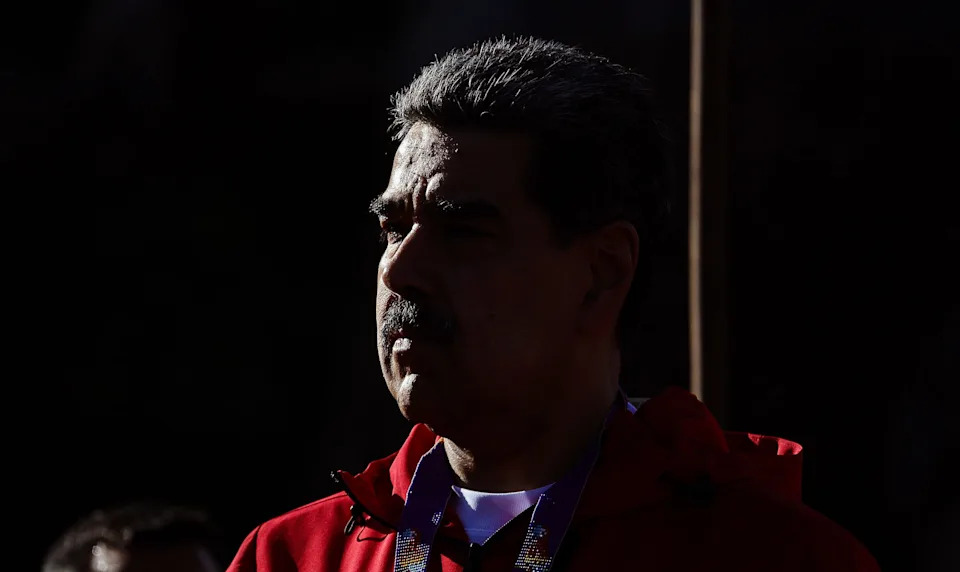
President Nicolás Maduro of Venezuela looks on during a rally on Oct. 12, 2025 in Caracas, Venezuela.(Jesus Vargas / Getty Images)
That ruling is often cited as persuasive authority for denying immunity where a defendant's leadership has not been recognized by the U.S. government. But the Noriega decision also relied on the fact that Noriega "never served as the constitutional leader of Panama," a factual point that differentiates Noriega from Maduro.
Key Differences In The Maduro Case
Unlike Noriega, Maduro appears to have been recognized by the United States at least at one point as Venezuela's legitimate leader. That factual distinction could influence how a court evaluates his immunity claim, though it is not dispositive by itself. A crucial legal question will be who — the executive branch, Congress, or the courts — has the authority to determine a foreign leader's legitimacy for purposes of immunity.
Jurisdictional And Procedural Issues
Maduro's case is being litigated in New York, within the 2nd U.S. Circuit Court of Appeals. The 11th Circuit's Noriega decision is therefore not binding precedent in the 2nd Circuit, but New York courts may still cite Noriega as persuasive authority. If disputes over immunity, recognition, or the proper standard of review persist, the case could ultimately reach the U.S. Supreme Court.
What Is At Stake? A ruling on Maduro's immunity claim could clarify the extent to which foreign heads of state can be held criminally accountable in U.S. courts, and whether executive-branch recognition decisions control that analysis. Given the high-profile nature of the parties and the potential constitutional questions, the dispute could produce lasting precedent on the interplay between foreign relations and criminal law.
Help us improve.


