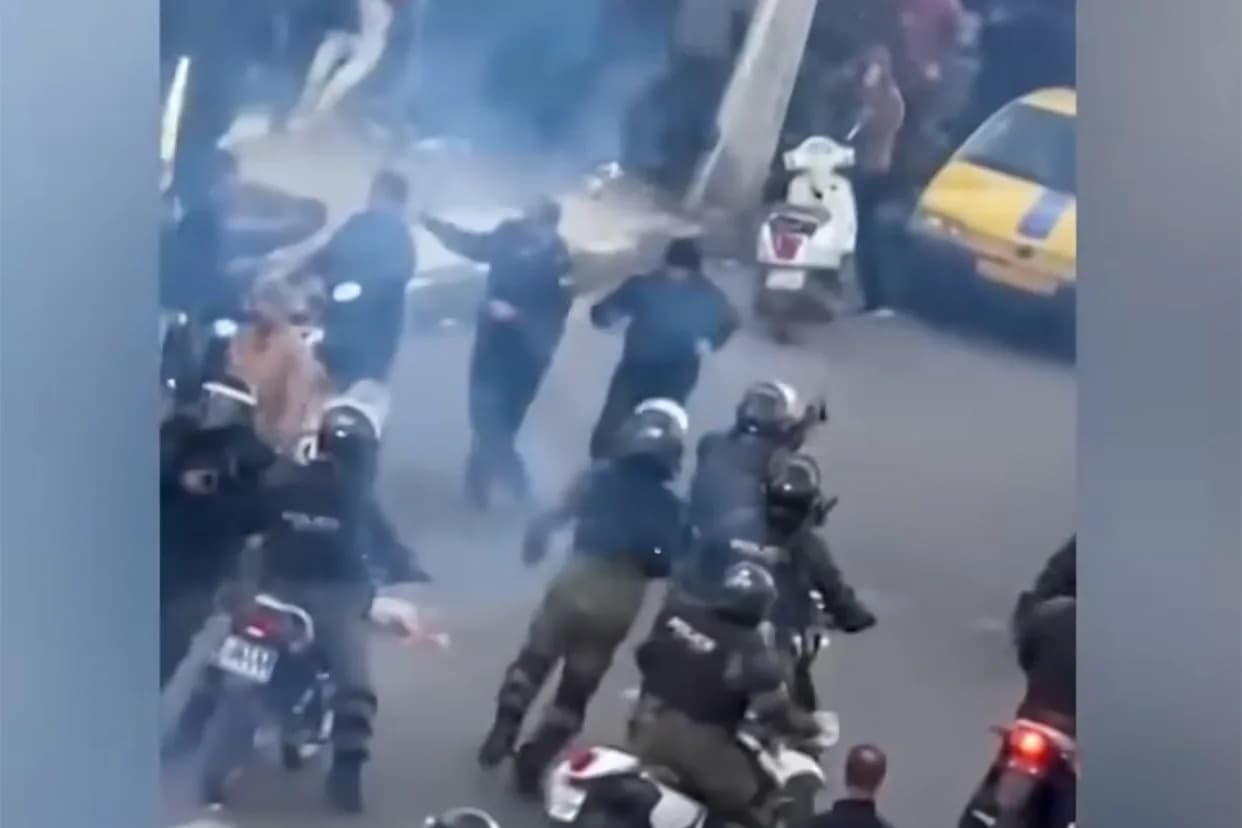
The Vulkangruppe claimed responsibility for a Saturday arson that destroyed high-voltage cables near Lichterfelde, triggering a major blackout across southwest Berlin and affecting nearly 50,000 homes and businesses. Roughly 30,000 households remained offline while crews replaced damaged cables in frozen soil; full restoration was not expected until Thursday. Mayor Kai Wegner condemned the attack as "terrorism," and officials linked the incident to a pattern of infrastructure sabotage dating back to around 2011. The blackout disrupted hospitals, care homes, transit and communications and prompted calls for stronger grid protection and federal assistance in the investigation.
Berlin Blackout: Arson on High-Voltage Cables Blamed on Left-Wing Extremists — Tens of Thousands Left Without Power
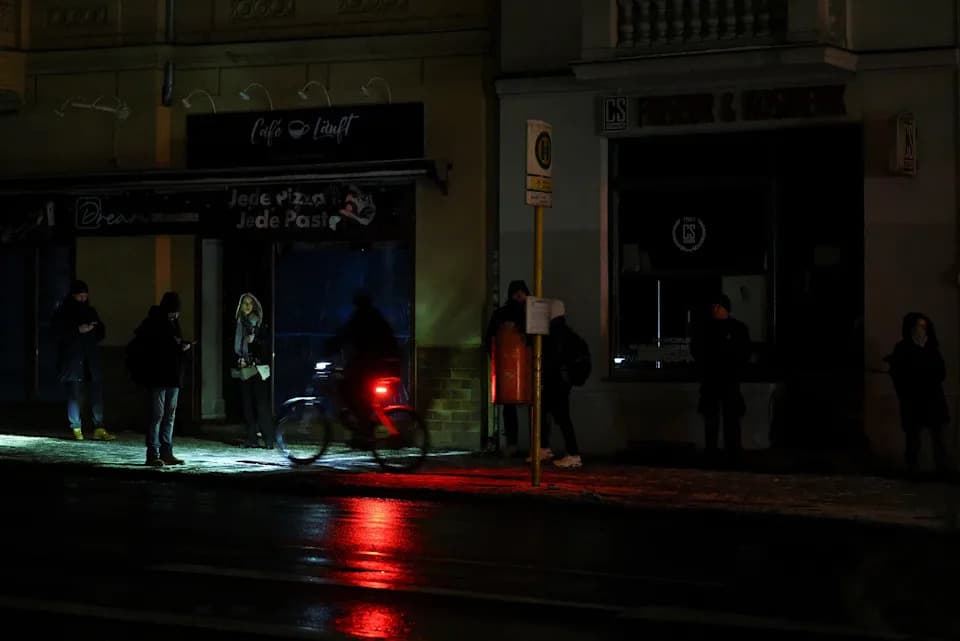
People wait at a bus stop during a blackout that left tens of thousands of homes without power after a suspected arson attack at the Lichterfelde power plant in the Steglitz-Zehlendorf district in southern Berlin, Germany, Jan. 4, 2026. / Credit: Lisi Niesner/REUTERS
Berlin — A deliberate arson attack on critical electrical infrastructure in southwest Berlin plunged large parts of the city into darkness during freezing winter conditions, leaving tens of thousands of residents and businesses without power for several days.
The blaze, which occurred on a Saturday morning near the Lichterfelde heat and power station, destroyed multiple high-voltage cables and caused one of the most serious blackouts the capital has seen in years. Operator Stromnetz Berlin said as many as 45,000 households and more than 2,000 businesses across four southern districts were affected.
Scope, Impact and Restoration Efforts
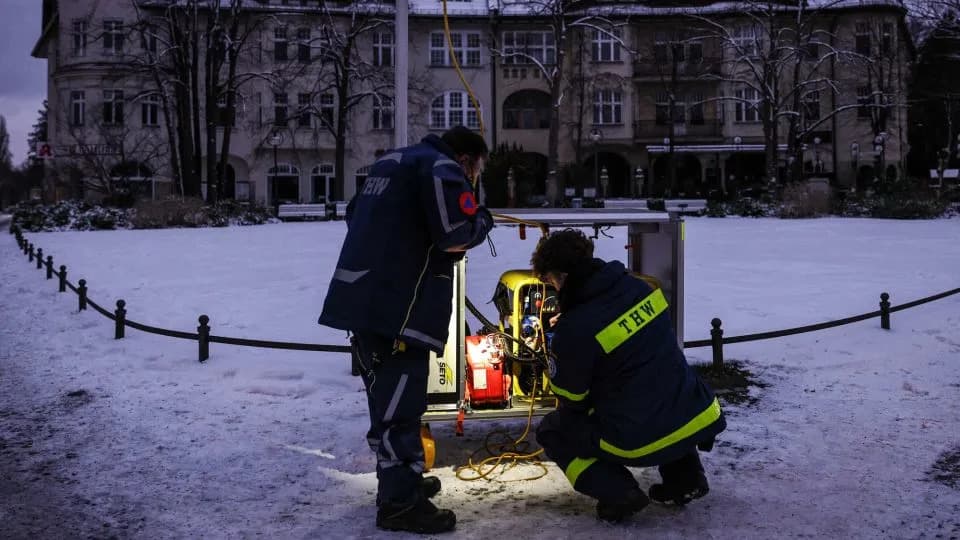
With temperatures well below freezing, many households also lost heating and hot water, heightening the humanitarian risk. By Monday engineers had restored power to portions of the network, but roughly 30,000 households remained offline while crews worked to replace damaged underground cables embedded in frozen soil. Stromnetz Berlin warned that full electricity restoration was not expected until Thursday.
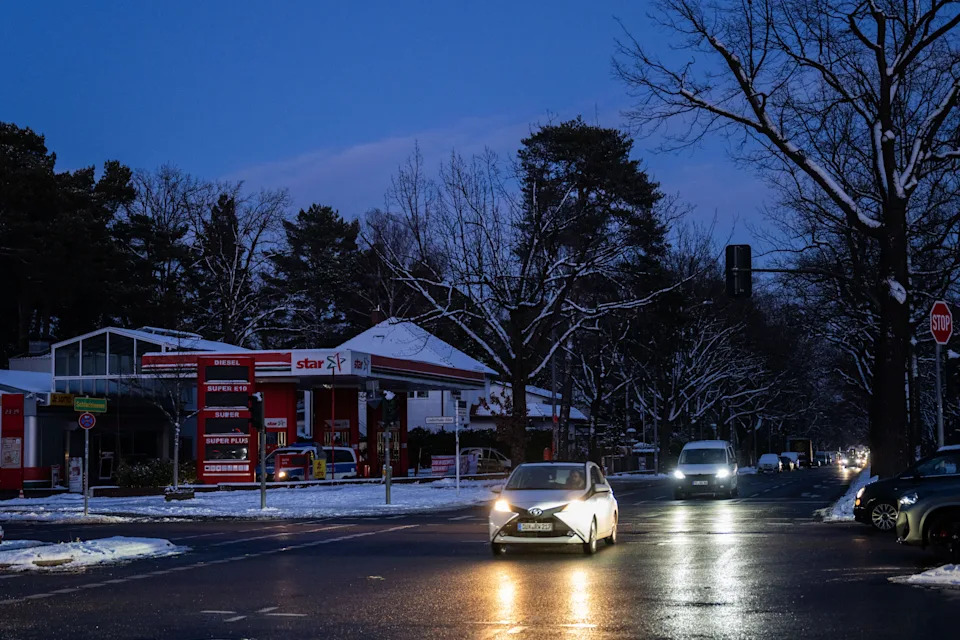
A gas station in southwest Berlin, Germany, is seen without power after a power cut caused by an arson attack on energy infrastructure, Jan. 5, 2026. / Credit: Christophe Gateau/picture alliance/Getty
Claim of Responsibility and Motive
An online communiqué that police described as credible was published by a group calling itself the Vulkangruppe. The group said it deliberately targeted affluent neighborhoods to "cut the juice to the ruling class" and framed the attack as a protest against fossil fuel dependence and the rising energy demand of AI data centers, which it accused of accelerating climate change and expanding mass surveillance. The statement included an apology for poorer residents affected by the blackout but expressed no sympathy for wealthier homeowners.
Wider Consequences
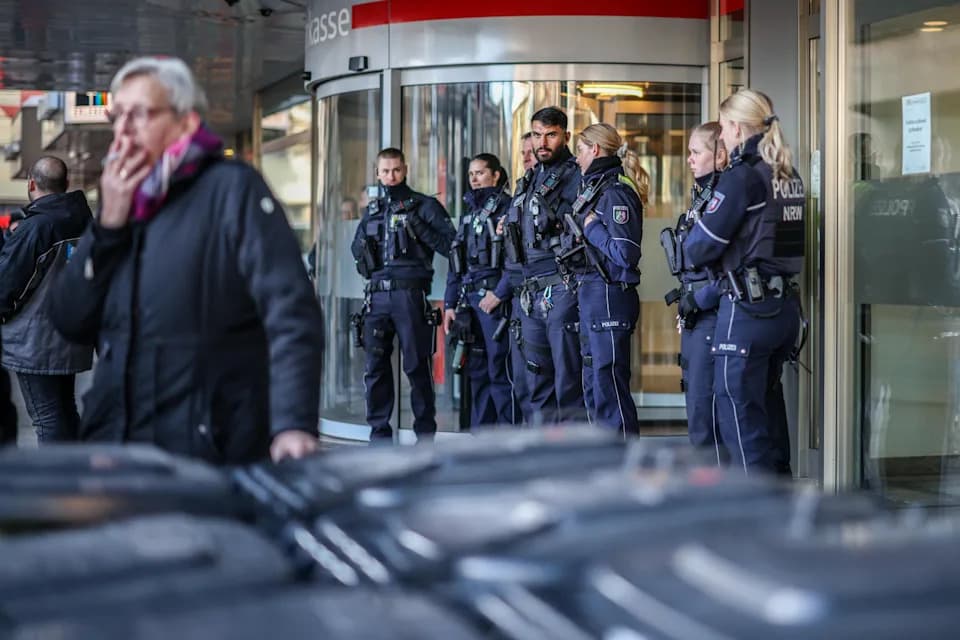
The disruption went beyond the group’s purported targets. Hospitals and care homes were affected, residents in high-rise buildings were stranded without elevator access, some cell-phone networks degraded in parts of the city, and commuter rail services were disrupted. Police used loudspeakers to alert neighborhoods, and several schools delayed reopening after the holiday break.
"These are not childish pranks, but rather professional criminals who attacked these power grids," Berlin Mayor Kai Wegner said on public broadcaster RBB. "This is not just arson or sabotage. This is already terrorism."
Franziska Giffey, the Berlin senator responsible for economic affairs, energy and public enterprises, urged federal assistance with the criminal investigation and described the incident as an attack on "our free society." Authorities said they are exploring whether more than ideological activism is at play.
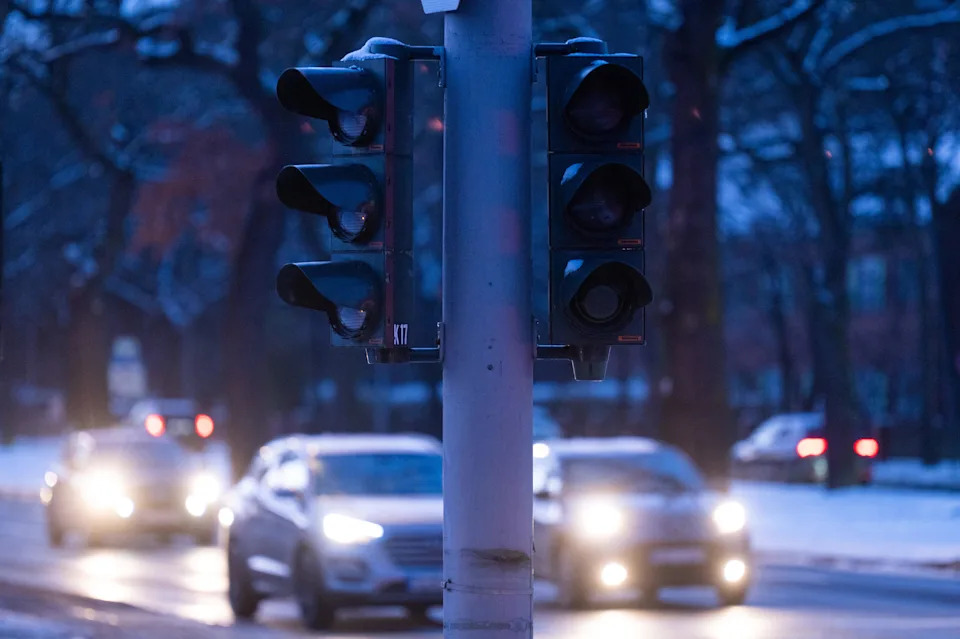
A disabled traffic light at a junction on Potsdamer Chaussee in southwest Berlin, Germany, is seen amid a power cut caused by an arson attack, Jan. 5, 2026. / Credit: Christophe Gateau/picture alliance/Getty
Context and Security Concerns
Security officials said the arson fits a pattern that has emerged over more than a decade. German authorities and domestic intelligence assessments link groups using the Vulkangruppe name or similar labels to attacks on power, rail and communications infrastructure since around 2011. Notable incidents include a 2018 fire on power lines that cut electricity to thousands, a March 2024 arson attack on a high-voltage pylon supplying the Tesla Gigafactory that temporarily halted production, and a 60-hour blackout in September that affected tens of thousands of people.
Officials warn such attacks often require limited specialist knowledge but can cause disproportionate and wide-ranging harm, underscoring vulnerabilities in interdependent urban systems. The latest blackout has intensified calls for stronger protection of energy infrastructure, improved emergency-response planning, and federal support for investigations.
The police and federal investigators continue to probe the incident; authorities have warned residents to follow official safety guidance and to report any suspicious activity.
Help us improve.