The author argues that treating government like a business can make sense, but reneging on contracts undermines trust and raises costs. He highlights the EPA’s attempt to reclaim money deposited at Citibank for the Greenhouse Gas Reduction Fund under the Inflation Reduction Act—an action contractors say lacked contractual authority. The litigation over those funds remains mired in procedure; the author urges the administration to drop the case and stop efforts to claw back committed funds to preserve a reliable environment for public-private deals.
Breaking Contracts Won’t Make America Great: How Reneging Harms U.S. Solar Investment
For years Americans have been told the government should operate more like a business. While government is not literally a private company—it answers to the whole nation rather than a handful of shareholders—borrowing sound management practices from the private sector can improve public services and outcomes.
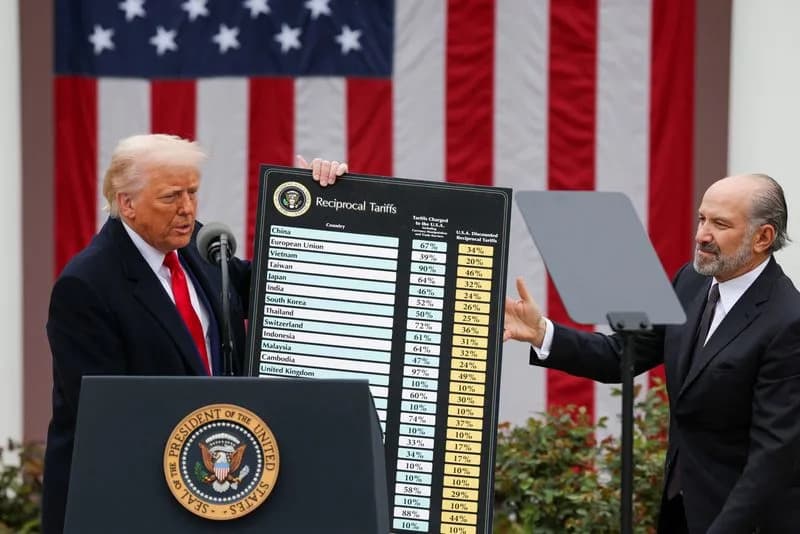
That promise of a more businesslike administration helped elevate a wealthy businessman to the presidency and shaped the administration’s approach: emphasizing dealmaking, using tariffs as negotiating leverage, outsourcing functions long handled by civil servants, and leaning on private actors for a range of tasks from emergency payroll support to high-profile building projects.
Why Contracts Matter
Yet in one critical respect parts of the administration have departed from a core business principle: honoring legally binding contracts. Far from promoting efficiency, breaching contracts damages trust, raises costs for taxpayers, and discourages private participation. If private partners cannot rely on the United States to honor commitments when administrations or priorities change, they will either refuse to work with the government or demand steep premiums to offset risk.
Early in President Trump’s second term, a newly created Department of Government Efficiency touted large taxpayer savings from cancelling contracts. Independent audits exposed arithmetic errors and apparent exaggerations in those claims — in some cases confusing “millions” with “billions.” More consequentially, the department lacked legal authority to void many of the agreements it cancelled.
The Greenhouse Gas Reduction Fund Example
A stark example involves contracts tied to the Greenhouse Gas Reduction Fund, a central element of the Inflation Reduction Act intended to expand U.S. solar capacity. The fund was designed to leverage private capital rather than have federal officials pick winners: nonprofit intermediaries with solar expertise would assemble transactions that combine public and private financing, and no project would proceed without private investors putting their own funds at risk.
To facilitate these investments, Congress authorized moving the government’s contribution into bank accounts at Citibank so those public funds could be paired with private capital and routed efficiently to winning proposals. The traditional bureaucratic method of submitting receipts and awaiting reimbursement would have been ill-suited to this investment model.
Yet one of the Environmental Protection Agency’s first actions after the administration took office was to instruct Citibank to return money already deposited in those accounts. The contracts between the EPA and the nonprofits and companies did not authorize the agency to seize funds from those accounts, and contractors contend that the agency had no legal basis for the demand.
Consequences Of Reneging
Governments are free to decline future commitments or rescind uncommitted appropriations; indeed, the administration’s recent legislation rescinded some unallocated Inflation Reduction Act funds. But cancelling obligations already made is a different matter. Pulling money from private entities’ bank accounts sends a chilling signal to firms contemplating federal partnerships: if administrations can disregard existing contracts, businesses will respond by charging higher prices, insisting on protective payment mechanisms, or shifting capital offshore to put it beyond the immediate reach of U.S. policymakers.
The contractors affected by the Citibank directive sued. The litigation has been bogged down in procedural disputes. The Justice Department has invoked doctrines that limit most federal courts from ordering new disbursements from the Treasury, even though the contractors seek only to protect funds already held in their Citibank accounts. The D.C. Circuit recently vacated an earlier procedural win for the government, and further briefing is pending.
A Path Forward
To restore a business environment conducive to productive public-private deals, the administration should seize this moment to drop the litigation and cease efforts to claw back funds already deposited at Citibank. Honoring contractual commitments—even when inconvenient—preserves predictability in markets, lowers the cost of capital for the government, and encourages private partners to invest in projects that serve the public interest.
David A. Super is Carmack Waterhouse Professor of Law and Economics at Georgetown University Law Center.
Help us improve.