
The Pink Ladies are a grassroots network of mostly middle‑aged mothers in Britain who stage rallies in pink to highlight perceived threats from illegal migration. Born after violent protests in Epping over an alleged sexual assault, the group presents a maternal, non‑aggressive image while many members lean toward Reform UK. Critics warn their message can echo far‑right narratives and point to a lack of public data linking asylum seekers to higher crime rates. The movement highlights how concerns about women’s safety and immigration are being reframed in contemporary British politics.
Meet The Pink Ladies: How A Maternal Image Is Shaping Britain's Anti-Immigration Movement

Local women wore pink to protest outside the Bell Hotel in Epping on August 8. - Henry Nicholls/AFP/Getty Images
On the leafy outskirts of London in Epping, social media calls for local men to “mask up” and bring “rage” preceded a July 17 protest after fresh trouble around the Bell Hotel, one of several British hotels used to accommodate asylum seekers. An Ethiopian man staying at the hotel was arrested in connection with the alleged sexual assault of a woman and a 14‑year‑old schoolgirl, and online-organised demonstrations that day turned violent. Some men hurled bottles at police; others fought physically. Four men later pleaded guilty to violent disorder, while others remain under investigation or on trial.
From Epping To Pink Ponchos
The unrest recalled the xenophobic riots that convulsed parts of Britain in the summer of 2024, when a hotel housing asylum seekers was set on fire while people were inside. For Orla Minihane, a mother of three from Epping, that moment was a “PR disaster.” Seeking to change the optics and present protesters as concerned residents rather than violent thugs, she encouraged a fresh tactic on WhatsApp: men should stay away, women should lead, and attendees should wear pink. The idea spread quickly.
What followed was the emergence of the “Pink Ladies,” a grassroots network of women who stage demonstrations across the country to highlight what they describe as risks posed by illegal migration to women and girls. Minihane estimates membership in the low thousands. Although the movement does not claim formal ties to any single party, she says many supporters plan to vote for Reform UK, a populist party that has made immigration its central pledge.
Who Are The Pink Ladies?
Minihane and supporters describe the typical Pink Lady as a white, middle‑aged mother who voted for Brexit and now feels that successive governments have failed to control migration. At rallies such as a rainy November Saturday in Chelmsford — where roughly 200 women gathered in pink ponchos, berets and leggings, waved flags, dressed dogs in pink coats and lit pink flares — the message was stark: Britain is “under attack” and “being invaded.” The presentation, however, is deliberately maternal and non‑confrontational, with placards reading “I’m not racist — I’m a worried mother.”
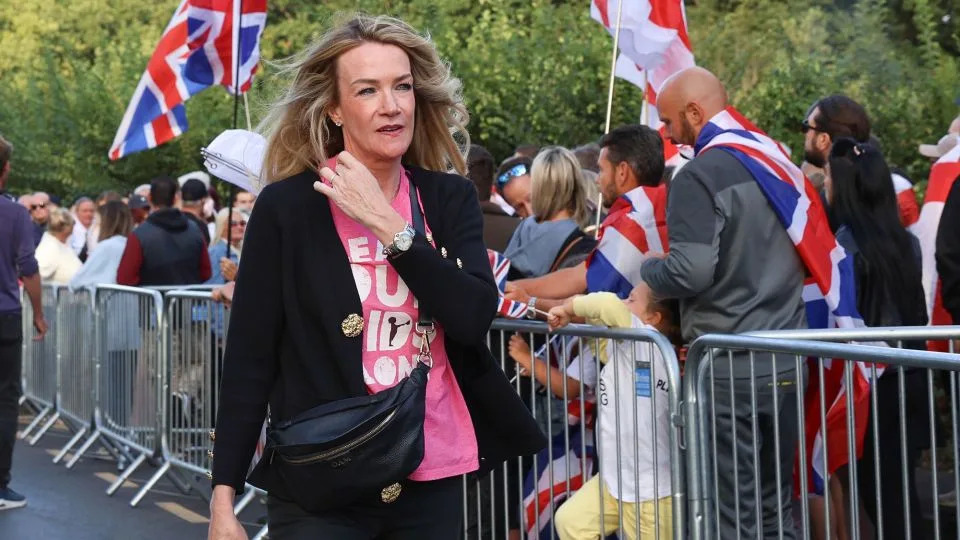
Orla Minihane, Reform UK's vice-chair for Epping Forest, joins local residents as they hold an anti-immigration protest outside the Bell Hotel in Epping, Essex, on August 31, 2025. - Jacqueline Lawrie/LNP/Shutterstock
“I’ve tried to create a movement where I say, ‘You can come. You do have a voice,’” Minihane told reporters. “I’m just a mom who’s worked her whole life, who’s bringing up three children, who lives in suburbia.”
Politics And The Gender Gap
Minihane is the vice‑chair of Reform UK’s Epping Forest branch and could stand as a candidate at the next election, but she denies any formal collaboration between the party and the Pink Ladies movement. Reform’s leader, Nigel Farage, has historically appealed more to male voters: polling from 2015 and 2024 shows a stronger male skew in right‑wing parties’ support. However, recent data from pollster More In Common suggests the gender gap for Reform has narrowed — from roughly 1.4 men supporting the party for every woman in mid‑2024 to about 1.2 by September this year — a shift some attribute to the party’s heightened focus on women’s safety.
At Reform party events this year, women have been more prominent on stage than in earlier cycles, and the party has added female figures to its ranks, including Sarah Pochin and Andrea Jenkyns. Reform spokespeople insist they prioritise merit over gender in recruitment and campaigning.
Criticism And Context
Advocacy groups caution that the movement’s framing risks echoing far‑right narratives. Andrea Simon, director of the End Violence Against Women coalition, warned that campaigns about women’s safety have been co‑opted in the past to promote racist or white‑supremacist agendas.
Public anxiety about migrants and crime is partly shaped by historic child sexual abuse scandals in several English towns between the late 1990s and early 2010s, in which gangs of men — many of South Asian heritage — abused children. A 2025 independent inquiry found a “collective failure to address questions about the ethnicity of grooming gangs,” a failure that harmed victims and also contributed to the stigmatization of wider British Asian communities.
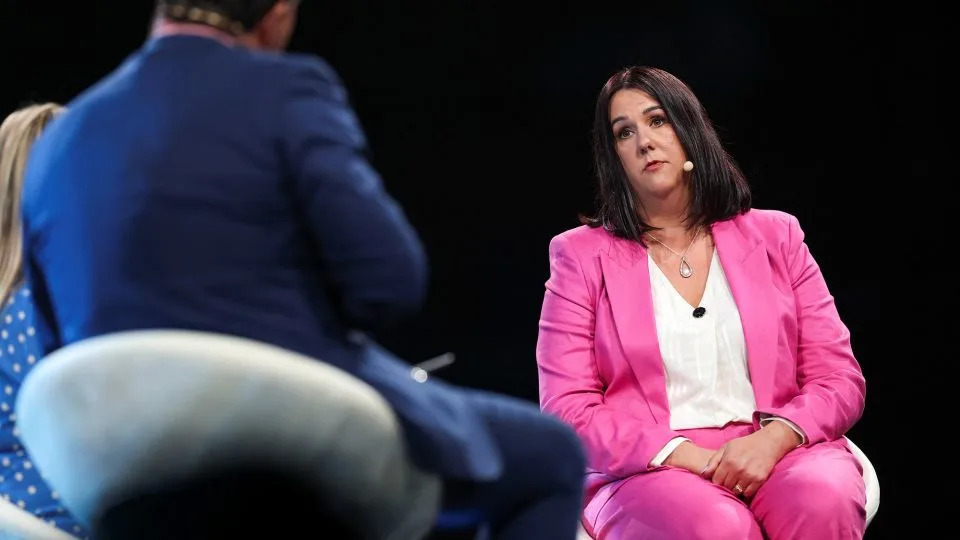
Lucy Connolly, who served time in prison for inciting racial hatred online, takes part in a panel discussion during the Reform UK party conference in September, in Birmingham, England. - Phil Noble/Reuters
Speakers at Pink Ladies rallies often link that history to current concerns about hotels used to house asylum seekers. Claims that crime linked to these hotels is “off the charts” are common at protests, but there is no public, detailed evidence to substantiate a dramatic spike in crime by asylum seekers: the government does not publish comprehensive crime statistics broken down by asylum status or comparable demographic categories, creating a data gap that fuels speculation.
What The Data And Evidence Say
Official crime statistics for England and Wales show that many categories of crime have fallen or remained stable over the past decade, and research consistently shows that most violence against women occurs in domestic settings and is perpetrated by people known to the victim. Those facts are often underplayed in public demonstrations focused on high‑profile migrant‑linked cases.
Some protesters call for hardline measures — from deploying the navy to stop small‑boat crossings to putting the army on the streets — language that underscores how fear can escalate into demands for extreme responses.
Conclusion
The Pink Ladies illustrate how concerns about women’s safety, immigration and community insecurity can be reframed into a grassroots, feminine aesthetic that reaches beyond traditional far‑right constituencies. The movement has made the immigration debate more visibly gendered, but it also raises difficult questions about evidence, political steering and whether appeals to maternal identity can mask or diffuse more divisive or exclusionary messages.
CNN reporters contributed to the original reporting on which this article is based.


