
Hundreds gathered at Mar Elias Church in Dweil'a ahead of Christmas to honor 25 victims of a June 22 suicide bombing and to reaffirm communal faith. Three congregants who tackled the attacker are credited with preventing a much larger death toll. The attack, blamed on an Islamic State-linked cell, has heightened fears among Syria’s Christian minority even as the interim government seeks to stabilize the country. Parishioners described grief, spiritual resolve and prayers for peace.
Syrian Congregation Honors Victims, Reaffirms Faith After Deadly June Church Bombing

People attend the lighting of a Christmas tree at the Greek Orthodox Mar Elias Church, months after the church was the site of a deadly suicide bombing, in the Dweila neighborhood of Damascus, Syria, Tuesday, Dec. 23, 2025.(AP Photo/Omar Sanadiki)(ASSOCIATED PRESS)
DWELI'A, Syria — Hundreds of worshippers gathered at Mar Elias Church on the outskirts of Damascus in the days before Christmas to honor 25 people killed in a June suicide bombing and to reaffirm their faith amid lingering fear.
A small contingent of security forces stood guard as parishioners attended evening Mass and switched on a neon Christmas tree mounted on the church courtyard wall. The tree was decorated with photographs of the victims, including three men the congregation calls heroes for tackling the attacker and likely preventing even greater loss of life.
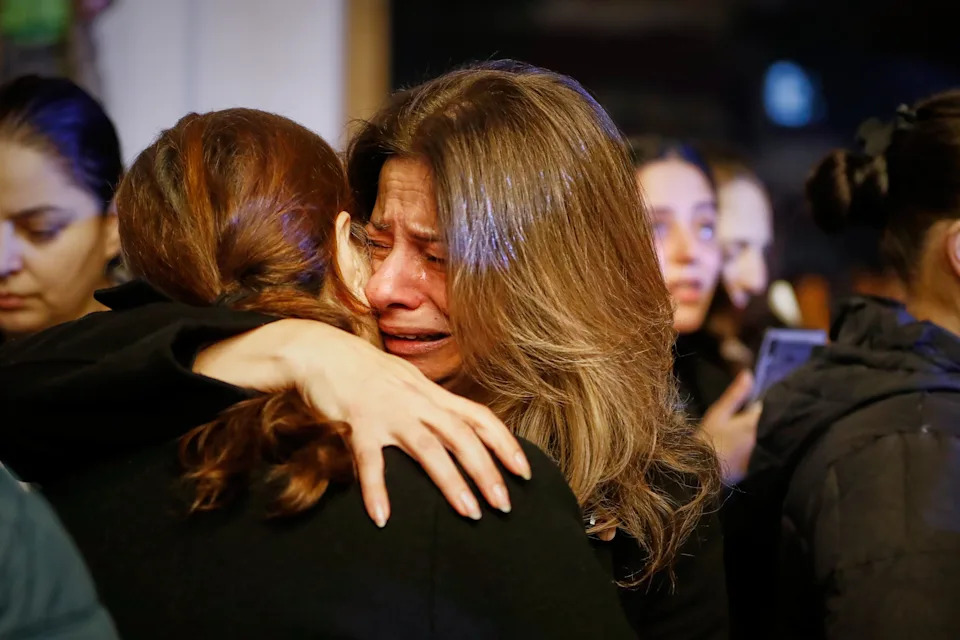
Two women hug each other as they attend the lighting of a Christmas tree at the Greek Orthodox Mar Elias Church, months after the church was the site of a deadly suicide bombing, in the Dweila neighborhood of Damascus, Syria, Tuesday, Dec. 23, 2025.(AP Photo/Omar Sanadiki)(ASSOCIATED PRESS)
On June 22, a gunman opened fire inside the Greek Orthodox Mar Elias Church while it was full of worshippers, then detonated an explosive vest. Parishioners say brothers Boutros and Gergis Bechara and fellow congregant Milad Haddad confronted the attacker and pushed him away from the center of the congregation before the blast.
“If it weren’t for the three of them, maybe not one person would remain out of 400 people,” said Imad Haddad, Milad’s brother, at the Christmas tree lighting.
Widow Thana al-Masoud described frantically searching for her husband, Boutros Bechara, after the explosion but never finding him alive. She said his body was torn apart by the blast and called the loss unbearable, even as she finds solace in the belief that he and the two others are martyrs.
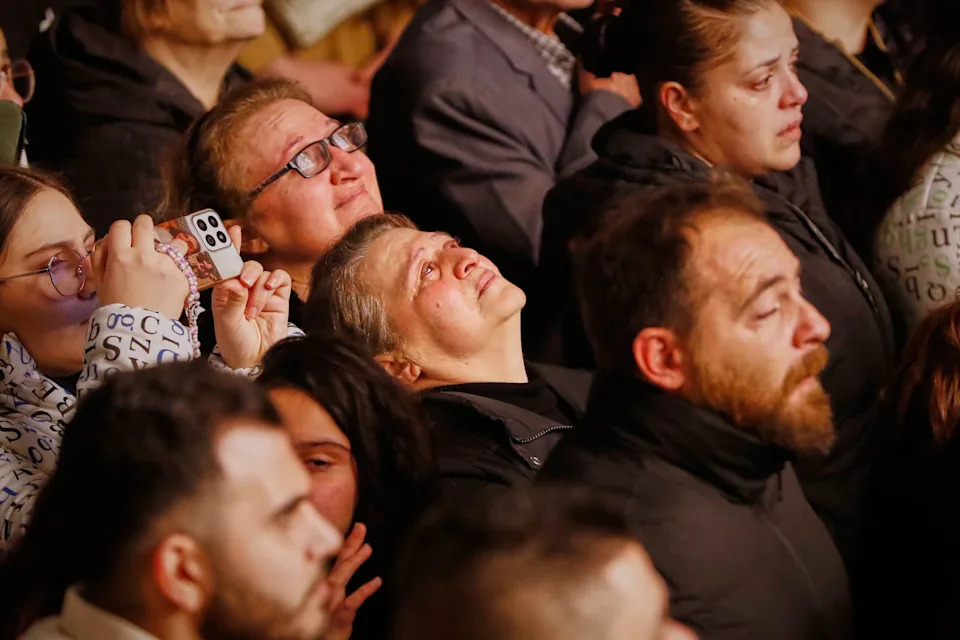
People attend the lighting of a Christmas tree at the Greek Orthodox Mar Elias Church, months after the church was the site of a deadly suicide bombing, in the Dweila neighborhood of Damascus, Syria, Tuesday, Dec. 23, 2025.(AP Photo/Omar Sanadiki)(ASSOCIATED PRESS)
Attack Stoked Christian Fears
The assault — the first of its kind in Syria in years — came as a new Sunni Islamist-dominated interim government in Damascus sought to reassure religious minorities after years of upheaval following the ouster of former President Bashar al-Assad. Interim President Ahmad al-Sharaa has struggled to extend authority nationwide amid outbreaks of sectarian violence and the challenge of integrating armed factions into state forces.
Authorities blamed the June attack on an Islamic State cell and said the group had planned a second target at a Shiite shrine. Islamic State did not claim responsibility; a little-known group called Saraya Ansar al-Sunna claimed the bombing, which the government described as a cover for IS activity.
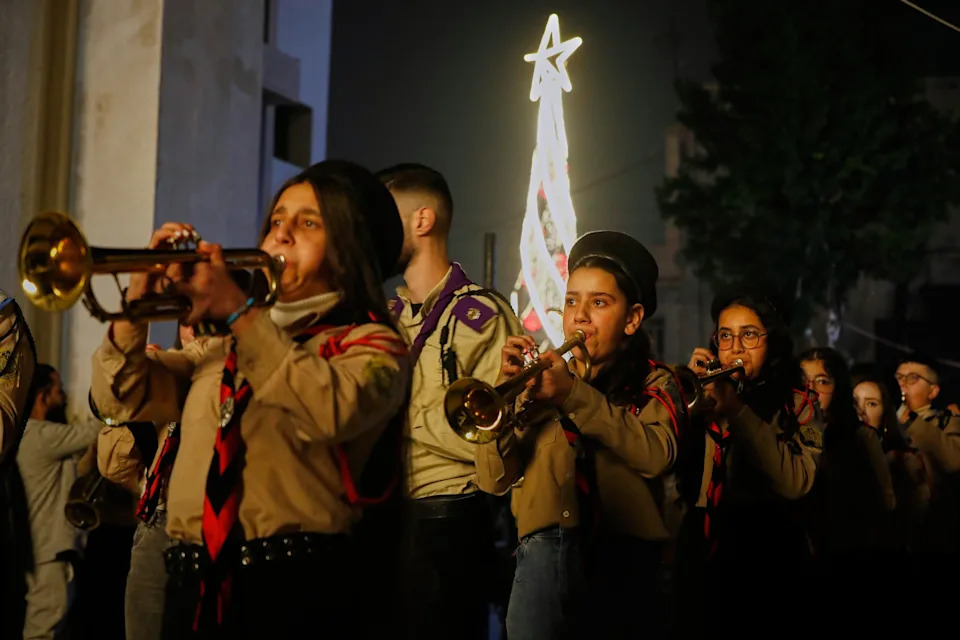
A Scout band plays during the lighting ceremony of a Christmas tree at the Greek Orthodox Mar Elias Church, months after the church was the site of a deadly suicide bombing, in the Dweila neighborhood of Damascus, Syria, Tuesday, Dec. 23, 2025. (AP Photo/Omar Sanadiki)(ASSOCIATED PRESS)
Before widespread protests in 2011 and the ensuing civil war, Christians made up roughly 10% of Syria’s population of about 23 million. Hundreds of thousands fled during the conflict amid kidnappings of clergy and destruction of churches; many say they are again considering leaving.
Solidifying Faith And Seeking Peace
Survivors and parishioners described a mixture of grief, fear and steadfast devotion. Juliette Alkashi, who lost her husband in the attack and returned to Syria from Venezuela to marry him in 2018, said she has surrendered to fate and now focuses on caring for her 3-year-old son.
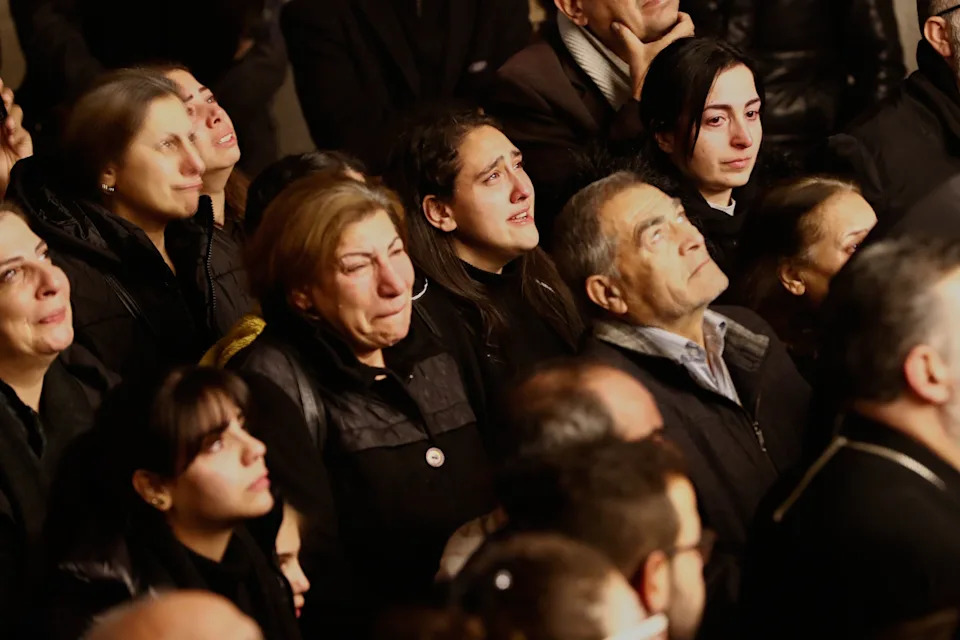
People react as they attend the lighting of a Christmas tree at the Greek Orthodox Mar Elias Church, months after the church was the site of a deadly suicide bombing, in the Dweila neighborhood of Damascus, Syria, Tuesday, Dec. 23, 2025.(AP Photo/Omar Sanadiki)(ASSOCIATED PRESS)
Others said the attack strengthened their faith. “I saw a column of smoke rising from the ground to the ceiling, and I heard a voice saying, ‘I will not forsake you and I will not leave you,’” said Hadi Kindarji, describing an intense spiritual experience during the blast.
Yohanna Shehadeh, priest of Mar Elias Church, acknowledged the congregation’s fear but emphasized a communal desire for peace. “Fear is a natural state,” he said. “We are praying for peace as Christmas approaches.”


