
Summary: This article examines New York City's aggressive enforcement campaign against unlicensed cannabis retailers — "Operation Padlock to Protect" — and the controversies that followed. It chronicles raid tactics, claims of undocumented cash seizures and arbitrary padlockings under Sheriff Anthony Miranda, legal challenges from shop owners and deputies, and a Department of Investigation probe into alleged misconduct. The campaign has produced mixed court rulings, strained city resources, and left many merchants contesting lost funds.
Up in Smoke: Inside NYC’s High-Stakes Crackdown on Unlicensed Cannabis Shops

New York Daily News/NY Daily News via Getty Images
On May 28, 2024, Lenore Elfand, owner of Empire Cannabis Club, an unlicensed dispensary in Chelsea, received a panicked call: NYPD officers and deputies from the New York City Sheriff's Office were lined up outside preparing to raid her shop. Elfand says officers handcuffed her security guard when he tried to film, disabled the security cameras, and seized products and more than $10,000 in cash that she has not recovered. Her allegations are part of a broader lawsuit in which a judge found the Sheriff's Office violated the shop owners' constitutional rights.
Operation Padlock to Protect
Following widespread complaints about unregulated cannabis sales, Gov. Kathy Hochul authorized Mayor Eric Adams to take stronger enforcement actions in 2024. The resulting initiative — launched as "Operation Padlock to Protect" — deployed K-9 units, tactical teams and the Sheriff's Office to padlock storefronts, seize inventory and levy civil fines. City Hall and the mayor framed the campaign as necessary to protect the public and channel demand toward the licensed market; City Hall has at times credited the effort with sealing more than 1,600 illegal shops and removing millions of dollars in illicit product.
Allegations of Overreach and Misconduct
Many shop owners and some deputies say the operation has been chaotic and heavy-handed, often carried out at the discretion of Sheriff Anthony Miranda. Complaints include undocumented cash seizures, arbitrary padlocking, and inadequate product testing. Attorneys representing affected merchants say more than $1 million in cash has been seized from clients; they say only a tiny fraction of that money has been returned as of late 2024.
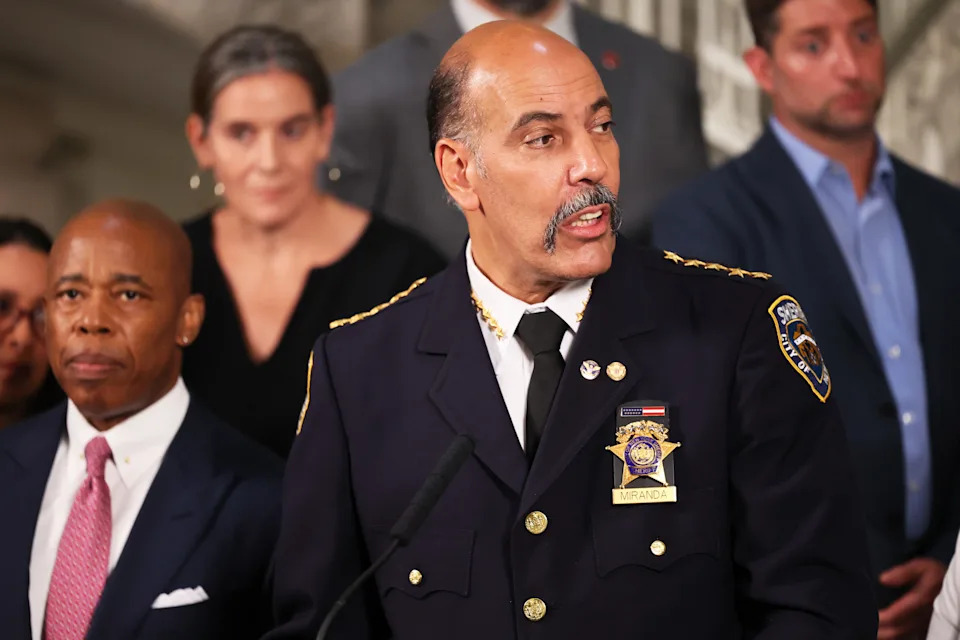
Appointed by longtime ally Mayor Eric Adams, New York City Sheriff Anthony Miranda has overseen Operation Padlock to Protect since May 2024.Michael M. Santiago/Getty Images
"The invoice had no actual documentation of what they took," Elfand said, referring to paperwork she received after her store was searched.
Questions From Within
Internal dissent surfaced among deputies who questioned the legal authority and procedures for the raids. Multiple deputies who voiced concerns were suspended or resigned, and the sheriff's union filed labor complaints. Some staff at the Sheriff's Office complained that seized product overflowed storage at a Queens facility, causing health and safety worries.
Legal Battles and Mixed Court Rulings
The padlock campaign has generated a wave of litigation. In October 2024, a Queens judge called the operation "capricious and arbitrary" and ruled parts of it unconstitutional; the city appealed that decision. In contrast, a separate federal court has upheld the sheriff's discretion in padlocking. Administrative hearings have sometimes allowed stores to reopen for non-cannabis sales, yet the Sheriff's Office in some cases kept properties padlocked despite rulings to the contrary.
Notable Cases
Tyler Lehmann, president of Breckenridge Cannabis Cafe in Williamsburg, says his licensed hemp business was repeatedly targeted; video reviewed by reporters showed deputies pouring tinctures into a cup and flushing them down a restroom toilet during a raid. Judges later found the Sheriff's Office had failed to show the store posed an imminent threat, but the padlock remained.
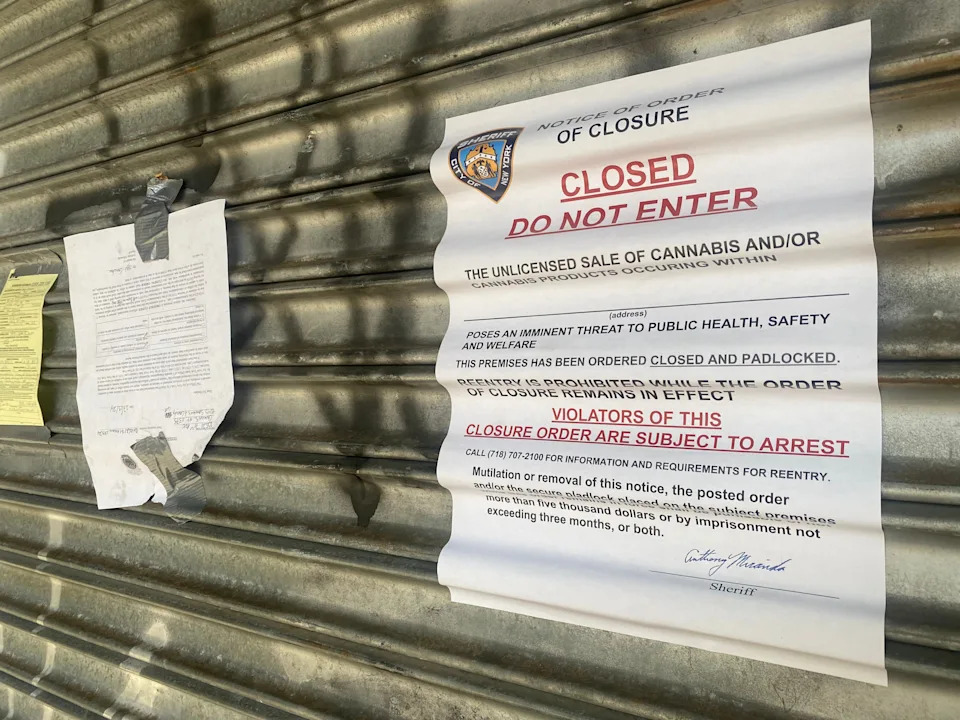
Operation Padlock to Protect: Lindsey Nicholson/UCG/Universal Images Group via Getty Images
Investigation Into Cash, Possible Protection Schemes
Accusations of undocumented cash seizures and an alleged protection-money racket prompted a Department of Investigation probe. Reporters also documented unvouchered cash discovered at the Sheriff's Office, which Miranda reportedly self-reported to supervisors. Miranda has testified about the scope of the operation — citing thousands of inspections, over a thousand sealed locations, and tens of millions in seized products — while also acknowledging that a significant share of padlock orders have been vacated by judges.
Operational Strain and Political Fallout
The campaign has strained the Sheriff's Office budget and staff resources. Overtime costs soared as the office reorganized to support repeated raids; the city comptroller flagged impacts to other duties. Miranda's critics — including the sheriff's union and some city council members — have demanded accountability, while Mayor Adams publicly defended the operation as vital for public safety. Political drama intensified after the mayor faced separate legal challenges and investigators scrutinized cash handling at the Sheriff's Office.
Where Things Stand
The crackdown exposed tensions between quickly curbing unregulated sales and protecting due process and property rights. Dozens of civil suits and administrative appeals remain pending; the DOI probe and several federal lawsuits continue. For many small merchants — often immigrants who opened shops to serve strong local demand while the licensed market lagged — the raids have meant lost inventory, prolonged closures and lingering uncertainty about recovering seized funds.
Reporting note: This article synthesizes court filings, attorney statements, public testimony and reporting on Operation Padlock to Protect and the legal and administrative responses that followed.


