Brent Rasmussen, 79, suffered a massive cerebellar stroke in December 2023 that was misdiagnosed for 19 hours and required surgery removing half his cerebellum. After intensive, multidisciplinary rehabilitation at UT Southwestern — and setting the goal of "getting his ho ho ho back" — he regained swallowing, speech, balance and endurance. By late October 2024 he no longer needed a feeding tube, could walk unaided and returned to in-character Santa appearances, offering hope to other stroke survivors.
After a Massive Stroke, 79-Year-Old 'Santa' Reclaims His Ho Ho Ho Through Determination and Rehab

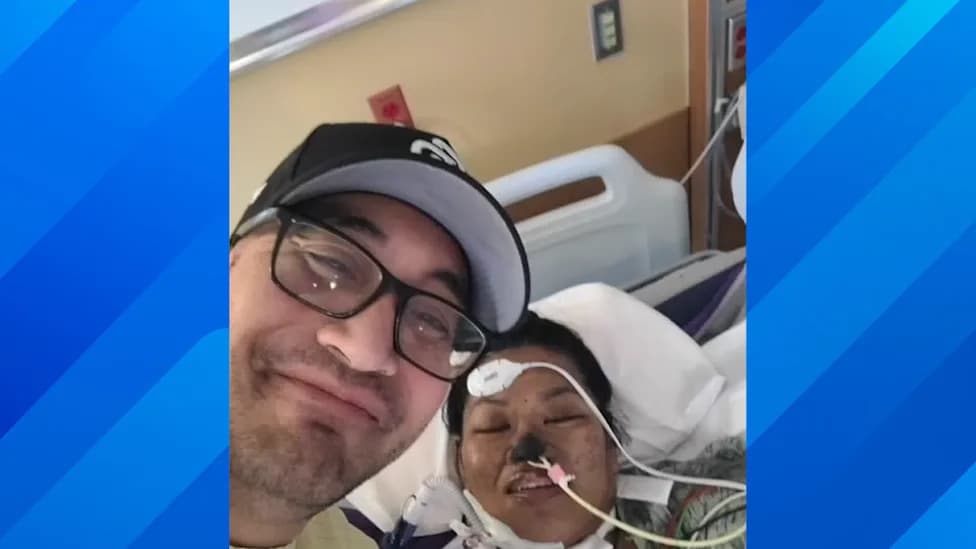
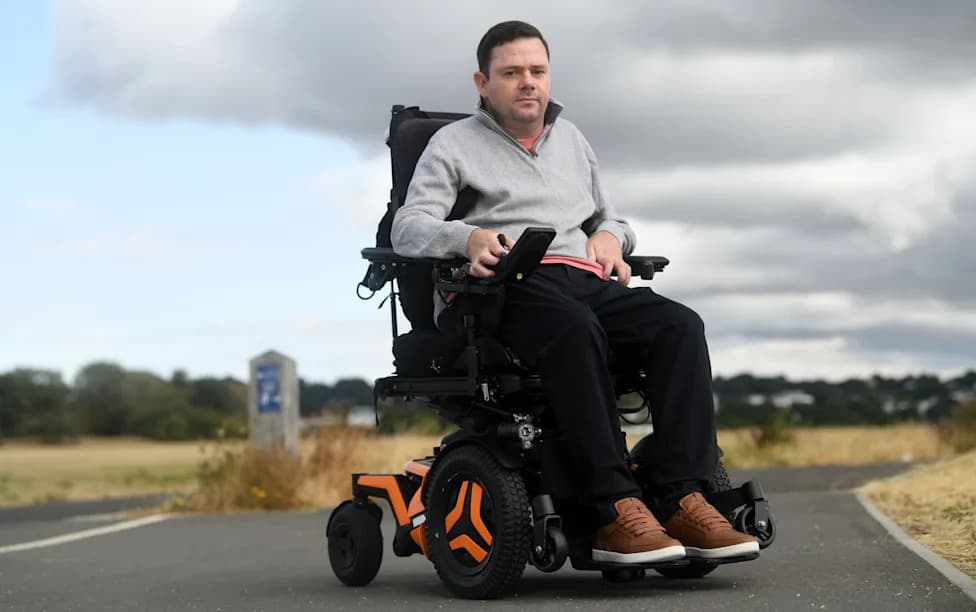
Rasmussen after his stroke. / Credit: UT Southwestern Medical Center
When 79-year-old Brent Rasmussen lost his balance one December morning in 2023, he immediately knew something was wrong. "All that went through my mind was 'Oh, this is gonna be bad,'" Rasmussen told CBS News. He grabbed a wall as the room spun, then fell hard and struck his face. Blood poured from his nose, and he was unable to stand or call for help. An hour later his dog found him and alerted his wife, who called 911.
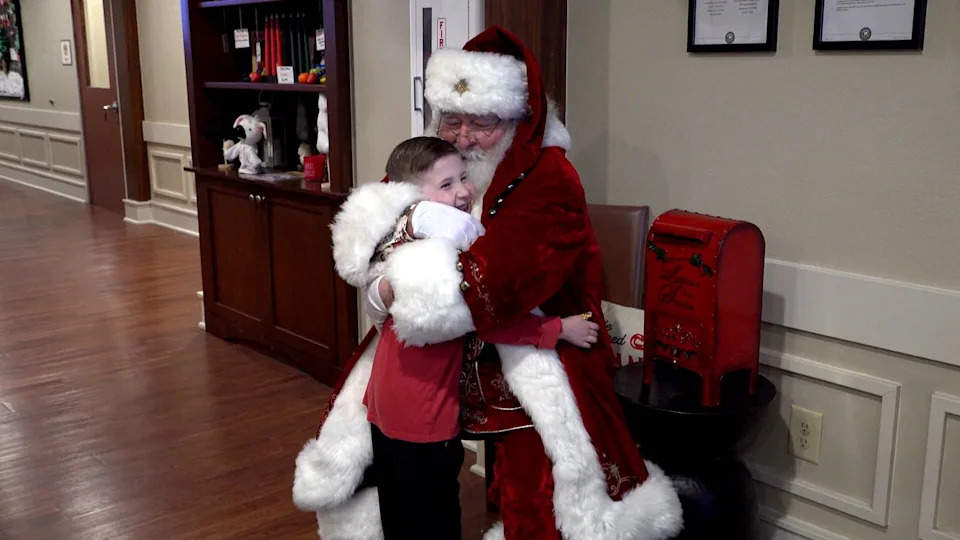
Brent Rasmussen as Santa Claus. / Credit: UT Southwestern Medical Center
Initially misdiagnosed at the local hospital, Rasmussen was found 19 hours later to have suffered a massive cerebellar stroke. The cerebellum — the part of the brain that governs balance and coordination — was blocked on the left side by a clot. Because of the diagnostic delay he was not eligible for clot-busting medication and surgeons removed roughly half of his cerebellum. When he awoke he could not swallow, walk, or speak.
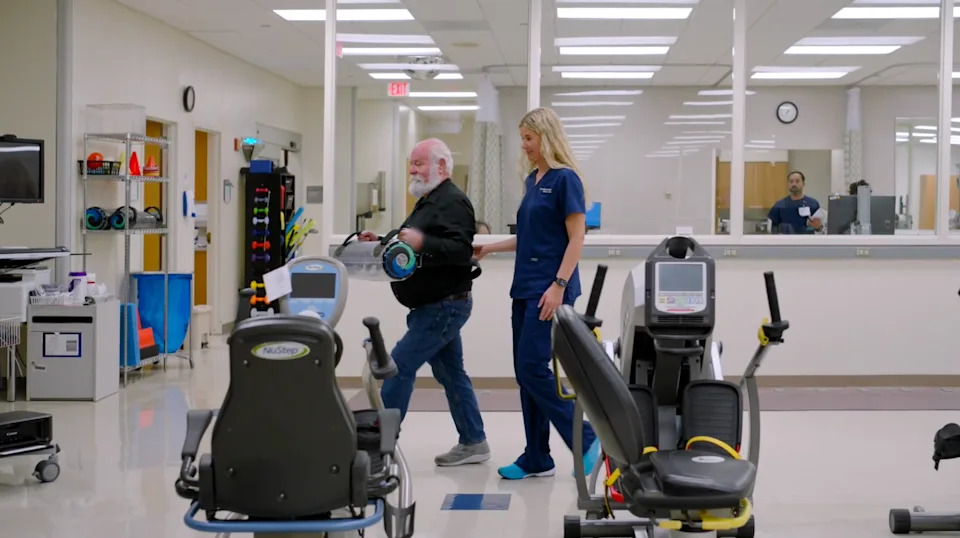
Brent Rasmussen works with Dr. Elge Richards at UT Southwestern Medical Center. / Credit: UT Southwestern Medical Center
Becoming Santa Claus
Rasmussen first donned a Santa suit in 1998 for a corporate holiday party and discovered a passion that turned into a longtime role: he and his wife Tenesa frequently appeared as Santa and Mrs. Claus, with Tenesa crafting elaborate costumes. By 2023 they had celebrated 25 years of bringing holiday cheer to children and families.
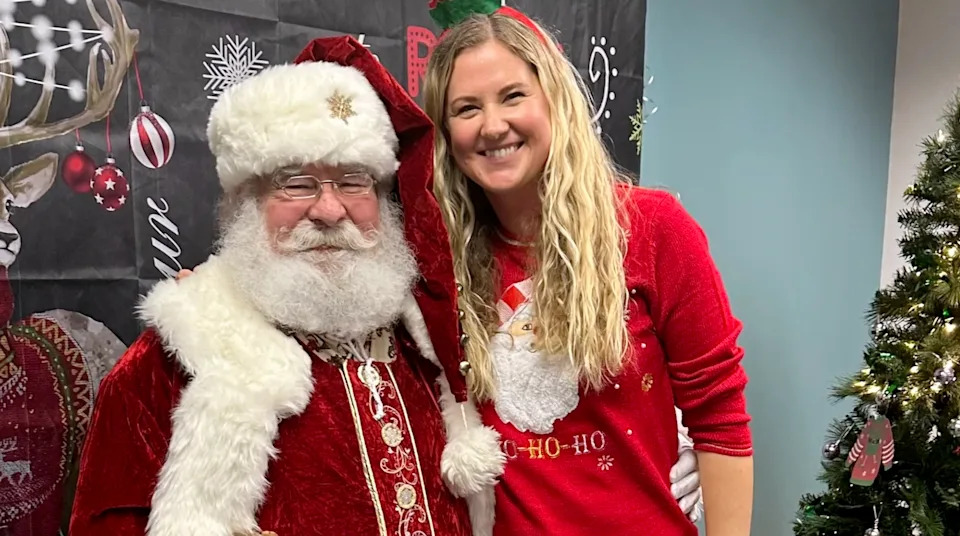
Brent Rasmussen and Dr. Elge Richards at UT Southwestern Medical Center's holiday party. / Credit: UT Southwestern Medical Center
After the stroke, Rasmussen feared he might never wear the suit again. Three months into recovery he still relied on a walker and a feeding tube, had lost 45 pounds, battled vertigo, and lacked his familiar booming Santa voice.
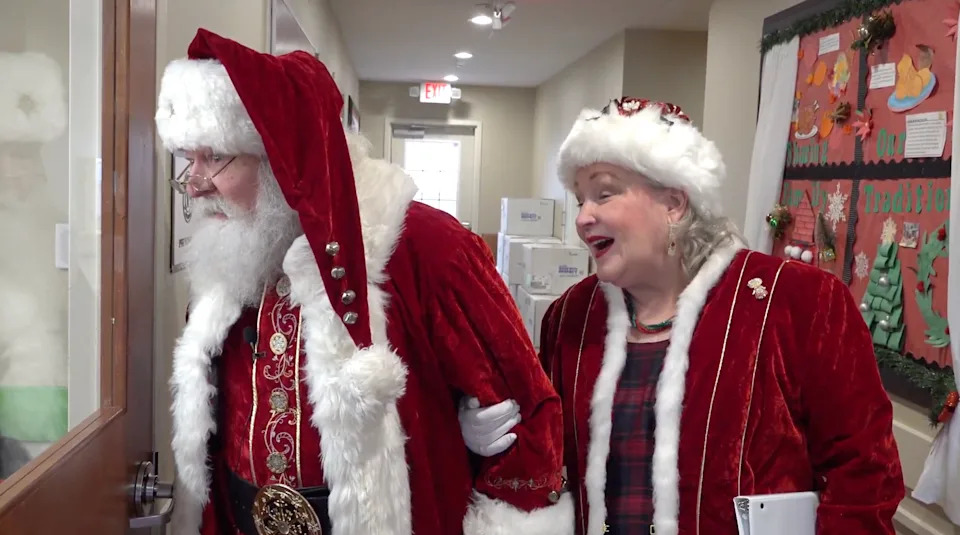
Brent and Tenesa Rasmussen arrive at an event as Santa and Mrs. Claus. / Credit: UT Southwestern Medical Center
Rehabilitation And A Personal Goal
In March 2024 Rasmussen began care at UT Southwestern Medical Center's Department of Physical Medicine and Rehabilitation. When asked to set a recovery goal, he surprised the team: "I said, 'I want to get my ho ho ho back. I have to be Santa Claus again.'"
Specialists created a multidisciplinary plan: physical therapy to rebuild strength and balance, occupational therapy to restore fine motor skills and dressing ability, and speech therapy to retrain swallowing and speech production. Progress was gradual and often frustrating. "Why does everything have to be so hard?" his wife recalled him asking — but his goal kept him working.
Return To The Role
After roughly seven months of intensive, coordinated rehabilitation, Rasmussen's improvements were clear. By late October 2024 he no longer needed a feeding tube, could walk unaided, had regrown his beard and regained enough vocal projection to perform as Santa. While he did not resume a full schedule that December, he made a surprise in-character appearance at UT Southwestern's holiday party — a moment staff described as the culmination of their efforts.
The following holiday season the Rasmussens booked a full slate of Santa appearances, including days with multiple events. Dressing and travel take a little longer now, and Rasmussen still relies on techniques from vocal and balance therapy, but when children line up the adrenaline helps him deliver the "magical moment" he prioritizes for each child.
What His Story Means For Others
"If you don't have a goal, you get up and get dressed every day and you're so exhausted... But it gets better. Slowly, the days get longer and you're doing more," Rasmussen said, offering hope to other stroke survivors.
Rasmussen's recovery highlights the importance of rapid diagnosis, multidisciplinary rehabilitation, and the power of personally meaningful goals in recovery. His journey is a reminder that targeted therapy, persistence, and community support can restore function and purpose even after major neurological injury.
Help us improve.