
Bulletin summary: Investigators have named a person of interest in the Brown University mass shooting and are probing a possible link to the fatal shooting of MIT professor Nuno Loureiro. The U.S. military struck a suspected drug-smuggling boat that killed four, while November CPI rose 2.7% year over year amid shutdown-related distortions. The administration proposed new limits on gender-affirming care for youth and acknowledged political considerations affected some energy grant cuts; the government also admitted liability in a deadly midair collision that killed 67 people.
Quick Hits — Dec. 18, 2025: Person of Interest Named in Brown Shooting; CPI Eases Amid Shutdown Distortions

Today's quick briefing — Dec. 18, 2025. A roundup of the day's top U.S. developments, summarized for fast reading.
Ongoing investigation: Authorities say they have identified a person of interest in the mass shooting at Brown University that left two students dead and nine others wounded, according to people familiar with the probe who were not authorized to speak publicly.
Related incident under review: Police are investigating whether the fatal shooting this week of Massachusetts Institute of Technology professor Nuno Loureiro, 47, in Brookline, Massachusetts, is connected to the Brown University attack, senior law enforcement officials told NBC News.
U.S. military strike: The U.S. military reported that it struck a boat in the eastern Pacific on Wednesday that it suspected was ferrying drugs. The strike reportedly killed four people.
Inflation data, with caveats: U.S. inflation eased in November, with the Bureau of Labor Statistics reporting the Consumer Price Index rose 2.7% year over year. Economists cautioned the figure may reflect distortions from the recent government shutdown, complicating the outlook for the Federal Reserve as unemployment rises.
Transgender health care rules tightened: Top health officials in the Trump administration unveiled a slate of proposals intended to restrict gender-affirming care for transgender youth, part of a broader legal and regulatory push expected to lead to major court fights.
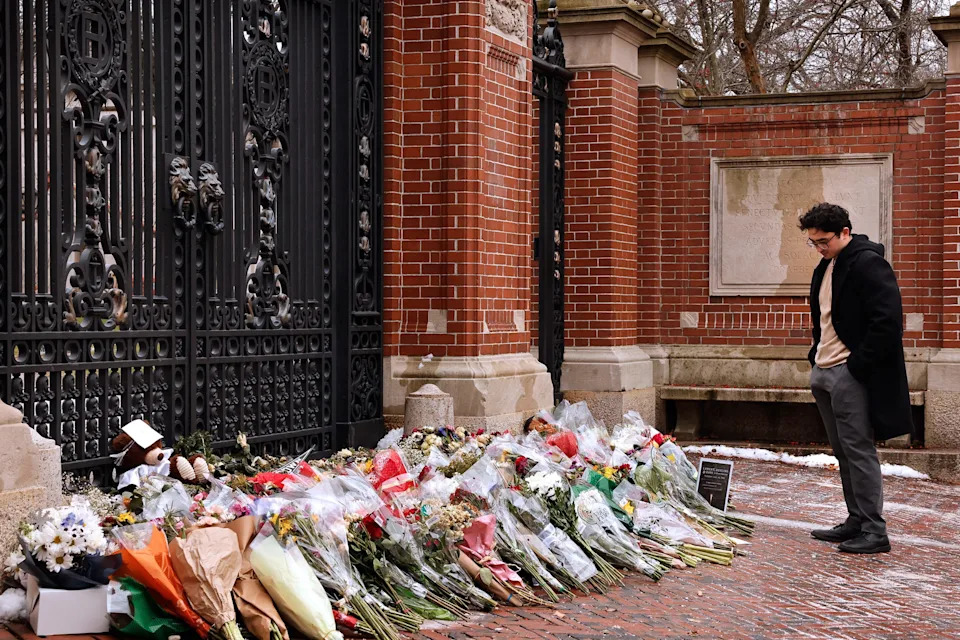
Providence, RI - December 17: A student stands at the Van Wickle Gates of Brown University after laying down flowers on December 17, 2025. (Photo by Craig F. Walker/The Boston Globe via Getty Images)(Craig F. Walker / The Boston Globe via Getty Images)
Oversight temporarily blocked: A federal judge on Wednesday issued a temporary injunction against Department of Homeland Security guidance that had placed new limits on members of Congress seeking to visit and inspect immigration detention facilities.
Political influence in grant decisions: In a court filing this week, the Trump administration acknowledged that cuts to certain energy grants during the government shutdown were influenced by whether funds would go to states that tend to vote Democratic statewide or nationally.
Liability admitted in deadly midair collision: The U.S. government acknowledged responsibility in a midair collision over the Washington, D.C., area that killed 67 people earlier this year, clearing a path for victims' families to seek damages under court documents.
Coast Guard nomination stalled: At least two U.S. senators have placed holds on the nomination of Adm. Kevin Lunday to lead the U.S. Coast Guard, citing objections to a new workplace harassment policy that reclassifies swastikas and nooses from explicit hate symbols to "potentially divisive."
Oklahoma standards invalidated: Oklahoma's state Supreme Court ruled Tuesday that controversial social studies standards are unenforceable because the state board violated open-meeting laws when it approved them.
Unexpected business pivot: President Trump's social media company — which has expanded into streaming and cryptocurrency — is reportedly exploring fusion energy, a promising but still experimental form of alternative power.
End of bulletin.


