
The deaths of Rob and Michele Reiner and the arrest of their son, Nick, underscore the profound distress families face when a loved one battles addiction. Public reporting shows Nick had a long history of substance use, multiple rehab stays and periods of homelessness. Experts warn addiction alone does not explain violence; the illness is complex, often needs repeated recovery attempts, and can exhaust families financially and emotionally. If someone is in crisis, call 988 or text HOME to 741741 for immediate help.
Reiner Family Tragedy Exposes the Hidden Agony of Families Facing Addiction

Rob Reiner, left, and his son Nick Reiner attend an event for their semi-autobiographical film "Being Charlie" in New York in 2016.(Rommel Demano / Getty Images)
The deaths of Rob and Michele Reiner and the arrest of their son, Nick, have focused public attention on the quiet, persistent anguish many families endure when a loved one struggles with addiction. For relatives and friends, it is often the helplessness — not the headlines — that leaves the deepest scars.
Personal Toll and Known Details
Greg, chair of Families Anonymous, told The Times that the case 'rings close to home.' In keeping with the group's anonymity policy, his last name is being withheld. He described the bewilderment and grief that accompany watching a family member battle a chronic illness that love and effort alone cannot fix.
Public details remain limited. According to reporting, 32-year-old Nick Reiner had a years-long struggle with substance use that included periods of homelessness and many stays in rehabilitation programs. He was most recently living in a guesthouse on his parents' Brentwood property. Rob and Michele Reiner were found dead in their home on Sunday afternoon; Los Angeles police arrested Nick hours later and charged him with their murder. He is being held without bail and, according to a law enforcement official, placed under special supervision because of a potential suicide risk.
What Addiction Experts Say
'Addiction or mental health issues never excuse a horrific act of violence like this, and these sort of acts are not a direct result or a trait of addiction in general,' said Zac Jones, executive director of Beit T'Shuvah, an addiction treatment center in Los Angeles.
Experts emphasize that while the Reiners' circumstances are unusual and tragic, the presence of addiction in their family is sadly common. A 2023 poll from the Kaiser Family Foundation found nearly one in five Americans has personally experienced addiction, and two-thirds report having a family member with the disease.
Nick's struggles have been publicly documented: during press around the 2015 semi-autobiographical film 'Becoming Charlie,' the family said Nick had been to rehab an estimated 18 times since his early teens, and Nick has publicly discussed teenage heroin use. Such cycles of treatment and relapse are not uncommon; a 2019 study reported that it took an average of five recovery attempts to achieve and sustain sobriety, with many people reporting 10 or more attempts.
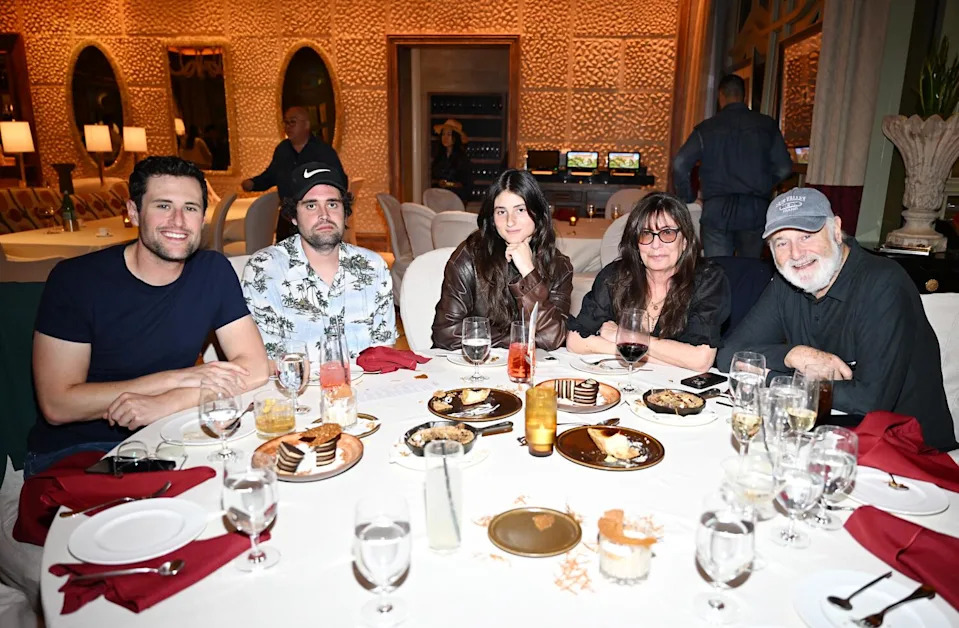
Jake Reiner, Nick Reiner, Romy Reiner, Michele Singer Reiner and Rob Reiner attend Four Sixes Ranch Steakhouse's pop-up grand opening at Wynn Las Vegas on Sept. 14, 2024.(Denise Truscello / Getty Images for Wynn Las Vegas)
Why Treatment Is So Difficult
Experts point to multiple reasons families often exhaust resources searching for a cure: addiction is a multifaceted disorder shaped by genetics, brain biology and environmental triggers; repeated drug use — particularly during adolescence and early adulthood — alters the brain's reward and motivation circuitry; co-occurring mental health conditions and trauma complicate recovery; and there are too few consistently effective, evidence-based treatment options that work for everyone.
Emily Feinstein, executive vice president of the Partnership to End Addiction, noted that even wealthy families can become trapped in a cycle of costly, ineffective interventions. 'No matter how much money you have, it doesn't guarantee a better outcome,' she said.
Support For Families
Families Anonymous encourages loved ones to accept the 'Three Cs' of addiction: you didn't cause it, you can't cure it, and you can't control it. Support groups, evidence-based treatment, coordinated care for co-occurring conditions, and long-term recovery planning can help, but experts caution that devotion and resources alone are rarely sufficient.
A family friend told The Times the Reiners 'did everything for Nick' — every treatment, therapy session and sacrifice — illustrating how deeply parents and relatives invest emotionally and financially in helping a loved one recover.
If you or someone you know is experiencing a mental health crisis, help is available: call 988 in the U.S. to connect with trained counselors, or text HOME to 741741 in the U.S. and Canada to reach the Crisis Text Line.
This story originally appeared in the Los Angeles Times.


