
The House passed the Kayla Hamilton Act in a 225-201 vote after 201 Democrats opposed it and seven Democrats joined Republicans in support. The bill would require HHS to screen unaccompanied migrant children for gang indicators (including tattoos), place those with such signs in secure federal facilities, bar placement with undocumented sponsors, and require background checks on sponsor households. Supporters say the measures would protect communities and prevent tragedies; critics argue the bill could criminalize and further endanger vulnerable children.
House Passes 'Kayla Hamilton Act' 225-201 After Debate Over Screening Unaccompanied Minors

Kayla Hamilton, who was murdered by an illegal migrants in 2022, celebrating her birthday.
The U.S. House of Representatives approved the Kayla Hamilton Act in a 225-201 vote after a heated debate over how to screen and place unaccompanied migrant children who arrive in the United States without authorization. Two hundred and one House Democrats opposed the bill; seven Democrats crossed party lines to vote with Republicans.
What the Bill Would Do
Sponsored by Rep. Russell Fry (R-S.C.), the legislation would require the Department of Health and Human Services (HHS) to:
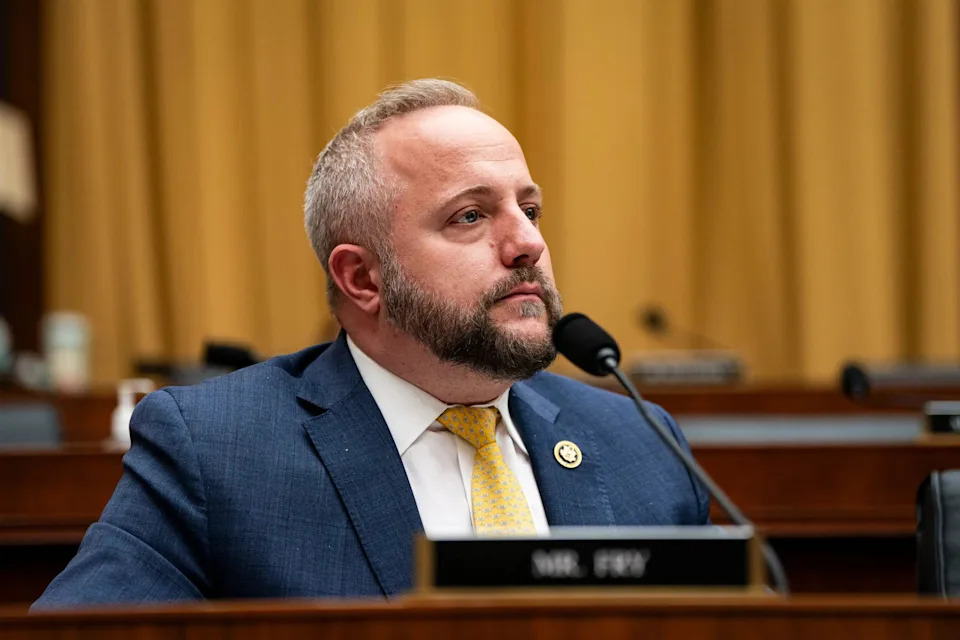
Rep. Russell Fry, R-S.C., during a House Judiciary Committee hearing in Washington March 12, 2024.
- Screen unaccompanied children for signs of gang affiliation, including visible gang tattoos;
- Place children with such indicators into secure federal facilities rather than releasing them to sponsors pending immigration hearings;
- Prohibit placing unaccompanied minors with sponsors who are undocumented in the United States; and
- Require background checks on all adults in a sponsor household, including fingerprinting and immigration-status verification.
Vote Breakdown
The final roll call was 225 in favor and 201 opposed. Seven Democrats joined Republicans to support the bill: Reps. Adam Gray (D-Calif.), Jared Golden (D-Maine), Marie Gluesenkamp Perez (D-Wash.), Don Davis (D-N.C.), Vicente Gonzalez (D-Texas), Laura Gillen (D-N.Y.) and Henry Cuellar (D-Texas).
Background And Rationale
The measure is named for Kayla Hamilton, a 20-year-old woman with autism who was killed in 2022. Authorities say the alleged attacker, 16-year-old Walter Javier Martinez of El Salvador, entered the United States as an unaccompanied minor and was later identified by prosecutors as affiliated with the MS-13 gang. Martinez pleaded guilty to first-degree murder in April.
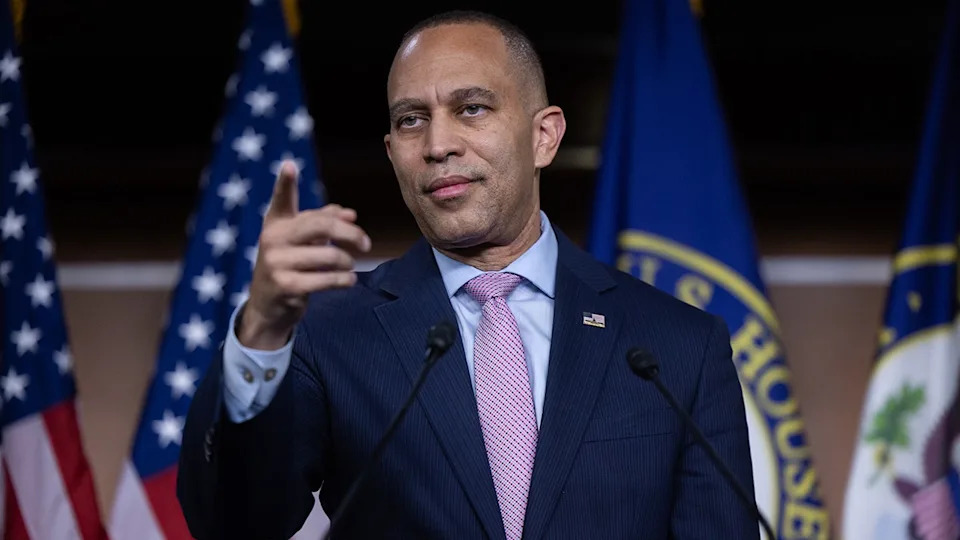
House Minority Leader Hakeem Jeffries speaks during a news conference in Washington, D.C., Nov. 20, 2025.
Rep. Russell Fry: "A simple phone call to El Salvador and a visual check for gang tattoos would have kept him in a secure facility. He would have never been on our streets."
Supporters argue the bill would close gaps in current screening and placement procedures, keeping children with clear gang indicators in secure custody pending their immigration hearings and preventing dangerous individuals from being released into communities.
Criticism And Concerns
Opponents—largely Democrats and immigrant-rights advocates—said the bill would harm already vulnerable children, risk wrongful detention, and could lead to intrusive searches and rights violations. Representative Delia Ramirez (D-Ill.) warned the measure "criminalizes children and creates a dangerous precedent," while Rep. Luz Rivas (D-Calif.) said it could subject youths to invasive procedures.
Rep. Fry and other supporters counter that medical evaluations and basic checks already take place and that the bill only seeks to act on obvious gang indicators. Fry criticized opponents for politicizing the issue and said child safety should be the priority.
What Comes Next
After passing the House, the bill would need to clear the Senate and be signed by the president to become law. The debate highlights ongoing partisan disagreements over immigration policy, child welfare, and public safety.


