
The Columbia antisemitism task force published a nearly 70‑page final report documenting repeated harassment of Jewish and Israeli students in classrooms and other campus settings. The review details alleged incidents — including students being called "murderers," instructors making anti‑Jewish claims about donors, and protesters disrupting a class taught by a visiting Israeli professor. The panel recommends clearer anti‑discrimination policies, broader and more ideologically diverse Middle East faculty expertise, and consistent enforcement of rules to protect students. Acting President Claire Shipman thanked the task force and said the university has begun implementing changes.
Columbia Task Force Releases Final Report Detailing Harassment of Jewish and Israeli Students
03:54 AM, 12/11/2025

Anti-Israel students occupy a central lawn at Columbia University in New York City on April 21, 2024.
Columbia University’s antisemitism task force has released a nearly 70-page final report documenting repeated incidents in which Jewish and Israeli students were reportedly harassed in classrooms and other campus settings. The review, compiled after listening sessions with students and faculty, outlines specific allegations, classroom disruptions, and institutional gaps that the panel says must be addressed.
Background: The task force was established in November 2023 following protests that erupted at Columbia after the Oct. 7 attacks and the subsequent Israel–Hamas war. Dozens of students were arrested during anti‑Israel demonstrations and a weeks‑long encampment on campus. This document is the fourth report in a series examining Columbia’s response to allegations of antisemitism and related campus policies.
Reported Incidents: The report recounts multiple accounts in which students were singled out or harassed during class. Examples include an Israeli student who had served in the Israel Defense Forces being told she should be considered "one of the murderers," and a separate allegation that an instructor accused "three major Jewish donors" of giving money to "launder blood money" while referring to Israel as "so‑called Israel."
In January, protesters reportedly entered a course taught by a visiting Israeli professor; the task force concluded the group appeared to target the class because of the professor’s background and the course’s focus on Zionism. Several students also described instructors introducing political condemnations of Israel into coursework that bore no clear connection to the subject being taught. One non‑Israeli Jewish student said they were told, "It's such a shame that your people survived in order to commit mass genocide."
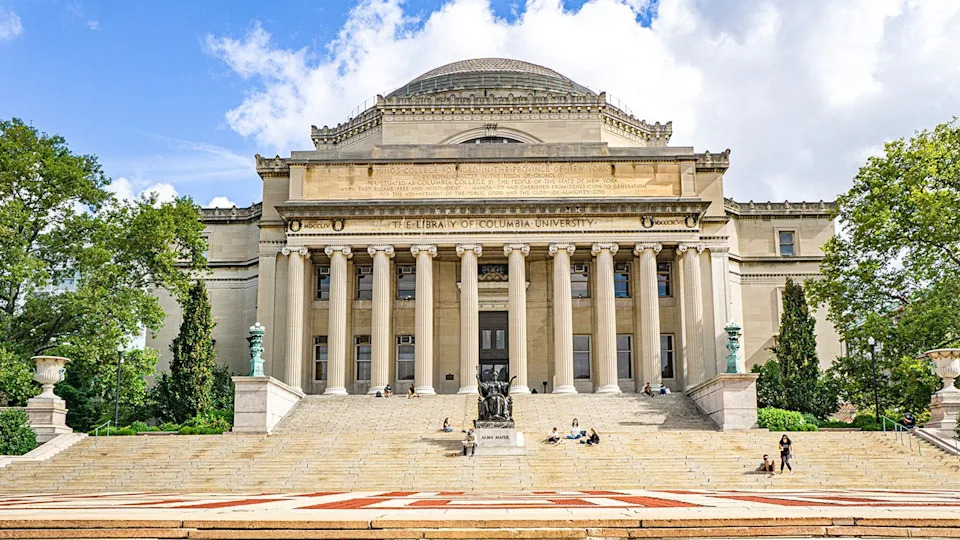
Low Memorial Library on the campus of Columbia University in New York City.
Institutional Findings: Beyond individual complaints, the task force found a broader institutional issue: Columbia "lacks full‑time tenure‑line faculty expertise in Middle East history, politics, political economy and policy that is not explicitly anti‑Zionist." The panel framed this gap as limiting the range of perspectives available to students and contributing to a charged campus climate.
Recommendations: To address these problems, the task force urged Columbia to:
- Adopt clearer, more specific policies on harassment and discrimination tied to protected identities;
- Strengthen and diversify faculty expertise in Middle East studies, including hiring tenure‑line faculty whose work is not explicitly anti‑Zionist;
- Consistently enforce anti‑discrimination rules and ensure accountability for violations;
- Balance protections for academic freedom with safeguards against targeted harassment and exclusionary behavior in classrooms and campus spaces.
Political Context: The report comes amid public scrutiny of universities nationwide over allegations of antisemitism; it notes criticism of Columbia from national political figures, including President Donald Trump, who has publicly criticized several universities for how they responded to related campus protests.
University Response: Columbia referred inquiries to an online statement by Acting President Claire Shipman thanking the task force for its work. In that statement she said,
"The work of this task force has been an essential part of the University’s efforts to address the challenges faced by our Jewish students, faculty, and staff. I have been heartened by the thoughtful and effective changes we have made over the course of the last two years and by the determination to forge a better future for our University displayed by so many members of our community."
The task force’s findings and recommendations now join ongoing discussions among university leaders, faculty, and students about how to respond to reported harassment and how to strengthen institutional protections while preserving robust academic debate.
Similar Articles

Free Speech vs. Antisemitism: Professor’s Call to 'End Israel' Spurs Lawsuit and Debate
Professor Ramsi Woodcock of the University of Kentucky was suspended after circulating a petition urging international milita...

Campus Tensions Escalate: Christian Student's Grade Restored, Jewish Students Disturbed, Conservative Clubs Blocked
Overview: A series of recent campus incidents has sparked debate over free expression and student organization rules. An Okla...

Campus Conflicts Surge: OU Zero Grade, Group Denials and Free-Speech Flashpoints
The latest campus roundup highlights a series of disputes over grading, student-group recognition and public displays that ha...

House Panel Launches Investigation into Alleged Antisemitism in Berkeley, Fairfax County and Philadelphia Schools
House committee opens probe: The House Education and Workforce Committee has asked three school districts—Berkeley Unified, F...

University of Kentucky Law Professor Sues After Reassignment, Citing First Amendment Claims Over Calls for Military Action Against Israel
Overview: Tenured University of Kentucky law professor Ramsi Woodcock filed a federal lawsuit on Nov. 13 after being reassign...

Human Swastika at Branham High: Students to Face Discipline as Hate-Crime Probe Continues
Students at Branham High School in San Jose formed a human swastika on the football field; a photo submitted anonymously and ...

Tenured San José State Professor Challenges Firing Over Pro‑Palestinian Protests
Summary: Sang Hea Kil, a tenured justice studies professor at San José State University, is appealing her dismissal after the...

Students For Life Chapter At University Of Southern Maine Reports Anonymous Threat Referencing Charlie Kirk
Overview: Students who launched a Students for Life chapter at the University of Southern Maine say an anonymous Yik Yak post...

“We Need To Make It Work”: Can International Law Deliver Justice Amid Gaza Sanctions?
At the Doha Forum, UN special rapporteur Francesca Albanese described how US sanctions upended her life after she accused Isr...

Anonymous Death Threats Against TPUSA Leaders at Olivet Nazarene University Prompt Urgent Investigation
Olivet Nazarene University is investigating anonymous social-media death threats aimed at leaders of a Turning Point USA stud...

Hamline Student Caught on Video Saying He 'Clapped' After Charlie Kirk Was Shot; University Condemns Violence
A video recorded by Turning Point USA volunteers shows an unnamed Hamline University student saying he was glad Charlie Kirk ...

Harvard Hires Divinity School Graduate After Assault Charges from 2023 Protest Were Dismissed
Summary: Harvard has hired Divinity School graduate Elom Tettey-Tamaklo as a graduate teaching fellow after misdemeanor assau...

Campus Conflicts Erupt: 'Whiteness' Warning, OnlyFans Speaker and Thanksgiving Disputes Stir Debate
This roundup highlights recent campus controversies: a university webpage warning of a perceived "whiteness pandemic," effort...

Extremist Website Posts Bounties — Up to $100,000 — on Israeli Academics Worldwide
An organization calling itself the Punishment for Justice Movement has reportedly posted online bounties of up to $100,000 fo...

Harvard Visiting Professor Detained by ICE After Boston Synagogue BB-Gun Incident Agrees to Voluntary Departure
The Department of Homeland Security confirmed ICE detained Carlos Portugal Gouvêa, a visiting Harvard Law School professor, i...