
Summary: The Justice Department is reviewing whether to bring federal charges in the killing of conservative activist Charlie Kirk, including an unusual theory that the attack could constitute an anti-Christian hate crime. The suspect, Tyler Robinson, faces state aggravated murder charges in Utah and may face the death penalty; authorities cite texts indicating a motivation tied to hatred. Some career federal prosecutors are skeptical that existing federal statutes clearly cover the facts, while Civil Rights Division involvement could expand charging options. The federal review is ongoing.
DOJ Weighs Novel Anti-Christian Hate-Crime Theory in Charlie Kirk Killing

A memorial for political activist Charlie Kirk stands on the grounds of Utah Valley University on Sept. 13 in Orem, Utah. (Chet Strange / Getty Images)
Three months after the assassination of conservative activist Charlie Kirk, the Justice Department is evaluating whether to file federal charges against the accused shooter — including an unusual theory that the slaying could qualify as an anti-Christian hate crime, according to sources familiar with the review.
The suspect and state case
Utah resident Tyler Robinson faces multiple state charges, including aggravated murder, and state prosecutors have said they plan to seek the death penalty. Authorities have produced text messages Robinson sent to his partner, who is transgender, in which he wrote that he was driven to kill Kirk because he had “enough of his hatred.” Robinson made his first in-person court appearance recently and has not yet entered a plea.
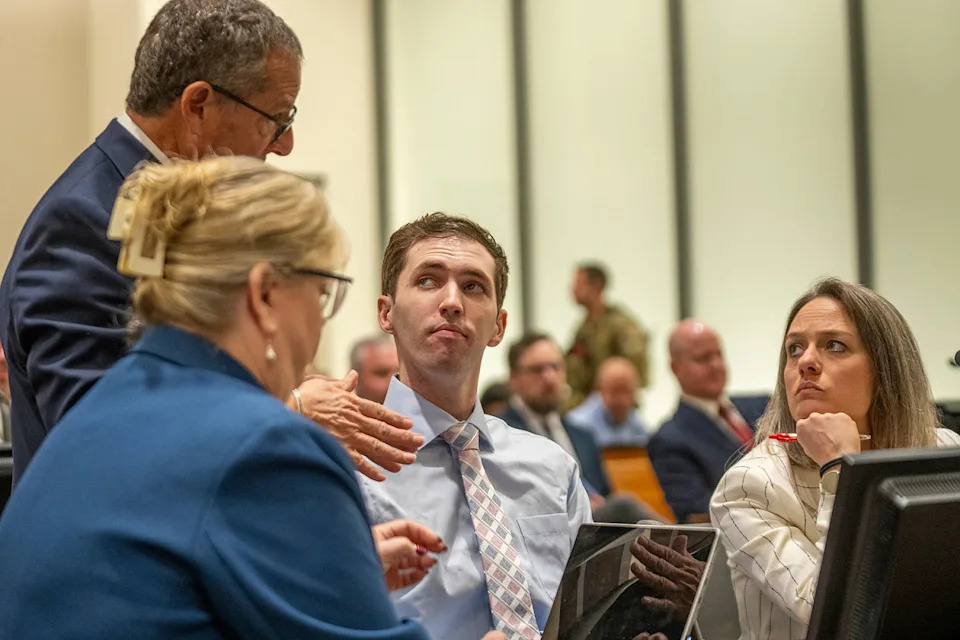
Tyler Robinson, accused of the murder of Charlie Kirk, during a hearing in Provo, Utah, on Thursday. (Rick Egan / Pool via AP)
Federal options and legal questions
It is not uncommon for defendants to face parallel state and federal prosecutions. But sources say some career federal prosecutors have pushed back on moving forward in this case, arguing the facts may not fit neatly within existing federal statutes. Prosecuting the case as an anti-Christian hate crime would be atypical because it would likely hinge on treating hostility toward transgender people as equivalent to hostility toward Christianity — a legal theory that many career prosecutors view as novel and untested.
“They are trying to shove a square peg into a round hole,” one person familiar with the federal review said.
Other potential federal statutes cited as comparisons — such as stalking charges used in unrelated cases — do not appear to apply here, sources said. Additional jurisdictional complications noted in prior coverage include that Robinson did not travel across state lines to reach Kirk and that Kirk was neither a federal officer nor an elected official, factors that can narrow straightforward federal avenues for prosecution.
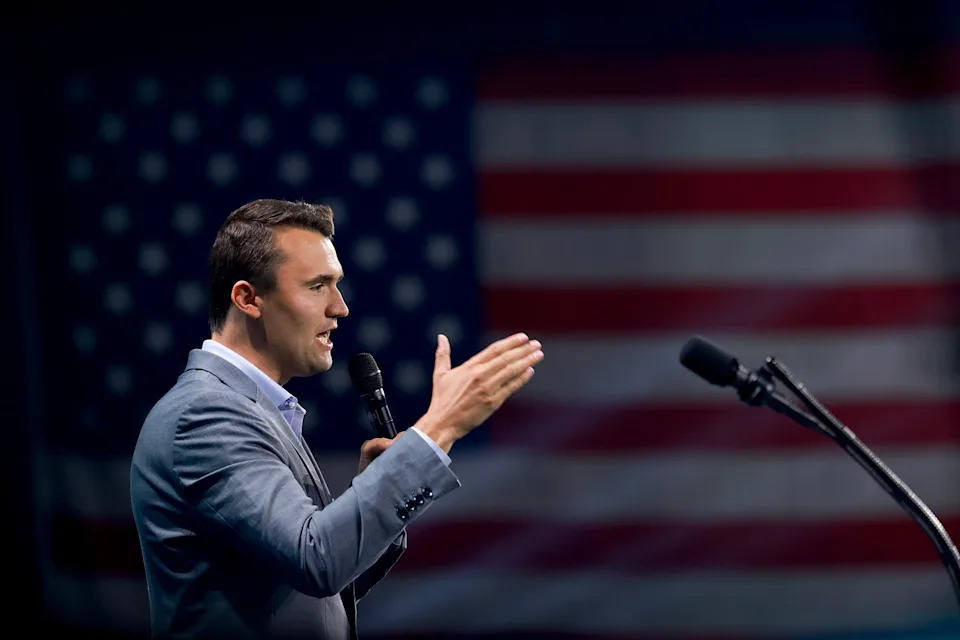
Charlie Kirk speaks during a Turning Point USA Believers Summit conference on July 26 in West Palm Beach, Fla. (Joe Raedle / Getty Images)
Civil Rights Division and local leadership
Officials say involving the Justice Department’s Civil Rights Division could open additional charging options. The division has experienced leadership changes under Assistant Attorney General Harmeet Dhillon, a conservative lawyer who previously represented former President Donald Trump. The U.S. Attorney’s Office in Utah has also undergone recent leadership turnover, with Interim U.S. Attorney Melissa Holyoak appointed in November.
Political response and context
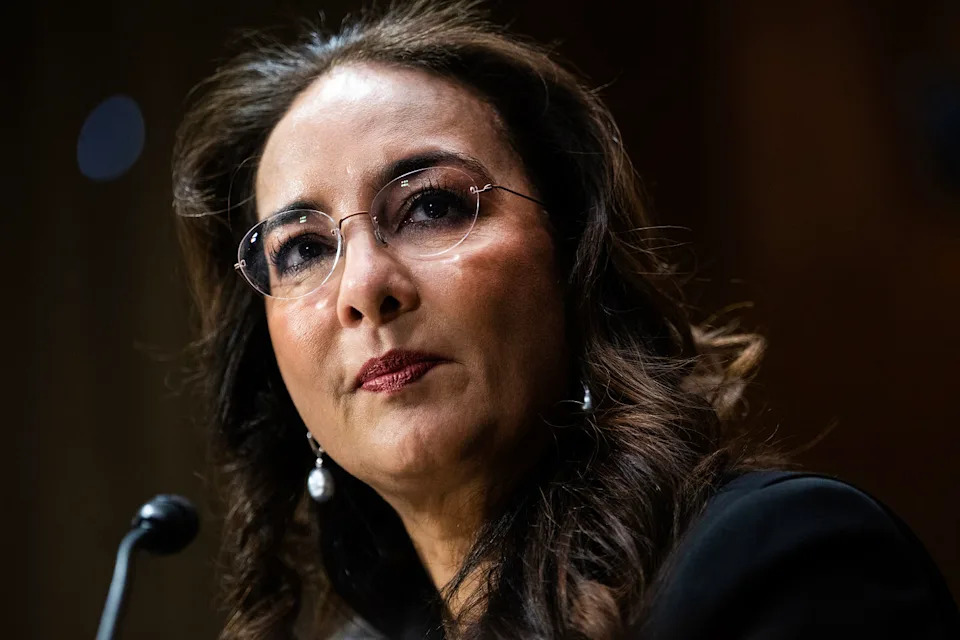
Harmeet Dhillon testifies during her Senate Judiciary Committee confirmation hearing on Feb. 26. (Tom Williams / CQ-Roll Call, Inc via Getty Images)
Kirk, founder of Turning Point USA, was a high-profile conservative voice. Prominent Republicans — including former President Donald Trump, Vice President JD Vance and former Florida Attorney General Pam Bondi — publicly reacted to his death and pledged to seek justice. Legal observers widely say the killing meets the federal definition of domestic terrorism in terms of motive and effect, though there is no standalone federal domestic-terror statute that applies by itself.
Status
The Justice Department has declined to comment publicly. Sources say federal prosecutors continue to weigh their options while Utah state authorities proceed with a death-penalty-eligible murder case.
This article was adapted from reporting first published on NBCNews.com.


