
The Syrian army was filmed chanting an anti‑Israel declaration of war during a Damascus parade, a clip that prompted Israeli Minister Amichai Chikli to warn, "War is inevitable." President Ahmed al‑Sharaa attended the parade, and U.S. envoys are pressing for a Syria‑Israel security arrangement while offering a verification role. Analysts warn Iran and Hezbollah are actively trying to derail any deal, and recent Israeli operations in southern Syria — including a seized 400‑sq‑km buffer zone and clashes in Bet Jinn — underscore the region's fragile security.
“War Is Inevitable,” Israeli Minister Warns After Syrian Troops Chant Anti‑Israel War Verse at Damascus Parade

Military personnel perform during a military parade, as Syrians mark the first anniversary of Bashar al-Assad's fall, in Damascus, Syria, Dec. 8, 2025.
Footage from a military parade in Damascus on Tuesday shows members of the Syrian army chanting what analysts described as an anti‑Israel declaration of war, prompting a senior Israeli minister to issue a blunt warning.
Amichai Chikli, Israel’s Minister of Diaspora Affairs, reposted the clip on X and wrote: "War is inevitable." The video — which Fox News Digital says it independently verified from the Arabic — shows Syria’s new army marching through the capital as President Ahmed al‑Sharaa attended the ceremony.
"Gaza, Gaza, our rallying cry, Victory and steadfastness, night & day. We rise against you, enemy, we rise. From mountains of fire we make our way. From my blood I forge my ammunition. From your blood, rivers will flow."
In a statement to Fox News Digital explaining his posts, Chikli pointed to reports from Druze communities in Sweida and accused the regime of brutality. He said those testimonies "leave no doubt" about the government's violent tactics, comparing its actions to those of extremist groups.
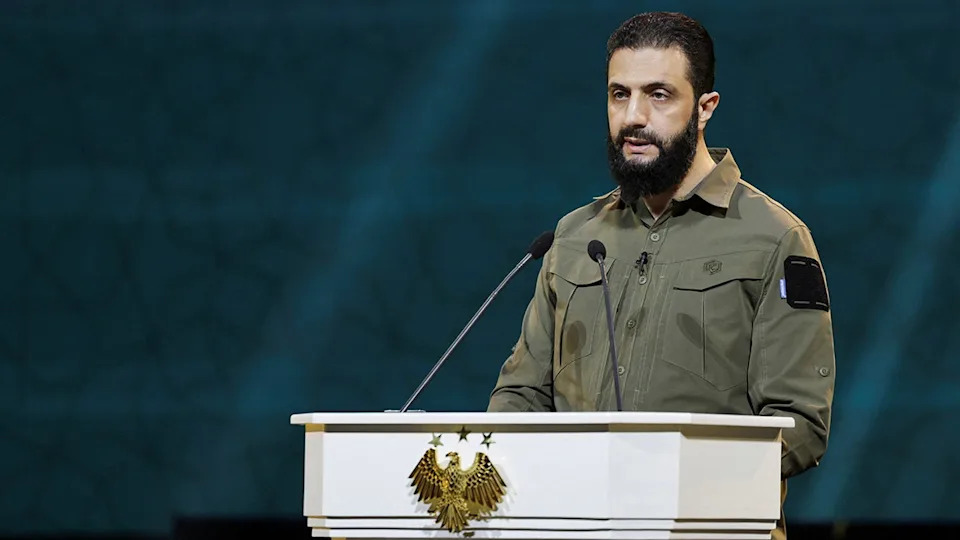
Syria's President Ahmed al-Sharaa delivers a speech on the first anniversary of Bashar al-Assad's fall, in Damascus, Syria Dec. 8, 2025.
Diplomatic Push And U.S. Involvement
The developments come amid a U.S. initiative to broker a security arrangement between Syria and Israel that Washington argues could stabilize a volatile part of the region. Syrian President Ahmed al‑Sharaa reportedly met with former U.S. President Donald Trump at the White House last month.
At a Jerusalem Post conference in Washington, D.C., Tom Barrack — the U.S. ambassador to Turkey and special envoy to Syria — said Damascus does not appear intent on initiating aggression against Israel. He noted recent operations that reportedly dismantled several Hezbollah and Islamic State cells in the region and said the U.S. has offered to serve as a peacekeeping and verification presence so that "verification replaces trust."
Security Concerns On The Ground
Israel says it seized a 400‑square‑kilometer (155‑square‑mile) demilitarized buffer zone in southern Syria as a preemptive step to prevent militants from exploiting the area after unrest weakened Syrian government control. Israeli forces have conducted raids inside and near the zone, detaining suspects and carrying out counterterrorism strikes; Israeli officials say at least 13 suspected militants were killed during an operation last month.
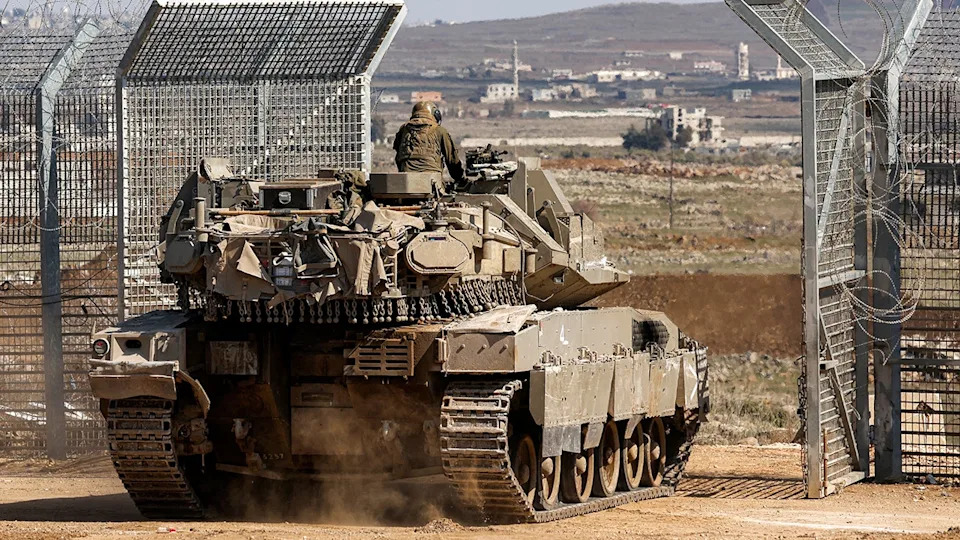
An Israeli army Merkava main battle tank crosses the barbed-wire fence into the U.N.-patrolled buffer zone separating Israeli and Syrian forces in the Golan Heights near the U.N. Quneitra checkpoint on March 2, 2025.
Analysts warn that Iran and its proxies, including Hezbollah, are working to undermine any Syria‑Israel agreement. Dan Diker, president of the Jerusalem Center for Security and Foreign Affairs, told Fox News Digital that Tehran and affiliated groups have tried to target Syrian leaders and are mobilizing cells in southern Syria that could be pushed toward the Israeli border — actions he says help explain ongoing Israeli strikes.
Political Leaders Respond
At the Doha Forum in Qatar, President al‑Sharaa pushed back against decades‑old accusations linking him to extremist groups, calling the labels politicized and urging that accusations be proven. He said the term "terrorist" is often misused and insisted he fought "honorably."
Israeli Prime Minister Benjamin Netanyahu visited reserve soldiers wounded in recent clashes in Bet Jinn and reiterated Israel's determination to defend its border communities. Netanyahu urged Syria to establish and respect a demilitarized zone reaching toward Mount Hermon, saying Israel's control of certain approaches is required to protect its citizens while leaving open the possibility of an agreement done in good faith.
The situation remains fragile: a verification role by outside parties, continued U.S. mediation, and the influence of Iran and allied militias will likely determine whether a durable security arrangement between Syria and Israel can take root.


