
The Ambler Access Road — a federally approved, 211‑mile corridor intended to reach a vast mineral deposit in Northwest Alaska — has split local communities. Residents face record rains, collapsing salmon runs, and a 66% plunge in the Western Arctic Caribou Herd over two decades, while proponents argue mining jobs and critical minerals could provide economic relief. Opponents warn the road and mine would fragment habitat, produce dust and tailings, and threaten subsistence food sources and culture. Lawsuits and intense local debate now surround how to balance livelihoods, Indigenous rights and environmental risk.
Ambler’s Crossroads: A 211‑Mile Mining Road Tests Alaska’s Arctic Communities and Wildlife

Tristen Pattee hunts with his family along the Kobuk River near Ambler, Alaska, where heavy rains have contributed to riverbank erosion Tuesday, Sept. 30, 2025. (AP Photo/Annika Hammerschlag)(ASSOCIATED PRESS)
Ice floes drift past as Tristen Pattee scans the banks of the Kobuk River for caribou, while his great‑uncle Ernest rests a rifle on his lap. It is late September, and where caribou herds historically funneled through the river corridor, the tundra sits quiet — a stark signal of how rapidly this region is changing.
A Community On The Edge
Federal approval of the 211‑mile Ambler Access Road would open a corridor through remote Northwest Alaska to reach a massive polymetallic deposit. The proposed route cuts across 11 major rivers and thousands of streams used by spawning salmon and migrating caribou, and it faces legal challenges even as developers say construction could begin next year.
Climate Stressors: Caribou, Salmon And Thawing Permafrost
Climate change is already reshaping the landscape. The Western Arctic Caribou Herd has fallen from nearly 500,000 animals to roughly 164,000 over two decades — about a 66% decline, according to the Alaska Department of Fish and Game. Scientists link shifts in migration timing to later, milder winters that keep animals in the Brooks Range and out of reach for hunters.
Record late‑season rains this year washed through spawning habitat and damaged eggs; warming streams reduce oxygen for salmon, contributing to dramatic declines in Chinook and chum runs. Researchers have also found dozens of formerly clear Brooks Range streams turning orange with elevated metal levels, a change attributed in part to thawing permafrost — another sign of the region’s rapid environmental transformation.
The Road And Mine: Promises And Risks
Proponents say the Ambler project could supply critical minerals — copper, zinc, lead, silver and gold — that are important to modern industry and, potentially, the green‑energy transition. The deposit is estimated at about 46.7 million tons of polymetallic reserves and ranks among the largest undeveloped deposits in North America.
But the road and mine pose multiple, long‑term risks: thousands of culverts, nearly 50 bridges and more than 100 trucks per day during production would alter hydrology and fragment caribou habitat. Federal biologists have warned of naturally occurring asbestos in regional rock, and dust from heavy traffic could settle on waterways and vegetation. Mining operations would withdraw substantial volumes of water, disrupt groundwater and permafrost, and produce vast quantities of waste rock and tailings that — if breached — could release heavy metals into rivers and lakes.
The Bureau of Land Management has designated roughly 1.2 million acres of nearby land, including salmon spawning and caribou calving areas, as critical environmental concern. Residents downstream — including the town of Kotzebue, where flooding recently prompted an emergency declaration — worry that increased runoff and extreme storms could heighten contamination risks.
Voices From Ambler: Divided, But Shared Stakes
“Everything takes money nowadays,” said Pattee, who serves on the Northwest Arctic Subsistence Regional Advisory Council. With gasoline near $17.50 a gallon and a single caribou hunting trip from Ambler costing roughly $400, many residents say mining jobs could be a lifeline.
Opponents stress the cultural and ecological costs: potential habitat fragmentation, increased public access and pressure on already stressed fish and wildlife, and the long history of extractive projects failing to deliver promised local benefits. Some fear the road, though proposed as private, could eventually open to outside users, amplifying hunting and fishing pressure.
Ambler Metals, the primary prospective mine user, says it will apply proven permafrost safeguards, treat mine water to strict standards and prioritize local hiring under an agreement with NANA, an Alaska Native corporation. The company declined to comment on certain road‑specific concerns and noted it is not the road developer; the Alaska Industrial Development and Export Authority, which is developing the road, did not respond to requests for comment.
Bigger Questions: Minerals, Climate And Indigenous Rights
The debate goes beyond local tradeoffs. Some frame the project as bolstering U.S. mineral security and supporting the energy transition; others warn that arguing for extraction on Indigenous lands in the name of a global climate fix can echo colonial dynamics. Scholars and local leaders emphasize alternatives — better recycling of materials, reduced consumption and investment in public infrastructure — and insist the starting point must be Indigenous self‑determination.
What’s Next
The project’s approval has triggered lawsuits and intense local discussion. For residents like Pattee, Mayor Conrad Douglas and activists such as Karmen Monigold, the decisions ahead will determine whether Ambler’s communities can preserve subsistence culture while finding sustainable economic options. The region’s recent extreme weather makes those stakes more urgent: future storms and thawing permafrost will complicate both environmental protection and industrial development.
By Annika Hammerschlag
The Associated Press receives support from the Walton Family Foundation for coverage of water and environmental policy. The AP is solely responsible for all content.
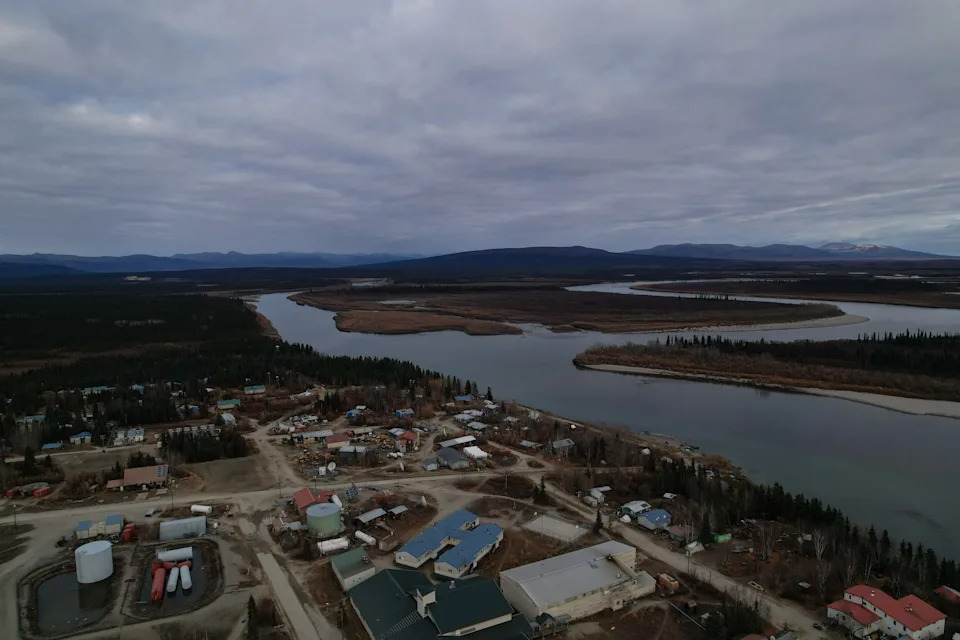
Ambler, Alaska, front, is visible on Sunday, Sept. 28, 2025, with the Gates of the Arctic National Park in the background. The Ambler Road, once constructed, would pass through the park. (AP Photo/Annika Hammerschlag)(ASSOCIATED PRESS)
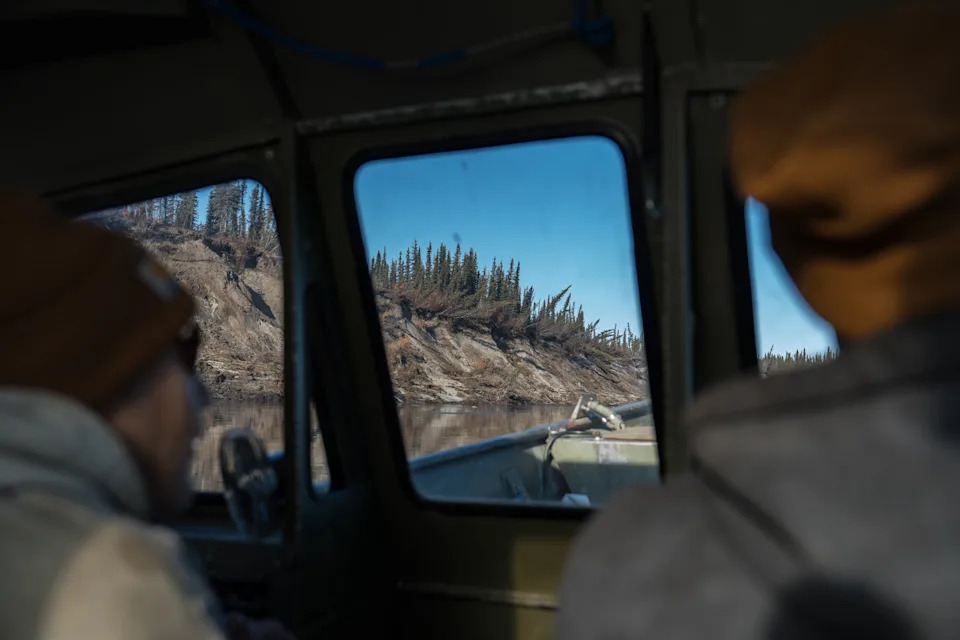
Tristen Pattee hunts with his family along the Kobuk River near Ambler, Alaska, where heavy rains have contributed to riverbank erosion Tuesday, Sept. 30, 2025. (AP Photo/Annika Hammerschlag)(ASSOCIATED PRESS)
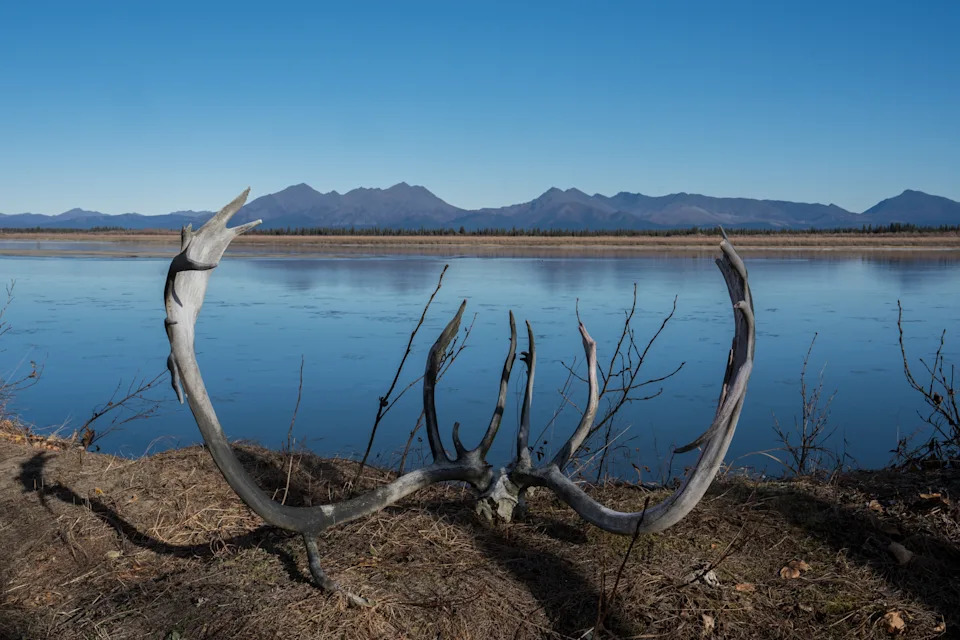
Caribou antlers rest on the banks of the Kobuk River at Onion Portage near, Ambler, Alaska, where caribou traditionally migrated in late summer but had yet to arrive, Tuesday, Sept. 30, 2025. (AP Photo/Annika Hammerschlag)(ASSOCIATED PRESS)
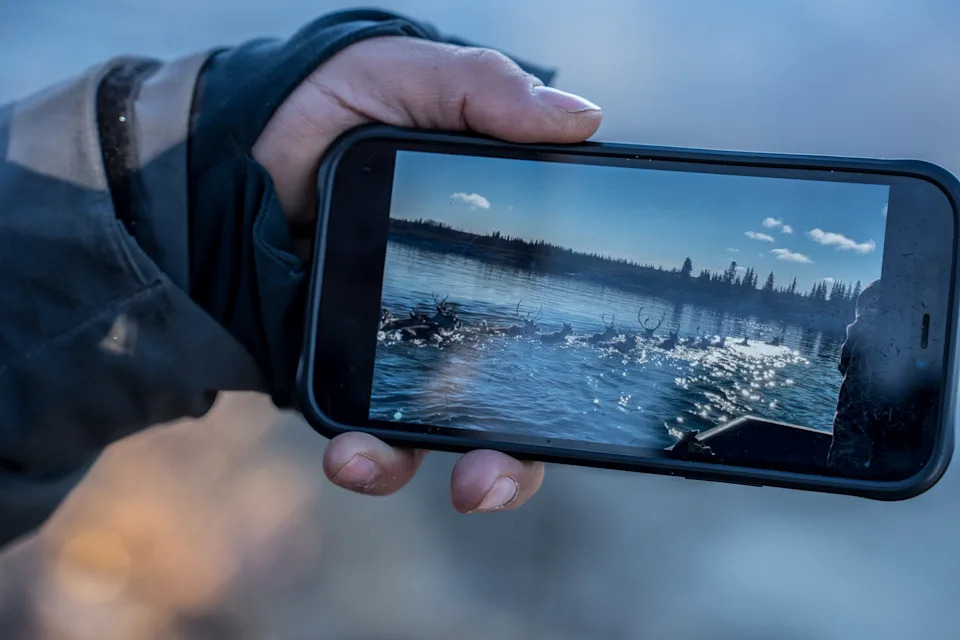
Tristen Pattee shows a photo on his phone from the same day in 2021 of caribou migrating through the same spot near Ambler, Alaska, Tuesday, Sept. 30, 2025. (AP Photo/Annika Hammerschlag)(ASSOCIATED PRESS)
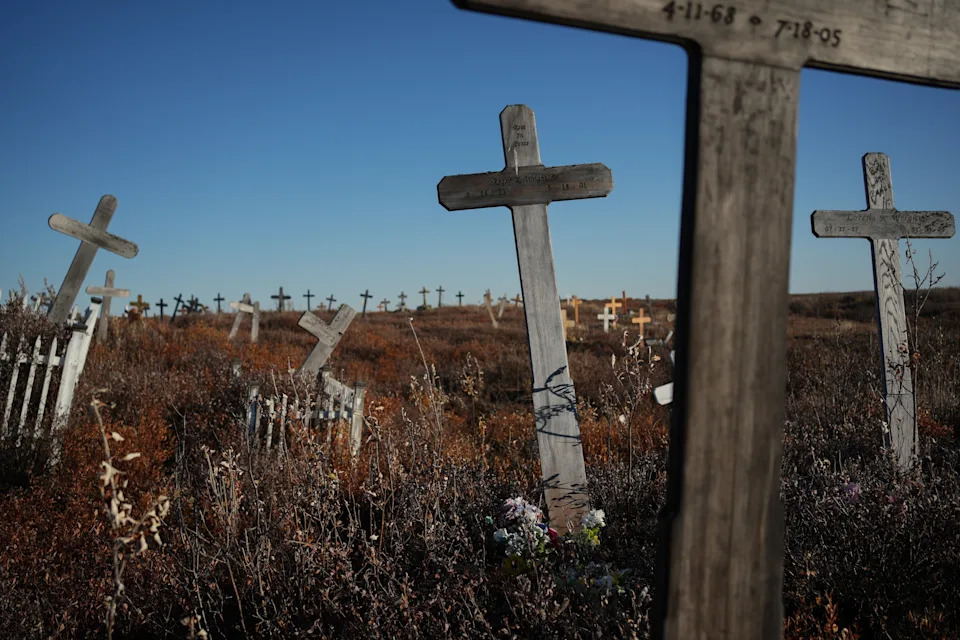
Grave markers are tilted due to thawing permafrost at a cemetery in Kotzebue, Alaska, Friday, Sept. 26, 2025. (AP Photo/Annika Hammerschlag)(ASSOCIATED PRESS)
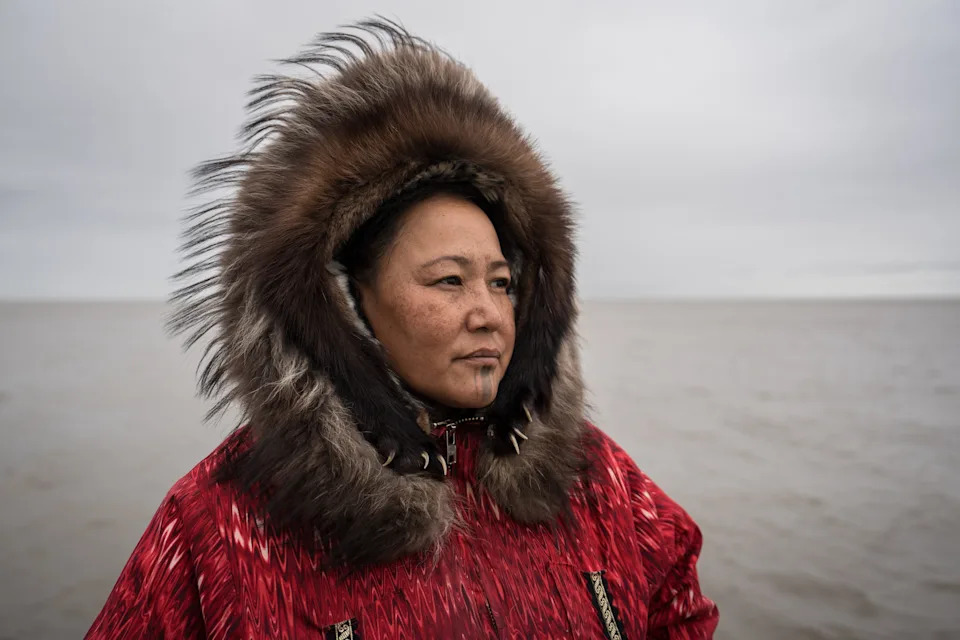
Karmen Monigold, a member of Protect the Kobuk, a Northwest Arctic advocacy group opposed to the Ambler Access Road, poses for a portrait in Kotzebue, Alaska, Saturday, Oct. 4, 2025. (AP Photo/Annika Hammerschlag)(ASSOCIATED PRESS)
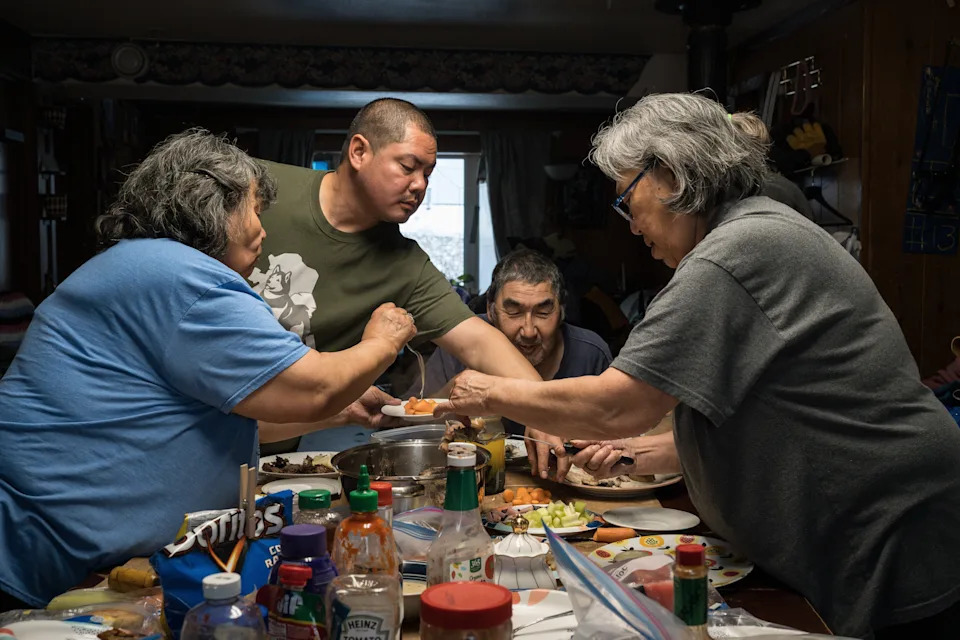
Tristen Pattee and his family eat a meal of beluga whale, bowhead whale, whitefish, moose and seal in Ambler, Alaska, Wednesday, Oct. 2, 2025. (AP Photo/Annika Hammerschlag)(ASSOCIATED PRESS)
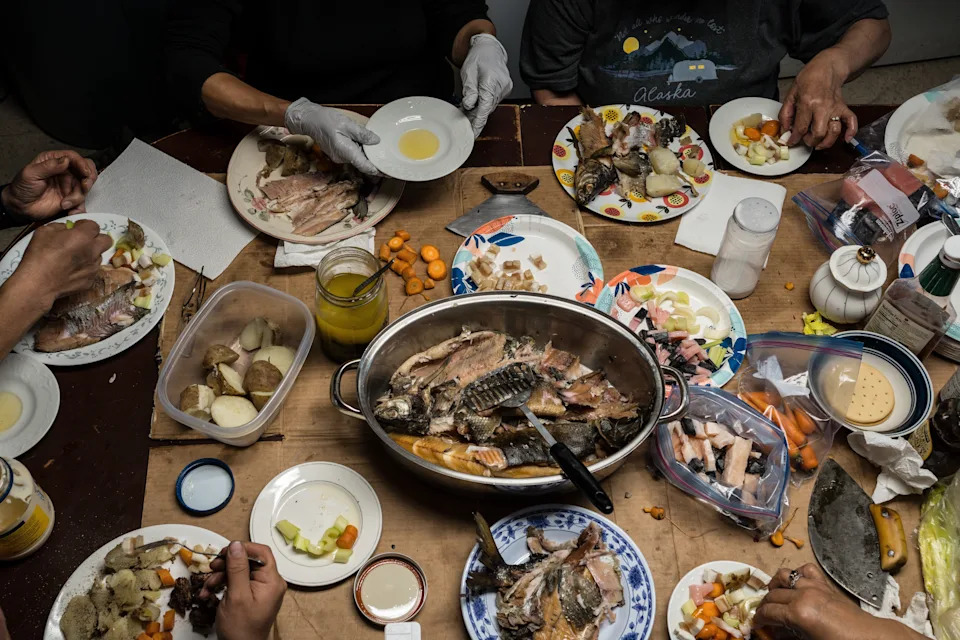
Tristen Pattee and his family eat a meal of beluga whale, bowhead whale, whitefish, moose and seal in Ambler, Alaska, Wednesday, Oct. 2, 2025. (AP Photo/Annika Hammerschlag)(ASSOCIATED PRESS)
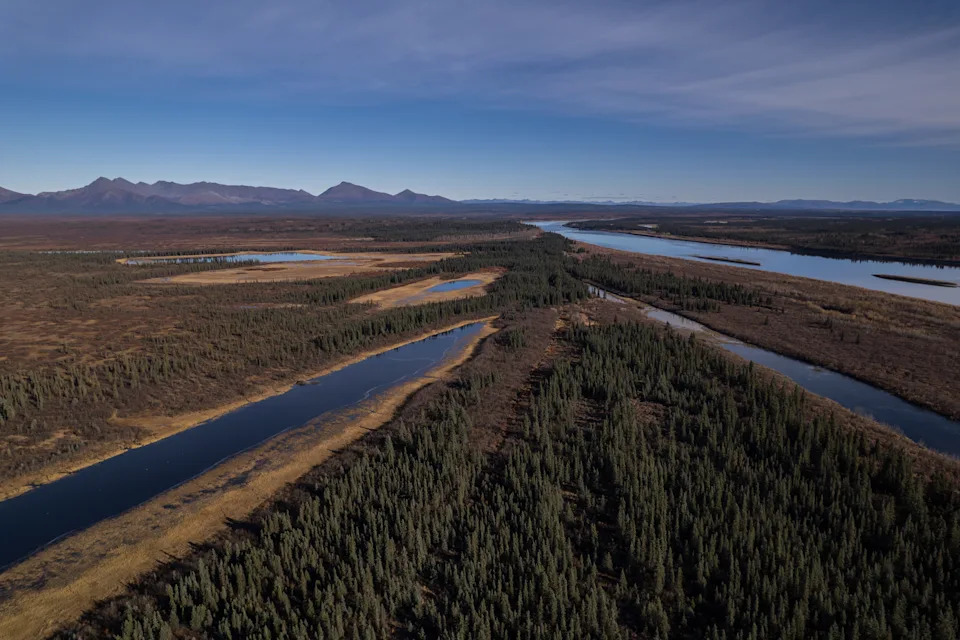
Onion Portage, a critical migration route for the Western Arctic Caribou Herd along the Kobuk River near Ambler, Alaska, is visible Tuesday, Sept. 30, 2025. (AP Photo/Annika Hammerschlag)(ASSOCIATED PRESS)
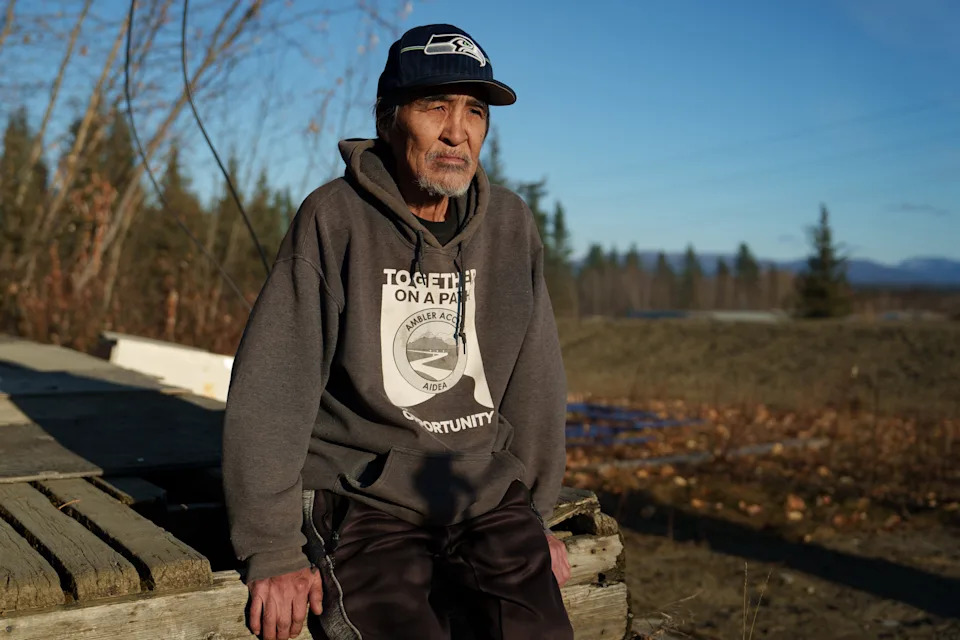
Ambler Mayor Conrad Douglas wears a pro Ambler Access Road sweatshirt while posing for a portrait in Ambler, Alaska, Tuesday, Sept. 30, 2025. (AP Photo/Annika Hammerschlag)(ASSOCIATED PRESS)
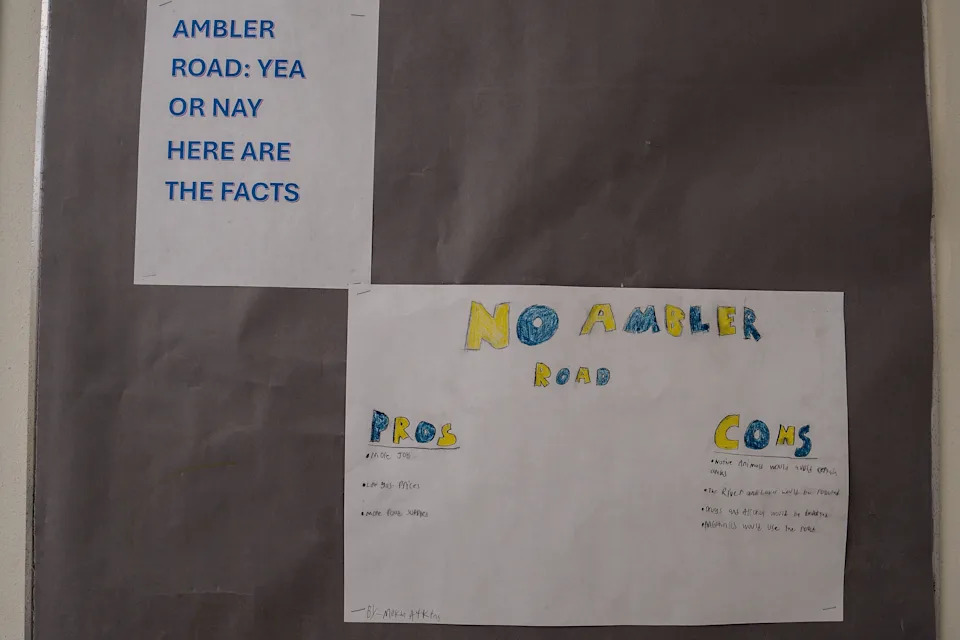
A pros and cons list of the Ambler Road hangs on the wall outside a classroom at Ambler School in Ambler, Alaska, Friday, Oct. 3, 2025. (AP Photo/Annika Hammerschlag)(ASSOCIATED PRESS)
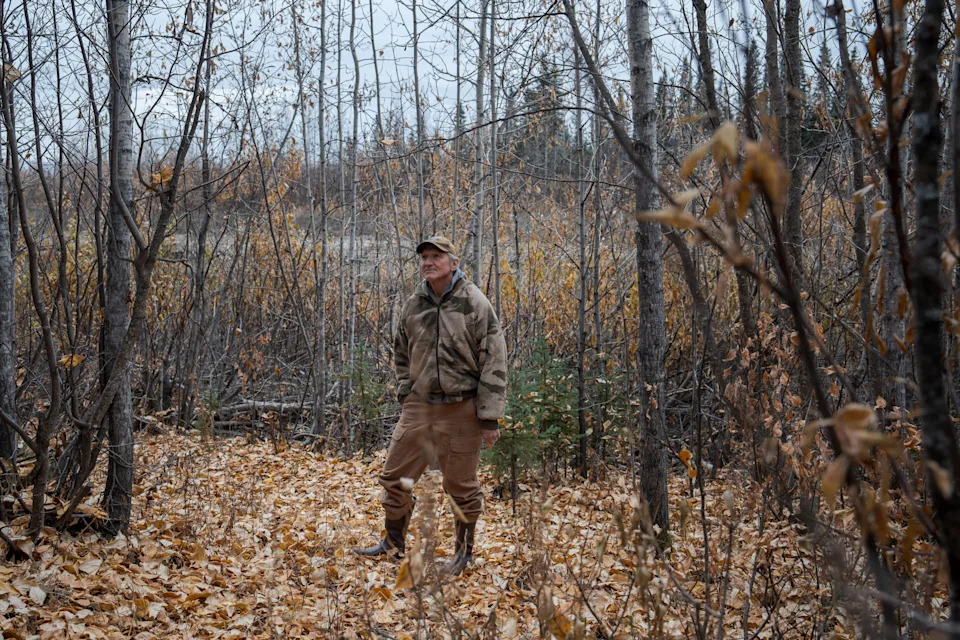
Nick Jans, an author who moved to Ambler, Alaska, in 1979, walks through the woods outside his home Monday, Sept. 29, 2025. (AP Photo/Annika Hammerschlag)(ASSOCIATED PRESS)
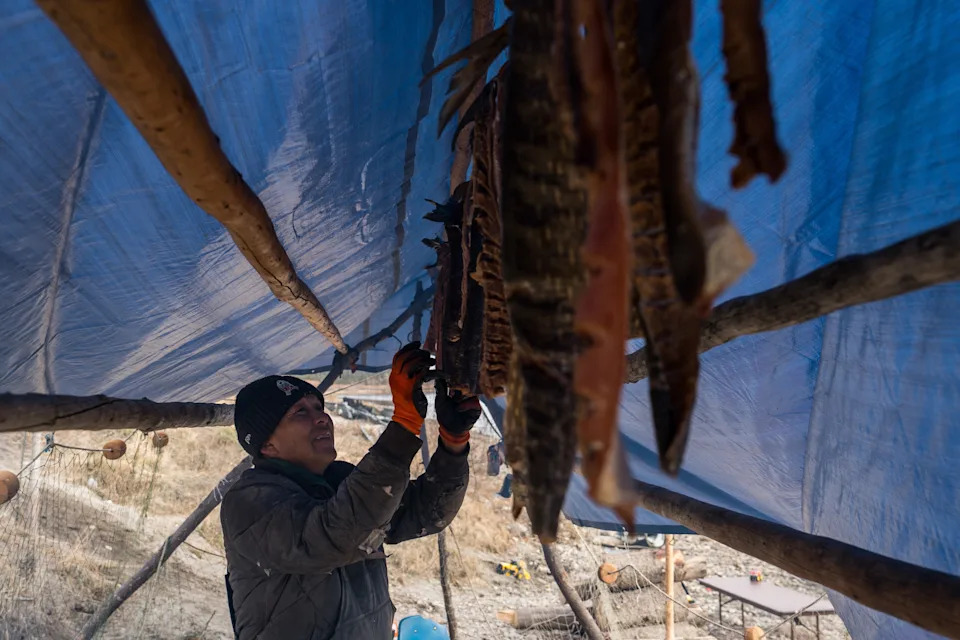
Inupiaq elder Morgan Johnson dries fish outside his home in Ambler, Alaska, Sunday, Sept. 28, 2025. (AP Photo/Annika Hammerschlag)(ASSOCIATED PRESS)
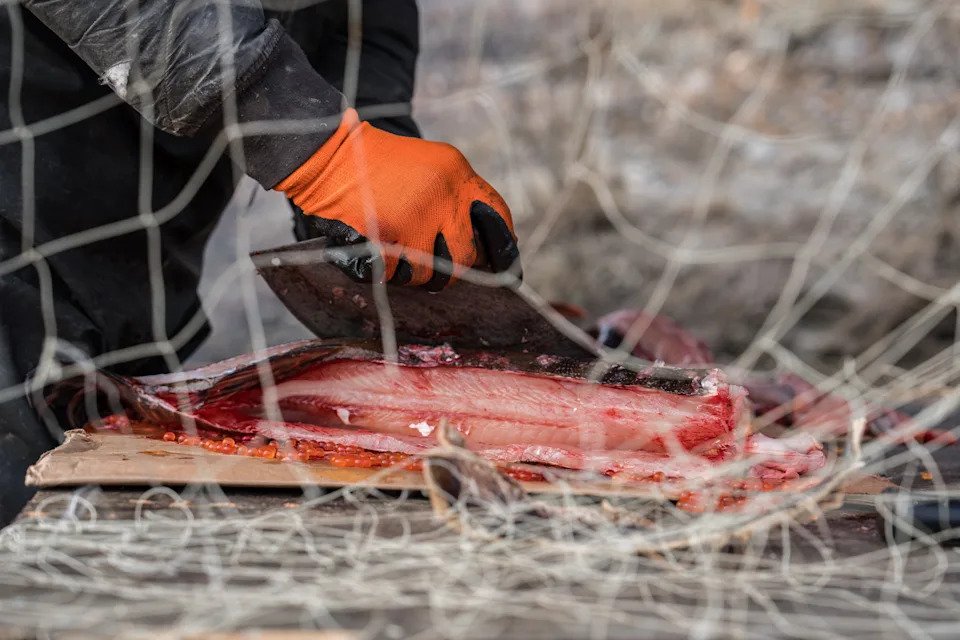
Inupiaq elder Morgan Johnson skins a fish outside his home in Ambler, Alaska, Sunday, Sept. 28, 2025. (AP Photo/Annika Hammerschlag)(ASSOCIATED PRESS)
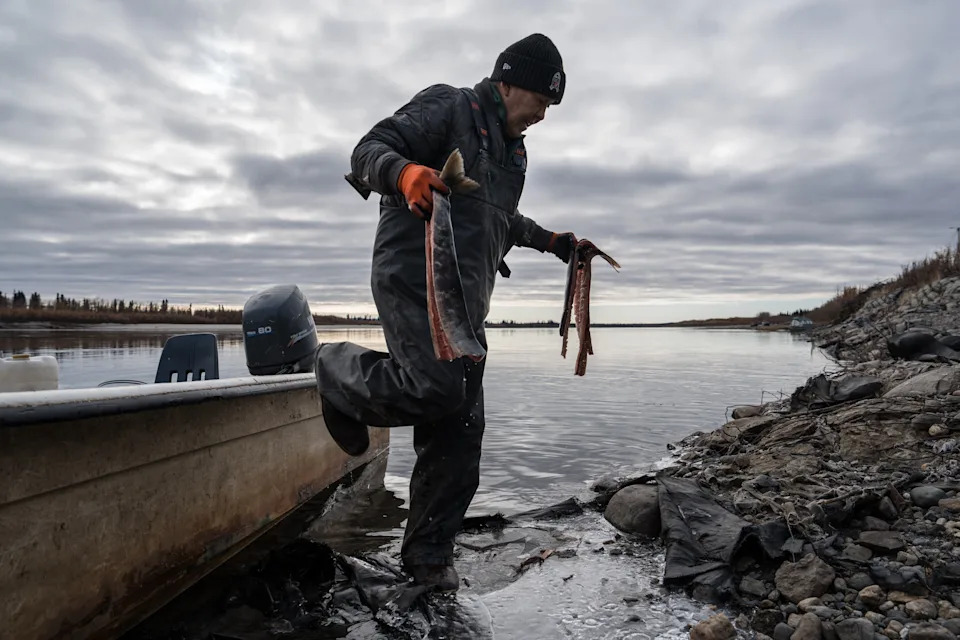
Inupiaq elder Morgan Johnson carries fish from his boat after rinsing them in the Kobuk River in Ambler, Alaska, Sunday, Sept. 28, 2025. (AP Photo/Annika Hammerschlag)(ASSOCIATED PRESS)
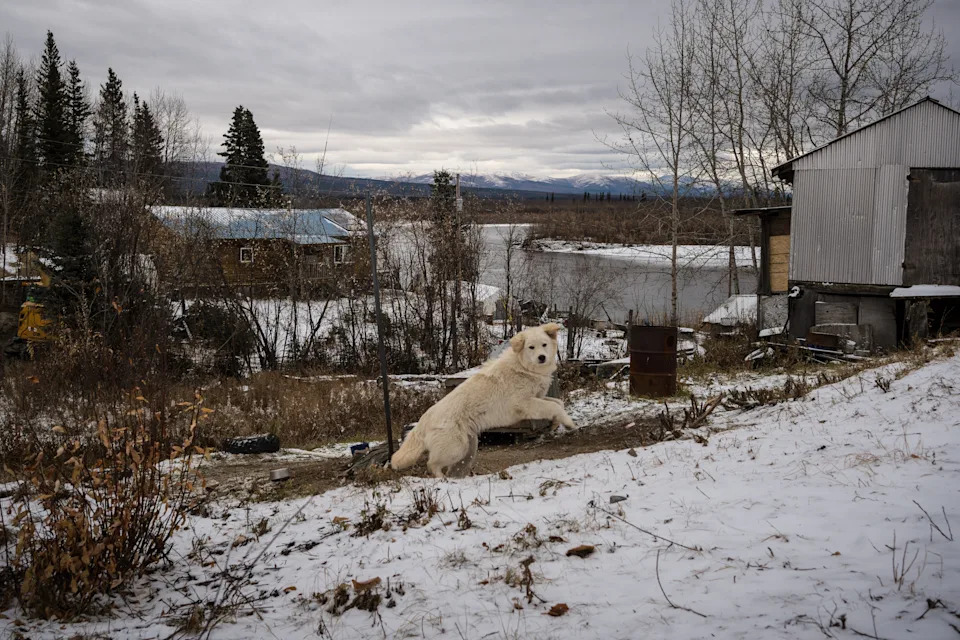
A dog plays on the first snow of the season in Ambler, Alaska, Wednesday, Oct. 1, 2025. (AP Photo/Annika Hammerschlag)(ASSOCIATED PRESS)


