
Washington faced a new series of atmospheric-river storms that forced roughly 100,000 people to evacuate and threatened record river crests, including a Skagit River forecast of 39.1 feet. Everson and nearby towns that were devastated in 2021 were flooded again, damaging homes, businesses and recently repaired infrastructure. Gov. Bob Ferguson declared a state emergency, mobilized the National Guard and requested expedited federal disaster aid while FEMA and federal rescue teams were deployed. Scientists link these intense storms to atmospheric rivers, which are growing more powerful as the climate warms, complicating recovery and future resilience.
“Déjà Vu”: Atmospheric Rivers Flood Washington, Striking Communities Still Rebuilding From 2021

Everson Mayor John Perry poses for a portrait on Emerson Road in 2022. (Jovelle Tamayo for NBC News)
SEATTLE — “Déjà vu.”
That was the reaction of Everson Mayor John Perry as floodwaters from the Nooksack River once again swept into his town’s streets, homes and businesses roughly four years after catastrophic storms in 2021.
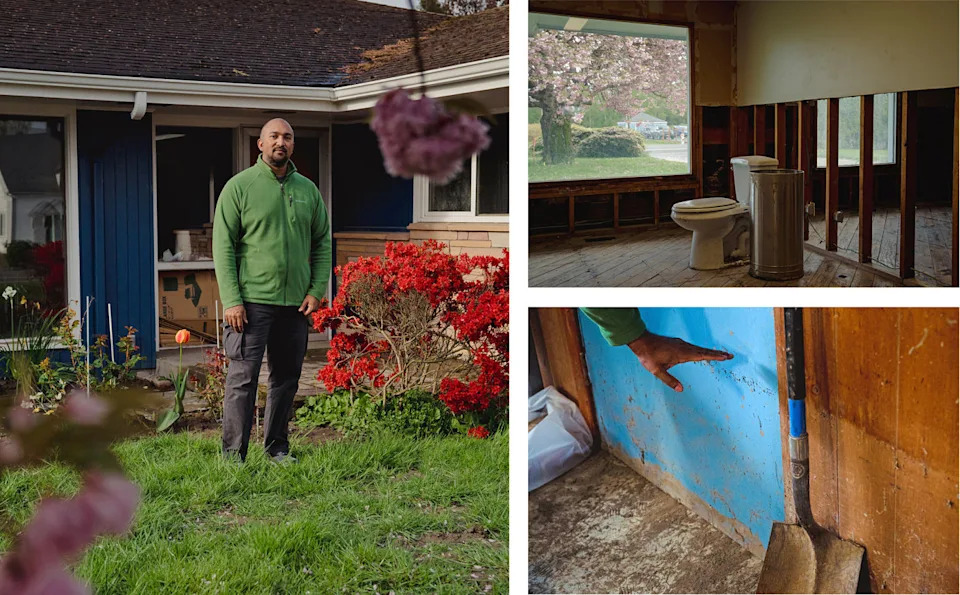
Tony Chunkapura's home had to be gutted and demolished after the flooding in 2021. Chunkapura lives in Montana now after having gone forward with a lengthy buyout process with his flood-prone property in Everson. (Jovelle Tamayo for NBC News)
Widespread Evacuations and Rising Rivers
About 100,000 people across Washington were asked to evacuate after a pair of atmospheric-river storms unleashed torrential rain, saturated soils and melted mountain snowpack. Over three days, as much as 16 inches of rain fell on the western slopes of the Cascades, according to the National Weather Service, producing mudslides, road closures and dozens of water rescues.
More than a dozen rivers were forecast to reach major flood stages. At Mount Vernon, the Skagit River was expected to crest near 39.1 feet — almost 2 feet above the previous record — raising fears of dike failures and extensive flooding downstream.
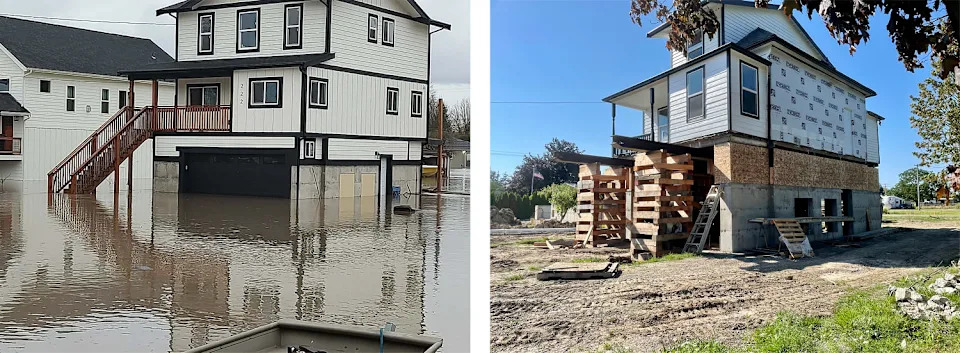
After flooding in 2021, Julieta Garcia-Suarez raised her home in Sumas and built a garage underneath. Four years later, the structure saw flooding again. The home's living area should be OK this year, she said. (Courtesy Julieta Garcia-Suarez)
Local Damage and Human Cost
Everson, still recovering from the November 2021 floods that sent up to 5 feet of water down Main Street, saw municipal buildings and businesses inundated again. "It’s pretty discouraging," Perry said. "Our businesses downtown got hit really hard. We’re anticipating probably similar or more extensive damage than in ’21." City Hall, recently renovated, was under water within days.
"The second round of rain really added the icing to the cake," said Harrison Rademacher, a meteorologist with the National Weather Service in Seattle.
Residents reported heavy emotional and financial strain. Reene Cabrera, an auto-body technician, said he had just been catching up financially after 2021 when he had to flee again. Some residents who accepted government buyouts after 2021 relocated; others remain in the rebuilding process or face repeated displacement.

Reene Cabrera, pictured in 2022, stands in front of the truck he used to evacuate his family after their home flooded in 2021. (Jovelle Tamayo for NBC News)
Government Response and Federal Aid
Gov. Bob Ferguson declared a state emergency, mobilized the Washington National Guard and requested an expedited federal disaster declaration so residents could pursue FEMA Individual Assistance and local governments could get help repairing infrastructure. The White House said it was prepared to review the request; FEMA had activated resources, including urban search-and-rescue teams and liaison officers to the state emergency operations center.
More than 30 major highways were closed during the worst of the storm period. Officials reported no confirmed deaths as of Thursday evening, though multiple swift-water rescues were carried out.
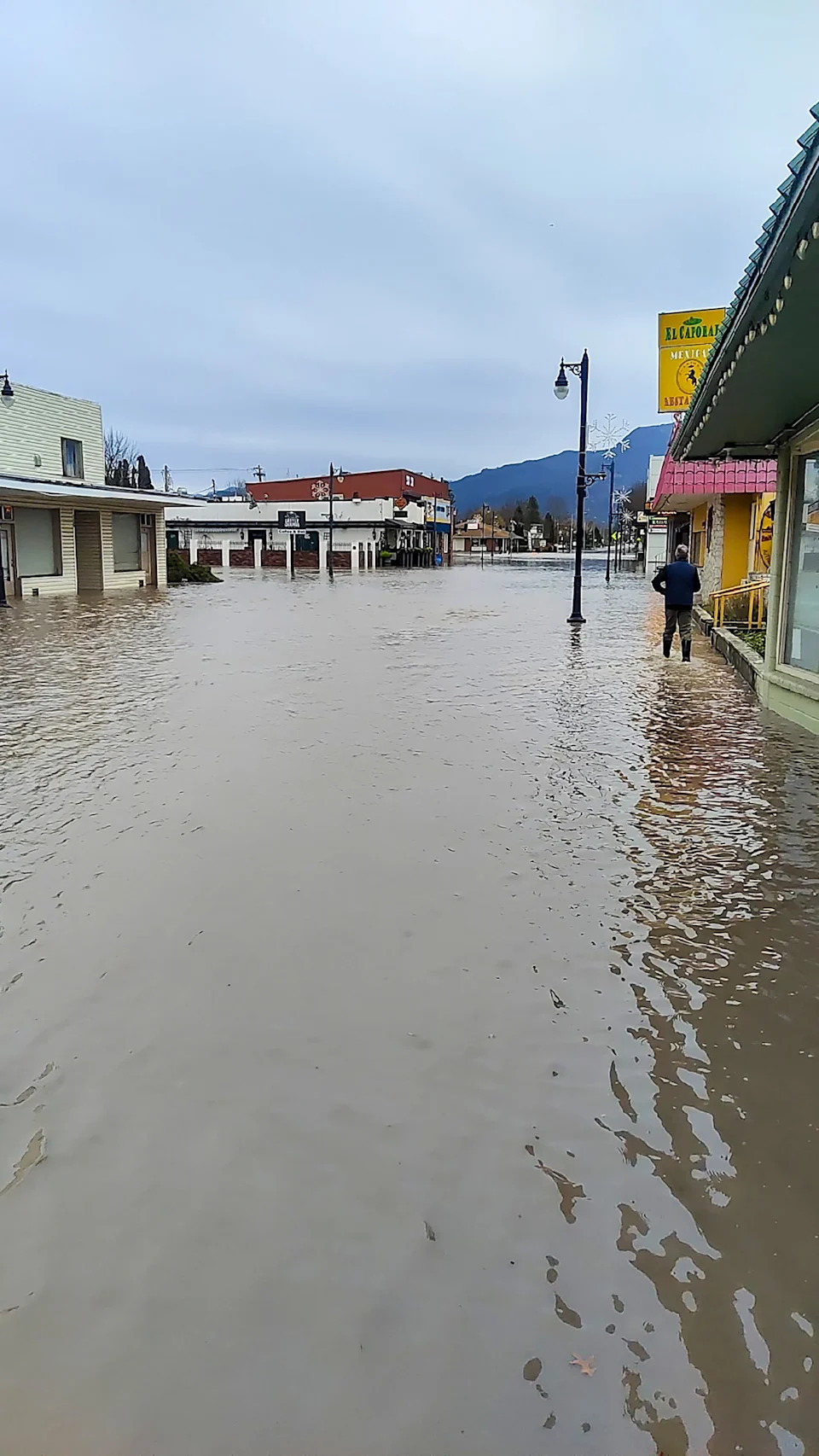
Downtown Everson on Thursday. (Courtesy Reene Cabrera)
Climate Context and Long-Term Challenges
Atmospheric rivers — sometimes called "Pineapple Expresses" because they draw moisture from Pacific waters near Hawaii — are major drivers of West Coast precipitation and flood damage. A 2022 study estimates atmospheric rivers cause more than $1.1 billion in annual flood damage and account for roughly 84% of flood losses in Western states. Scientists warn that a warming climate allows storms to carry more moisture and deliver heavier precipitation, increasing the frequency and intensity of these destructive events.
After the 2021 floods, Everson pursued buyouts for homes in the highest-risk floodplain and examined complex dike systems. Those investments and improved emergency procedures reduced the need for some rescues this time, officials said, but many communities still face long rebuilding timelines and difficult decisions about staying or relocating.

Flooding in the Everson area. (Micah Moeller)
What’s next: While the Nooksack near Everson appeared to crest Thursday morning, other rivers and levee systems, including those protecting Mount Vernon, remained at risk. Local officials cautioned that repairs made since 2021 may have vulnerabilities and that communities will continue monitoring water levels closely.
This article was originally published on NBCNews.com.


