
Federal Reserve Chair Jerome Powell warned that AI could destroy more jobs than it creates, noting firms have cited AI in recent layoffs. The Fed cut its policy rate to 3.75% from 4.0% amid concerns about a softening jobs market; the decision drew three dissents. Powell suggested payrolls may be overstated by roughly 60,000 a month and said productivity gains—partly from automation—help explain upgraded GDP forecasts. The Fed expects unemployment to rise to about 4.5% this year and signalled only one cut in 2026.
Fed Chair Powell Warns AI Could Cost More Jobs Than It Creates as Fed Cuts Rate to 3.75%

Jerome Powell, the chairman of the Federal Reserve, fears AI may destroy jobs - Jacquelyn Martin/AP
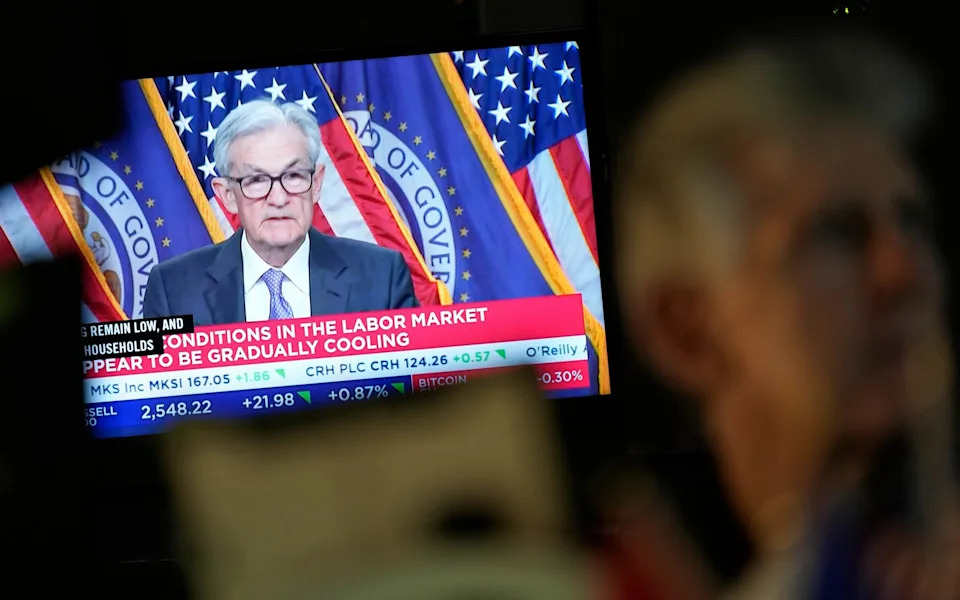
Federal Reserve Chair Jerome Powell warned that America's rapid advances in artificial intelligence (AI) could eliminate more jobs than they create, even as the central bank trimmed its policy rate to a three-year low.
The Fed cut its policy rate to 3.75% from 4.0%, citing concerns about a cooling jobs market and elevated downside risks to employment. The decision was not unanimous: three members of the Federal Open Market Committee (FOMC) dissented.
Powell said it is impossible to ignore that some companies are explicitly citing AI in recent layoff announcements, and cautioned that this wave of technological change may differ from past innovations.
“In past really significant technology innovation eras, you have seen some jobs destroyed and other jobs made. Ultimately, what’s happened for a couple of hundred years is that when you get through all that, you have higher productivity, and you have new jobs, and there are enough jobs for people. This may be different.”
Although official payroll data from the Bureau of Labor Statistics shows the economy has added roughly 40,000 positions per month on average since April, Powell suggested those figures may be overstated. He estimated an overstatement of about 60,000, which by his math would imply a net loss of about 20,000 jobs per month.
Powell said AI is “probably part of the story but not a big part of the story” behind recent high-profile layoffs at firms including Amazon, which announced cuts of about 14,000 roles last October.
Donald Trump is already interviewing candidates to replace Jerome Powell when he steps down as Fed chairman in May - Seth Wenig/AP
Despite the rate cut and warnings about jobs, the Fed raised its GDP growth forecasts: to 1.7% for this year (from 1.6%) and to 2.3% in 2026 (from 1.8%). Powell attributed the brighter outlook in part to higher productivity, some of which may be driven by technological gains and automation.
He noted that productivity has been growing at roughly a 2% annual pace for the past five to six years—a trend that may partly reflect automation or pandemic-era shifts to greater use of computers and digital tools.
How the FOMC weighs risks from inflation versus a weakening labor market was the central point of disagreement at the meeting. Governor Stephen Miran voted for a larger 0.5 percentage-point cut, while Austan Goolsbee (Chicago Fed) and Jeffrey Schmid (Kansas City Fed) voted to keep rates unchanged.
The committee maintained its outlook for unemployment to rise to about 4.5% this year (up from 4.4% in the most recent reading), easing slightly to 4.4% in 2026, and signaled just one interest-rate cut in 2026.
Meanwhile, President Donald Trump has publicly pressured the Fed for much deeper cuts—calling for rates near 1%—and has criticized Powell sharply. The president is also conducting final interviews to choose nominees for the Fed chair when Powell’s term ends in May, including a scheduled interview with former Fed governor Kevin Warsh; Kevin Hassett is widely reported as a leading candidate.
Bottom line: The Fed’s latest move underscores a careful balancing act—cutting rates to support economic growth while flagging risks that AI-driven productivity gains could reshape the labor market faster than new job creation can absorb displaced workers.


