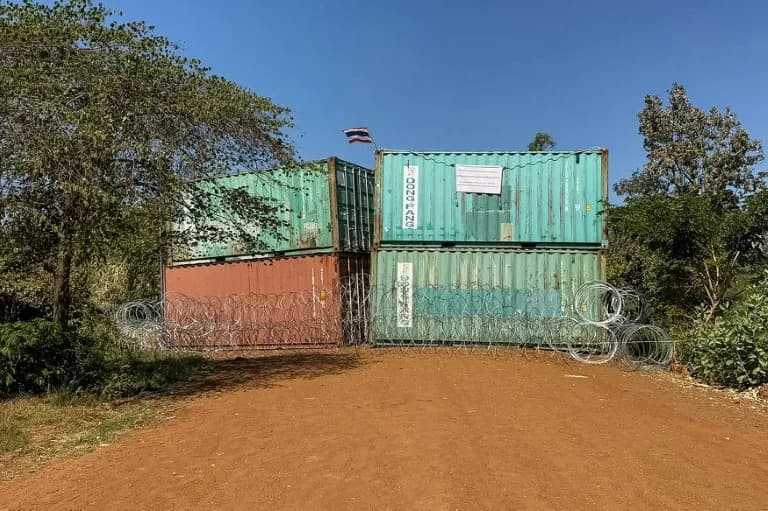
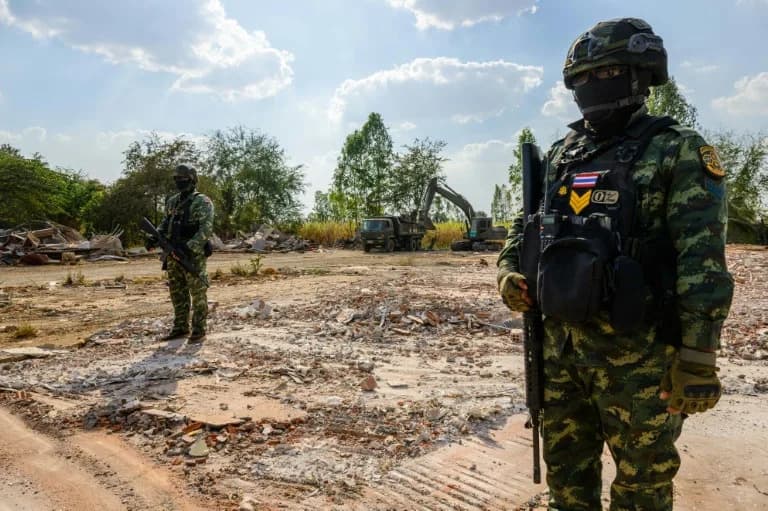
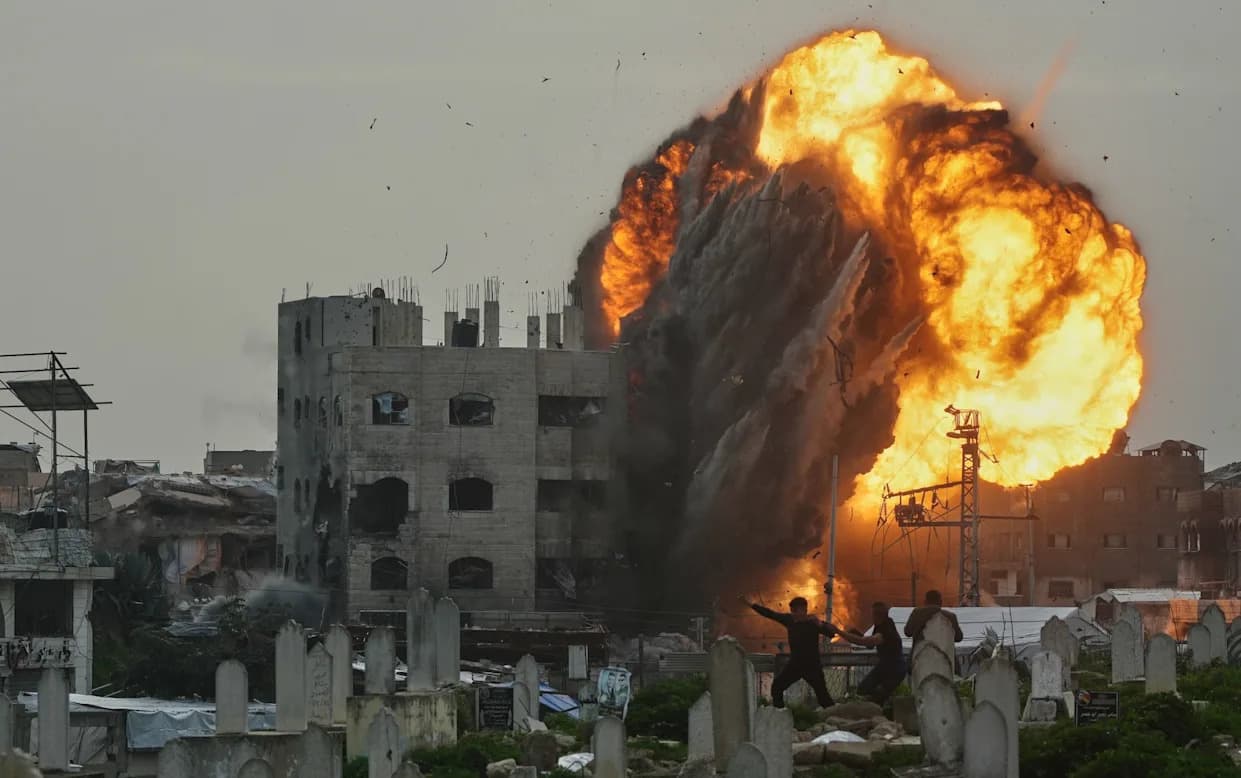
Thai forces launched airstrikes on Cambodian positions Dec. 8 after Bangkok said Cambodian fire hit the Anupong base and killed one soldier. Cambodia denied initiating the attack and provided a detailed timeline accusing Thai forces of multiple small‑arms and heavy‑weapons strikes between 5 a.m. and 11 a.m. The incident follows a suspended cease‑fire and ongoing disputes over the shared border. Regional leaders urged restraint and the use of diplomatic channels to prevent further escalation.
Thailand Conducts Airstrikes Against Cambodia as Border Clashes Escalate

Dec. 8 (UPI) — Fighting along the Thailand–Cambodia border intensified Monday after Thai forces launched airstrikes against Cambodian positions, renewing a long‑running dispute between the neighboring Southeast Asian countries.
Claims and Counterclaims
Both capitals traded blame over who fired first. The Royal Thai Army said in a statement, "It has begun," and accused Cambodian forces of opening fire on the Anupong base, killing one Thai soldier. Thailand said mortar and artillery rounds from across the border prompted a response.
The Royal Thai Army said F‑16 jets were scrambled to strike what Thai commanders described as Cambodian long‑range weapons positions that posed "a clear threat." Royal Thai Air Force spokesperson Air Marshal Jackkrit Thammavichai warned that Cambodia had "mobilized heavy weaponry, repositioned combat units and prepared fire‑support elements," actions he said could further escalate operations and endanger Thai border areas.
Cambodia’s Account
Phnom Penh rejected Thailand’s version of events. The Cambodian Ministry of National Defense said in a statement that Thai forces struck Cambodian positions at about 5 a.m. local time after a series of "numerous provocative actions for many days" alleged to have been designed to instigate confrontation.
Lt. Gen. Maly Socheata, a ministry spokesperson, provided a timeline alleging Thai provocations: 25 small‑arms rounds at 5:04 a.m., 38 shots at 5:19 a.m., and 120 shots at 5:25 a.m. Cambodia also accused Thai forces of using shells, artillery, toxic gas and carrying out an airstrike between 5 a.m. and 11 a.m. The ministry said Cambodian forces did not retaliate during those incidents and continued to monitor the situation "vigilantly and with utmost caution."
Background and Recent Developments
The two neighbors have disputed sections of their shared border for decades. Tensions turned deadly in July when a landmine explosion injured five Thai soldiers. After further clashes, both sides agreed to a fragile initial cease‑fire that was reportedly brokered by U.S. President Donald Trump, with a formal agreement signed in late October.
Thailand later suspended the truce on Nov. 11, saying four Thai soldiers were wounded by landmines while patrolling the border. On the day before the airstrikes, Thai officials said two of its soldiers were injured in fire from Cambodian positions but that Thailand did not retaliate at that time.
International Reaction
Regional leaders expressed alarm. Malaysian Prime Minister Anwar Ibrahim, who witnessed the November signing alongside Trump, said he was "deeply concerned" about reports of renewed fighting and warned that further clashes could undo efforts to stabilize relations between the neighbors.
"Renewed fighting risks unravelling the careful work that has gone into stabilizing relations between the two neighbors," Anwar wrote on X. "We urge both sides to exercise maximum restraint, maintain open channels of communication and make full use of the mechanisms in place. Malaysia stands ready to support steps that can help restore calm and avert further incidents."
Note: Claims from both sides are sharply at odds. Independent verification of specific battlefield details, including casualties and the exact sequence of events, was not immediately available.
Help us improve.