Pope Leo XIV’s first foreign trip to Turkiye has been welcomed by Greek, Armenian, Syriac and Latin Christian community leaders as a sign of renewed openness. Legal reforms since the 2000s — including EU-driven harmonisation measures and a 2011 decree — have enabled foundations to reclaim properties, with representatives citing about 1,250 returns between 2003 and 2018. Improved security in the southeast and high-level political support have boosted confidence, though unresolved governance and legal issues remain.
Pope Leo XIV’s Visit to Turkiye Signals Renewed Space and Hope for Christian Minorities

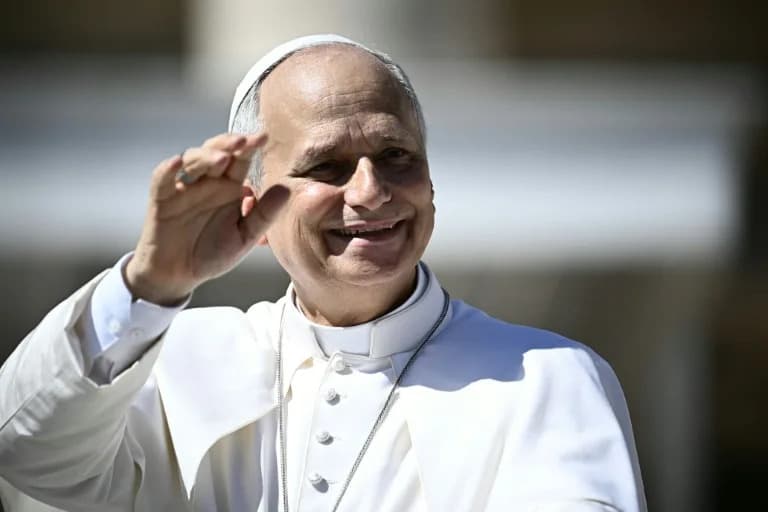
Pope Leo XIV chose Turkiye for his first foreign trip as leader of the Roman Catholic Church, a visit that minority community leaders say comes at a moment of renewed openness in the predominantly Muslim country. During his itinerary he met President Recep Tayyip Erdogan, held talks with religious leaders and visited historic places of worship where Christianity’s deep roots coexist alongside an influential Islamic tradition.
Turkiye, home to more than 80 million people and predominantly Muslim, still hosts centuries-old Greek, Armenian, Syriac and Latin Christian communities. Representatives of these communities say that after decades of political tensions, demographic shifts and property disputes, the current atmosphere offers greater visibility and confidence than in many past years.
Manolis Kostidis, vice president of the Greek Foundations Association, described the visit as an honor for Turkiye and particularly meaningful for the Ecumenical Patriarchate and the Greek community. “Istanbul has hosted empires for centuries, and welcoming such a guest highlights the value of the patriarchate,” he said, adding that recent governmental support has made a difference.
Historical context and legal changes
In the early decades of the republic, Turkiye’s Greek, Armenian and Syriac populations numbered in the hundreds of thousands. Their decline through the 20th century was shaped by political ruptures, including the 1942 Wealth Tax that disproportionately affected non-Muslims, the 1955 attacks that devastated minority neighbourhoods, and the 1964 deportation of more than 12,000 Greek citizens amid tensions over Cyprus. Administrative restrictions and adverse legal rulings in later decades accelerated emigration.
From the 2000s onward a series of legal reforms improved the situation for minority foundations. The Foundations Law — originally drafted in the Ottoman era and later adapted by the republic — governs how non-Muslim charitable foundations own, manage and inherit property. European Union-driven harmonisation packages between 2003 and 2008 expanded foundations’ ability to register assets, reclaim properties seized under earlier rulings, and again receive donations and inheritances. A 2011 government decree ordered the return or compensation of properties taken under earlier rulings, helping many foundations reclaim assets.
Can Ustabası, head of the Minority Foundations Representative Office, said these changes have been tangible: “Previously, getting permission to paint a church could take years. Now doors open more easily.” He estimated that about 1,250 properties were returned between 2003 and 2018 as a result of reforms and amendments to the Foundations Law.
“It makes us feel like full citizens,” said Kostidis, reflecting on the material and symbolic impact of property returns and legal recognition.
Renewed confidence and remaining challenges
One visible sign of renewed confidence is among Syriac communities in Tur Abdin, the historic heartland in southeastern Turkiye around Midyat and the wider Mardin region. Return migration has begun to inch upward: some expatriates who settled in Europe are rebuilding homes and preparing for longer-term stays. Ustabası linked that shift to improved security in the southeast after years of clashes between the state and the outlawed Kurdistan Workers’ Party (PKK), noting that safer conditions make travel, restoration and village life more feasible.
Lawyer Kezban Hatemi, who has advised minority foundations for decades, described the reforms as major but cautioned that work remains. “Some cases are still ongoing — this kind of historical process doesn’t end quickly,” she said, noting persistent legal ambiguities and bureaucratic hurdles. She also said the state continues to intervene in foundation governance in ways it does not with Muslim foundations, a mentality that has not entirely disappeared.
Turkish-Armenian journalist Etyen Mahcupyan observed that the pace of restitution slowed after the failed coup attempt in 2016, when state bureaucracy reasserted influence. He suggested momentum might return if Turkiye revived efforts toward European Union accession, a process that began in 2005 but has effectively stalled.
Mahcupyan also highlighted the political and symbolic resonance of the pope’s visit. He noted that the pope’s public positions on international conflicts — which Mahcupyan says align with Turkiye’s stance on the war in Gaza — can create diplomatic convergence and support Turkiye’s broader foreign policy aims. “This kind of convergence is important. It prevents Turkiye from turning inward and helps ensure minority communities are not forgotten,” he said.
Representatives emphasize that practical barriers remain — from foundation board elections and governance autonomy to outstanding property handover cases — but they welcomed the visit as proof of progress and a sign that pluralism is valued. “All communities — Muslim, Jewish, Armenian, Syriac, Greek — should live in this city,” Kostidis said. “Istanbul’s strength has always been its plurality.”
The pope’s trip thus carried both religious and diplomatic weight: a symbolic affirmation of Turkiye’s multiconfessional history and a reminder that legal reforms and political will can reshape life for longstanding minority communities.
Help us improve.