Sen. Mark Warner sharply criticized the Trump administration’s 28-point truce proposal for Russia and Ukraine, calling it "a historically bad deal" and warning it could embolden China. The plan reportedly would cede the Donbas to Russia, limit Ukraine’s military and propose roughly $200 billion for reconstruction, while leaving key security guarantees vague. Reactions split U.S. lawmakers, Ukraine remains cautious, and diplomats are pressing for clearer enforcement and deterrence measures.
Sen. Warner Calls Trump’s 28-Point Russia-Ukraine Truce a 'Historically Bad' Deal — Warns It Could Embolden China

Sen. Mark Warner (D-Va.), the top Democrat on the Senate Intelligence Committee, on Sunday condemned the Trump administration’s 28-point proposal for a truce between Russia and Ukraine, calling it "a historically bad deal" and likening it to appeasement before World War II.
Warner warned the plan could have global consequences beyond Europe, saying it might encourage Chinese leader Xi Jinping to consider more aggressive moves toward Taiwan. He described the proposal as "a total capitulation by Ukraine," and questioned whether Ukrainian President Volodymyr Zelenskyy could survive politically if he accepted its terms.
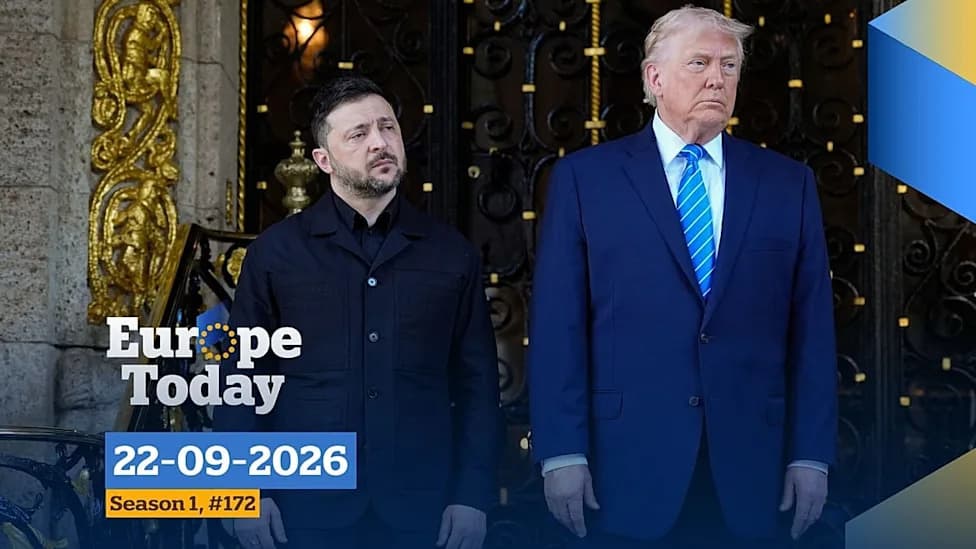
"Clearly this plan was at least initially laid out as simply Russian input and no Ukrainian input. Now they're saying there has been Ukrainian input. Now the president is changing his mind again about whether this is a final offer or not," Warner said. "At the end of the day, we all want to see peace, but we don't want to see a peace that rewards Vladimir Putin."
The plan, as described by officials and leaked details, would require Ukraine to cede control of the Donbas region to Russia and accept limits on the size of its armed forces. It also proposes allowing Ukraine to pursue negotiations for European Union membership and envisions roughly $100 billion in frozen Russian assets combined with about $100 billion in European funding to support Ukraine’s reconstruction.
Administration officials say any future Russian attack on Ukrainian territory under this deal would trigger a "decisive, coordinated military response," but the proposal does not specify what form that response would take. Senior officials were scheduled to meet with Ukrainian advisers to work through outstanding issues, and the administration set a near-term deadline for Ukraine to respond.
Political Reaction
The proposal has fractured opinion in Washington. Several Republican Senators often described as Russia hawks — including Lindsey Graham (R-S.C.), Mitch McConnell (R-Ky.) and Roger Wicker (R-Miss.) — publicly urged the administration to rethink the terms. At the same time, other Republican voices backed the administration’s pragmatic framing.
Sen. Eric Schmitt (R-Mo.) urged critics to show restraint, arguing that the administration is seeking a realistic settlement that reflects the toll of years of war and that key details, such as security guarantees and territorial arrangements, remain subject to negotiation.
Ukraine’s Response
Ukraine has not endorsed the proposal. President Zelenskyy’s office said it remains ready to work constructively with the United States and other partners to secure peace, while emphasizing that justice and Ukraine’s rights are central concerns. Ambassador to the United States Olga Stefanishyna described ongoing negotiations as cautious and reiterated that the Ukrainian perspective emphasizes fairness and security.
"The crux of the entire diplomatic situation is that it was Russia, and only Russia, that started this war, and it is Russia, and only Russia, that has been refusing to end it throughout the full-scale invasion," Zelenskyy said, urging a "dignified" peace that prevents future aggression.
Historical Context and Next Steps
Warner repeated his comparison to British Prime Minister Neville Chamberlain’s 1938 concessions, arguing that a deal perceived as rewarding aggression could have dangerous long-term consequences. Critics and supporters alike say the coming days of negotiations will be decisive: officials seek clearer security guarantees, a precise deterrence framework, and assurances that the arrangement would not undermine Ukraine's sovereignty.
As congressional leaders, allied diplomats, and Ukrainian advisers continue to debate the proposal’s terms, key questions remain about enforcement mechanisms, the scope of territorial concessions, and the nature of international security commitments that would accompany any truce.
Help us improve.