Chick‑fil‑A has scaled its Shared Table program, which began as a 1990s local pilot, to reach roughly 90% of its restaurants and more than 1,600 nonprofit partners nationwide. CEO Andrew Cathy, inspired by family history and nonprofit board experience, made the initiative a strategic priority after 2021. The program has produced over 50 million meals to date, including 8.6 million this year, and Cathy is urging industry-wide collaboration to reduce 22 billion pounds of annual food waste and strengthen distribution systems like Feeding America.
Chick‑fil‑A Scaled Its "Shared Table" to 50M Meals — Now Urging the Industry to Join
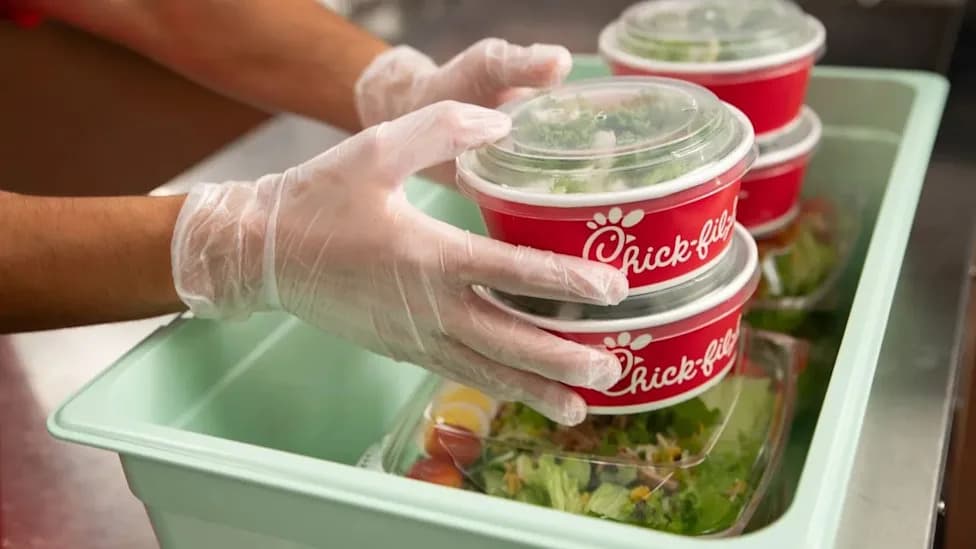
Ninety percent of Chick-fil-A restaurants donate excess food to local nonprofits in their communities. Photo courtesy of Chick-fil-A
Chick‑fil‑A has expanded a once-local effort into a nationwide program that diverts surplus restaurant food to people in need. Known as Shared Table, the initiative now operates in roughly 90% of Chick‑fil‑A restaurants and partners with more than 1,600 nonprofit organizations across the United States.
Shared Table: From Local Pilot To National Program
The idea began in the 1990s when owner-operator Marshall Wilkins in Knoxville, Tennessee, donated surplus food from his restaurant to a local nonprofit. Chick‑fil‑A formalized the program in 2012 with standardized logistics, internal targets and awareness campaigns, enabling the chain to scale the effort systemwide.
Today, Chick‑fil‑A reports that Shared Table has produced more than 50 million meals to date, including 8.6 million meals so far this year. The program’s growth reflects both operational improvements and renewed emphasis from company leadership after Andrew Cathy became CEO in 2021.
Leadership, Legacy and a Stronger Focus
Andrew Cathy cites family history and personal experience as drivers behind the push to amplify the program. His grandfather, Truett Cathy, who founded the Dwarf House and later the first Chick‑fil‑A, grew up in poverty and developed a habit of sharing whenever he had extra. Cathy also points to his board service with the Atlanta Community Food Bank as a turning point in understanding the scale of food insecurity.
“We are passionate about using this business to make a difference. It goes back to how my grandfather created this business,” Cathy said at a Shared Table popup event in New York City.
Public Awareness And Partnerships
The company highlighted Shared Table at a popup at The Oculus in Manhattan, where visitors received free sandwiches and Chick‑fil‑A donated a meal to The Bowery Mission for each guest. The event fell on Sept. 30 — the final day of Hunger Awareness Month — to emphasize that hunger is a year-round problem.
Chick‑fil‑A emphasizes industry collaboration as the next step. Cathy has discussed joint efforts with numerous restaurant CEOs and says the sector is open about sharing what has worked and what hasn’t. The aim is to tackle two pressing, related problems: food waste and insufficient distribution to people who need food.
Scale And Ambition
Industry-wide numbers put the opportunity in perspective: roughly 22 billion pounds of food are discarded annually in the U.S., while Feeding America processes about 4.5 billion pounds for distribution to people experiencing food insecurity. Chick‑fil‑A believes that coordinated action across the food industry could amplify impact with relatively modest additional effort.
“Imagine if the whole industry was doing this. The impact could be massive,” Cathy said, urging continued conversations to develop a collective goal and practical, holistic solutions.
Contact: Alicia Kelso at [email protected]
Follow: TikTok: @aliciakelso
Help us improve.