Summary: The Manchester City affair has exposed how state-linked Emirati capital can translate into political leverage in the UK. Recent legal threats and investment warnings have called into question the claim that Sheikh Mansour’s 2008 purchase was purely private. The Telegraph’s blocked takeover by RedBird IMI in 2024 shows the broader risks to media independence, and policymakers should protect cultural and political institutions from foreign state ownership while remaining open to legitimate investment.
Manchester City Fallout Exposes Britain's Vulnerability to UAE Influence
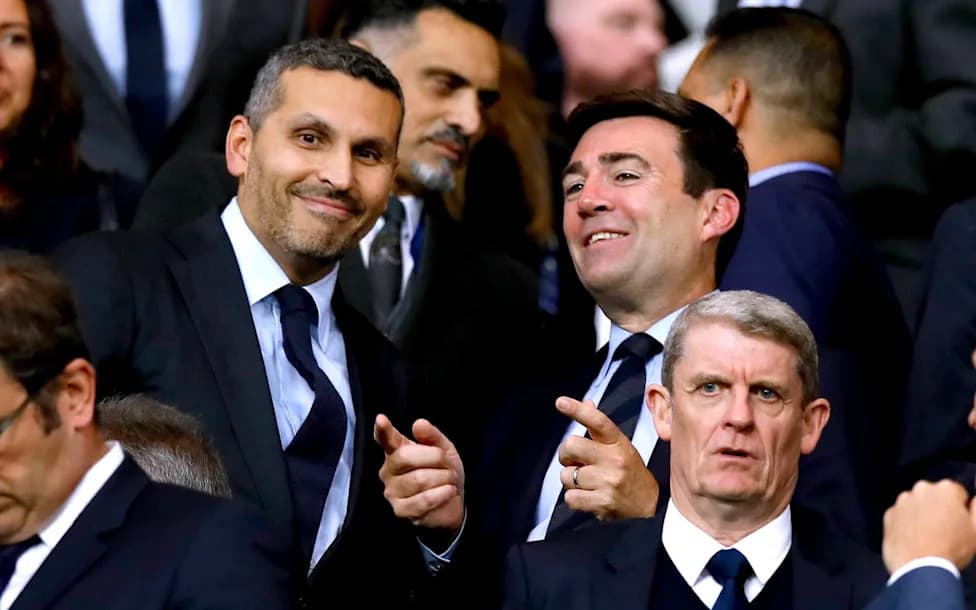
Andy Burnham with Khaldoon Al Mubarak, the chairman of Manchester City - Martin Rickett/PA
The Manchester City controversy has laid bare uncomfortable truths about the UK’s relationship with sovereign wealth and state-linked capital. Moves by Emirati actors — and the political reactions they have provoked at home — demonstrate how ownership linked to foreign states can become a lever of influence that reaches beyond sport.
How The Story Unfolded
For years Sheikh Mansour’s 2008 acquisition of Manchester City was presented as a private investment. The club’s website still carries his declaration:
“Despite what you may have read, I have bought the club in a private capacity and as part of my personal business strategy to hold a wide portfolio of business investments.”
Recent events, however — including legal threats reportedly originating from Etihad and warnings that other UK projects could be reconsidered — have undercut that narrative. Those moves have been read as signals that state-linked actors can and will apply economic or political pressure when decisions run counter to their interests.
Wider Context: Media, Politics And State-Linked Capital
The Telegraph’s own experience with the attempted takeover by RedBird IMI illustrates the wider stakes. The bid, publicly framed as a commercial transaction, was viewed by many as entangling the paper with a vehicle close to Emirati interests. After Parliament intervened to block the deal in 2024, diplomatic relations cooled and some investments were paused — showing how ownership disputes can escalate into broader political consequences.
Former journalists and editors who initially defended such transactions have since acknowledged mistakes, while security sources have warned that cities once considered discreet meeting hubs (notably Dubai) are now treated with suspicion because of surveillance concerns.
Why This Matters
There are two separate, legitimate considerations:
- Economic Openness: Sovereign capital can provide valuable investment across the economy, from manufacturing to infrastructure.
- National Resilience: Cultural and political institutions — newspapers, broadcasters, key civic assets and some parts of sport — carry democratic weight and public trust. Allowing foreign states to acquire controlling stakes in these institutions risks creating leverage that can be used for political ends.
The central argument is not anti-foreign investment: it is about drawing a line where state-backed ownership could undermine independence, editorial freedom, or national security.
Voices And Reactions
Public debate has also included defensive charges of xenophobia from some who opposed restrictions on sales to foreign buyers. Others have responded by pointing out the asymmetry that arises when potential proprietors are linked to unaccountable state power rather than to private, diversified capital.
Prominent defenders of the Emirati position, including some former media figures, have continued to press that the deals involved were commercial. Critics counter that the pattern of behaviour — threats, legal cases and investment warnings — weakens the claim of purely private intent.
What Should Policymakers Do?
Policymakers should strike a balance: welcome productive, transparent foreign investment that builds the UK economy, while protecting entities whose independence is fundamental to democratic discourse and civic life. Clear rules on state-linked ownership, robust transparency requirements and a careful distinctions-based approach will help preserve both openness and resilience.
Whatever the verdicts in court and wherever diplomacy leads, one lesson is clear: when powerful foreign states and state-linked capital are involved, the line between private investment and political leverage can quickly blur.
Help us improve.