Interest in private bunkers has surged since 2020 as buyers cite AI risks, cyberattacks, geopolitical conflict and domestic unrest. The market ranges from community-style Cold War–era silos to bespoke luxury subterranean residences with EMP and CBRN protections and independent power systems. Although some firms emphasize accessibility, the most secure, long-term facilities remain largely affordable only to wealthy individuals, corporations or governments. Developers report sharply increased inquiries and a shift from fringe curiosity to concrete planning.
AI, War and Civil Unrest: Why Affluent Buyers Are Flocking to Bunkers
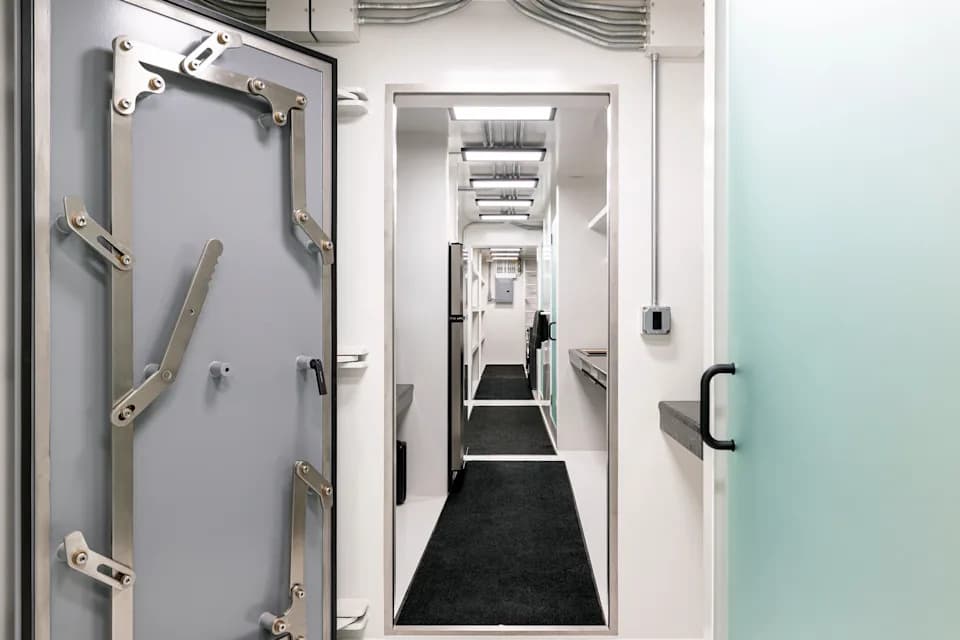
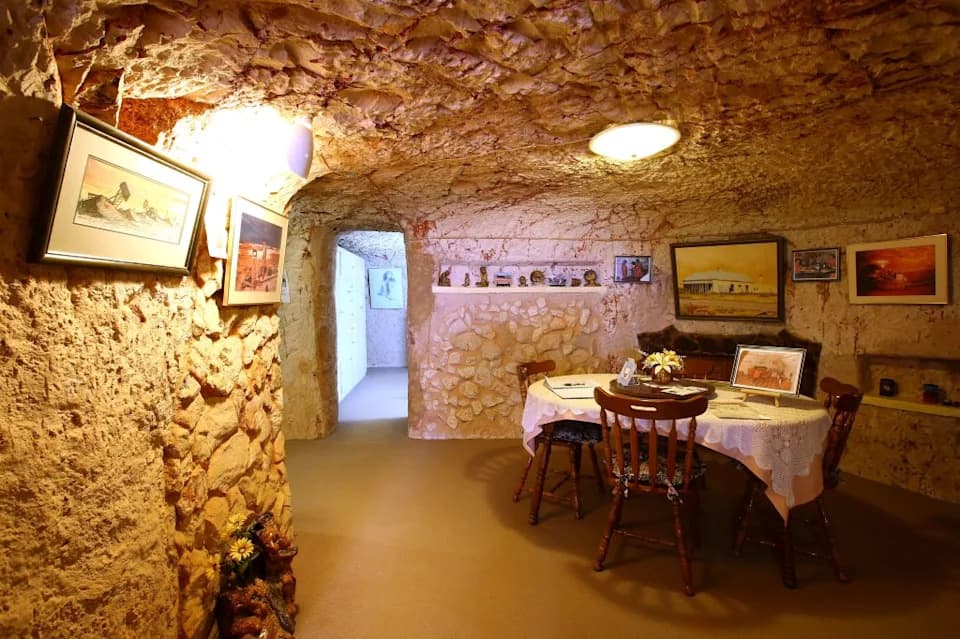
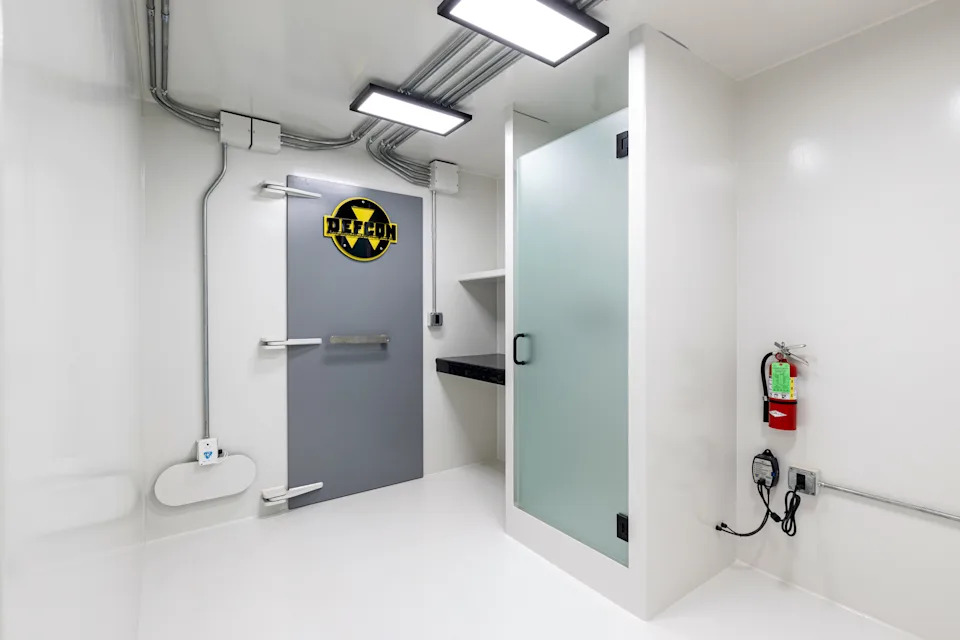
Inside one of DEFCON Underground's bunkers.
When potential clients first contact bunker builders, many are asked a simple, revealing question: "In your lifetime, do you feel like the world has become a better place or a worse place?" Cory Hubbard, co-owner of DEFCON Underground, uses that prompt as he works with an expanding mainstream market seeking protection against worst-case scenarios.
Why Demand Is Rising
From backyard shelters in the U.S. Midwest to deep subterranean complexes in Northern Europe and the Middle East, manufacturers now offer a wide range of designs, locations and price points. Executives in the sector say inquiries and sales have surged amid growing geopolitical and technological anxieties.
"Interest has grown sharply. I haven't put a precise figure on it, but the rise in inquiries and website traffic has been unmistakable," said Michael Brait, CEO of Bunker Building Consulting LLC. "A subject once treated as fringe has become a mainstream conversation among people with the means to act on it."
Disaster-preparedness firms report varied motivations: the desire for peace of mind, specific geopolitical fears, and accelerating technological risks. "One person is worried about Iran and where that goes. Someone else is concerned about the grid or a cyberattack. We hear about AI, political unrest, another pandemic, natural disasters," said Naomi Corbi, partner and director of operations at SAFE (Strategically Armored & Fortified Environments). "Often a client will mention three or four things in the same conversation. There's a general sense that the world feels less predictable than it did even a few years ago."
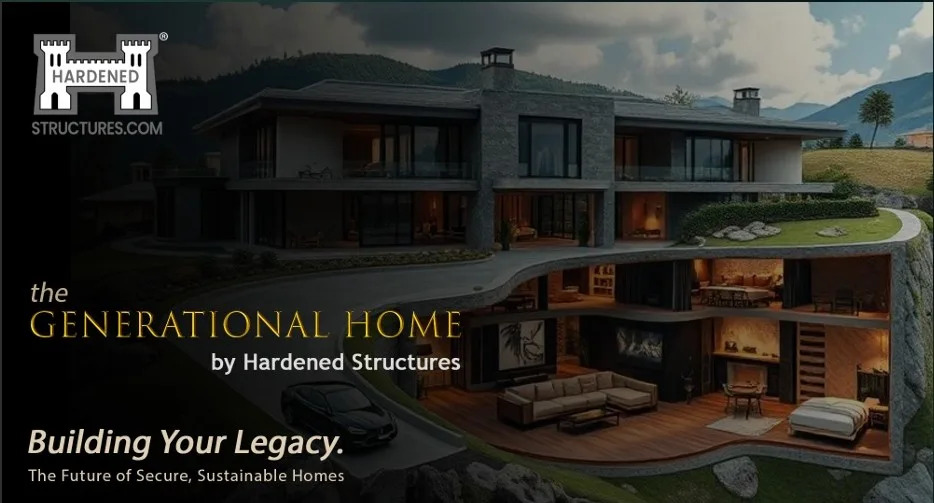
A brochure for the company's "generational home."
AI, Cybersecurity and Civil Unrest
Concerns about artificial intelligence have moved from niche debate into many client conversations. "The risks posed by powerful, out-of-control AIs are not overblown," said Andrew Yoon, head of research at the AI safety nonprofit CivAI, adding that even without an apocalyptic scenario these rapidly evolving risks merit humility and planning.
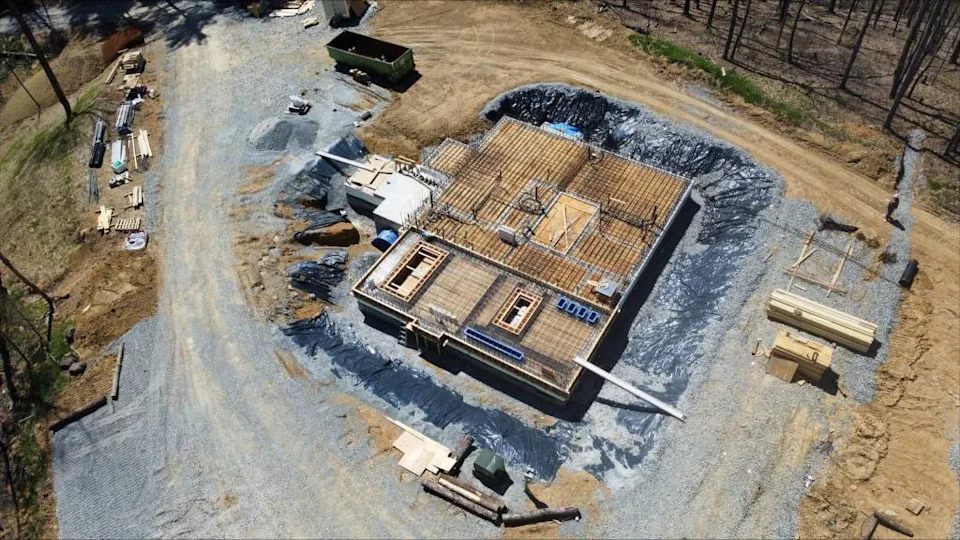
A drone image of a Hardened Structures bunker under construction
At DEFCON Underground and other builders, worries about civil unrest and potential domestic conflict are common among U.S. customers who see the country growing more polarized. Ron Hubbard, CEO of Atlas Survival Shelters, pointed to a "cocktail" of drivers since 2020: the COVID-19 pandemic, the war in Ukraine, tensions with Iran, migration pressures and now AI.
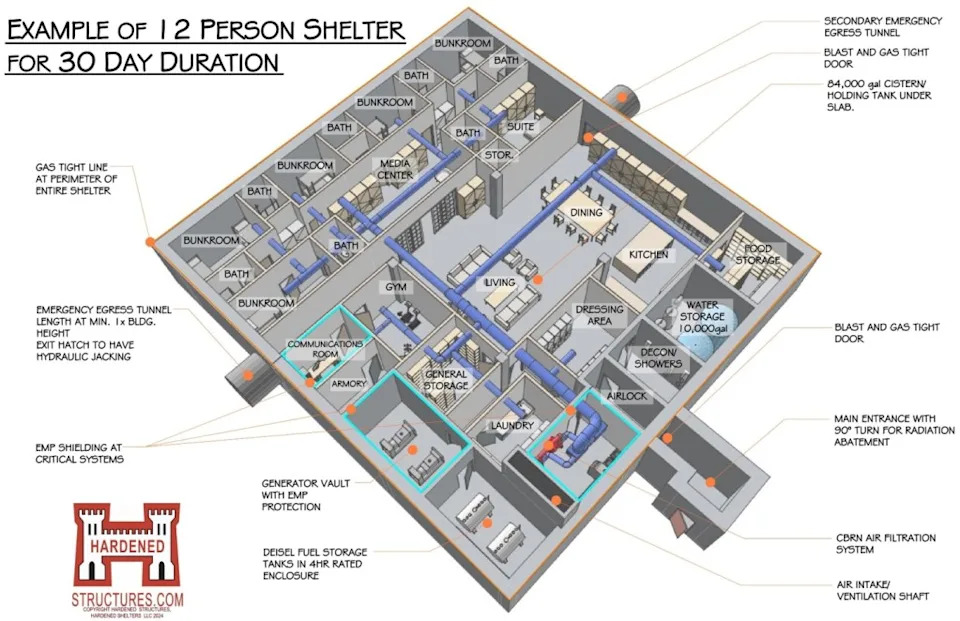
Range of Offerings: From Community Silos to Luxury Residences
The market covers both community-style shelters and bespoke luxury bunkers. Vivos, which began seeking to create a global network of underground community shelters, offers private accommodations intended to withstand threats from nuclear strikes to economic collapse and massive natural disasters. One Cold War–era, "nuclear-hardened" Indiana facility is advertised as able to withstand a 20-megaton blast, with individual spaces listed at about $50,000 and discounts for people with useful skills.
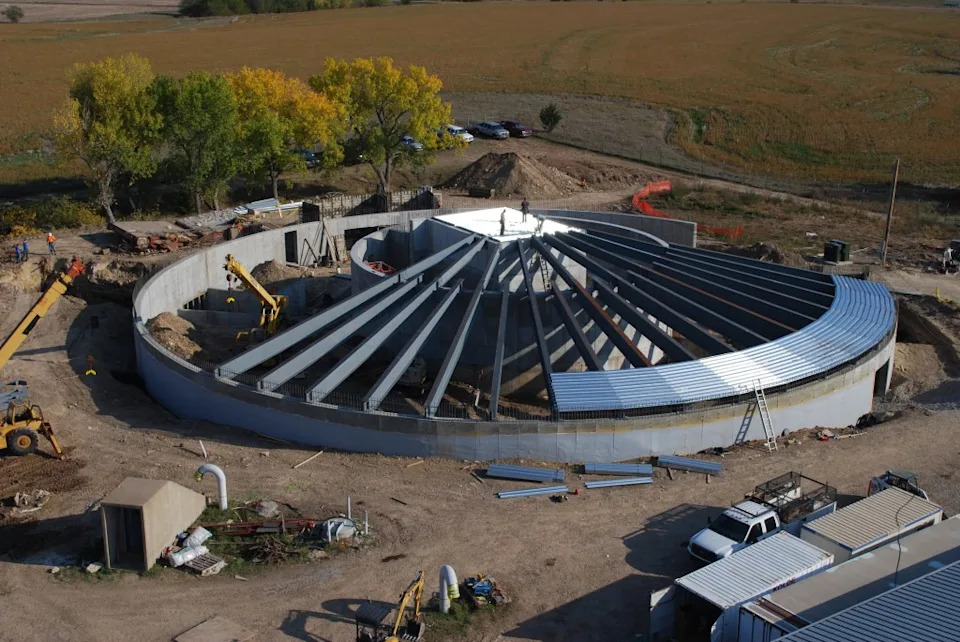
The silo being rebuilt into a 15-storey fallout shelter.
Hardened Structures reports roughly $100 million in projects under way and said it has assisted foreign governments in the Middle East, Poland, Spain and Ukraine with fortified facilities, with U.S. State Department approval on some efforts.
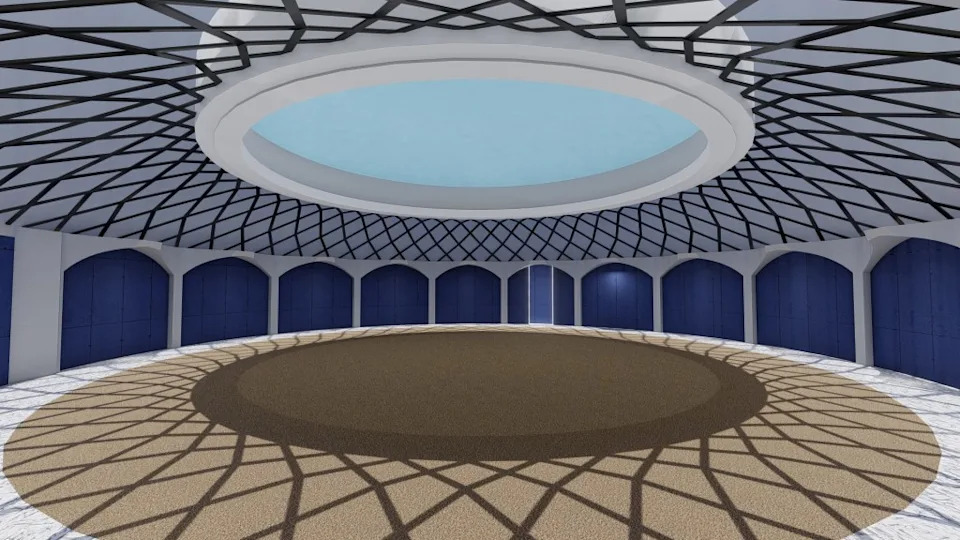
The design for an in-bunker Mosque.
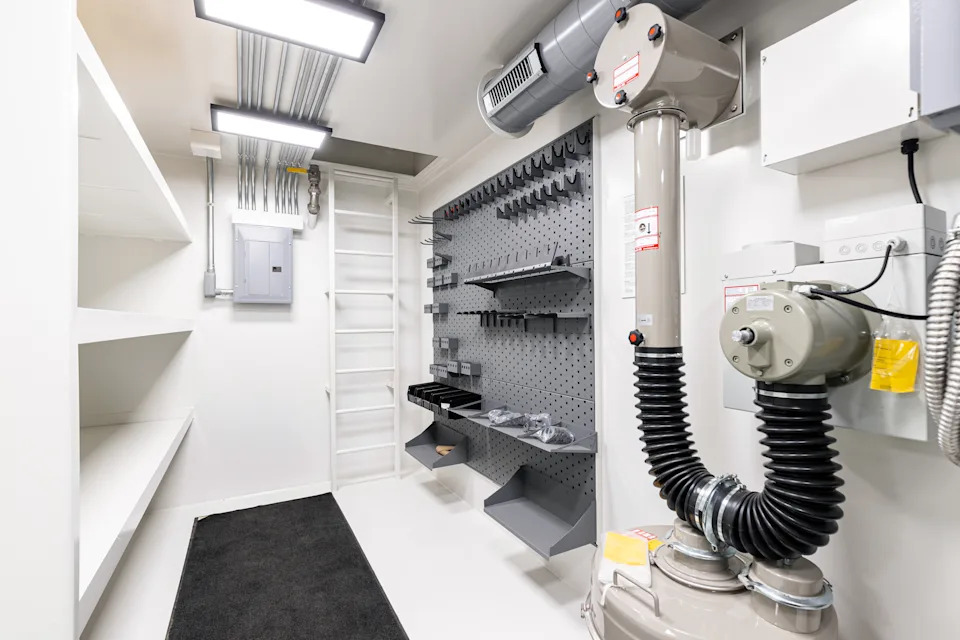
On the high end, companies like SAFE and Hardened Structures build multi-function residences with EMP protection, CBRN (chemical, biological, radiological and nuclear) air filtration, independent power, medical suites and command centers. Designers also emphasize livability: full kitchens, bedroom suites, gyms, pools, simulated exterior views, circadian lighting and even pet accommodations.
Notable Examples
Survival Condo converted a decommissioned missile silo in northern Kansas into a 15-storey, roughly 20,000-square-foot underground complex that can house and sustain up to about 75 people for years. Larry Hall bought the silo in 2008 for $300,000 and developed it into a multi-unit community; some wealthy clients prefer such community models to isolated private bunkers.
Developers also describe bespoke requests from affluent buyers, including helipads and facility-wide cultural accommodations. Many luxury projects are marketed as multi-million- or even multi-hundred-million-dollar developments, and some firms openly serve high-net-worth individuals and corporations while others emphasize a broader customer base.
Who Can Afford It?
While companies say inquiries now come from a broad cross-section of the public, most large-scale and highly fortified projects remain accessible primarily to wealthy buyers and institutions. Executives note that many initial inquiries underestimate costs and logistics; serious, high-value projects typically involve lawyers and long planning horizons.
As one industry executive put it: survival is a basic human imperative, but the market for engineered, long-term subterranean survival is stratified—those who think the world is getting worse are much more likely to invest in shelters.
Note: Newsweek reporters used the AI assistant Martyn in producing the original story.
Help us improve.