Eric Jorgenson’s The Book of Elon examines how Elon Musk’s "philosophy of curiosity" and a five‑step engineering "algorithm" drive his long‑term projects at Tesla and SpaceX. Jorgenson says he reviewed millions of words of Musk’s public record to extract the principles behind his decision‑making. The book also covers Musk’s XAI work, its overlap with SpaceX AI, and how many of his major ideas date back to college. Jorgenson hopes the book will inspire a new generation of engineers and problem‑solvers.
New Book Decodes Elon Musk’s Mindset: Curiosity, 'The Algorithm' And A Mission To Make Life Multi‑Planetary

Eric Jorgenson Book of Elon interview
Eric Jorgenson’s new book, The Book of Elon: A Guide to Purpose and Success, aims to unpack the ideas and methods behind Elon Musk’s most ambitious ventures. Jorgenson argues that Musk is driven less by wealth than by a long‑range mission to understand the universe, solve hard engineering problems and expand humanity’s horizons.
How Jorgenson Researched Musk
Jorgenson says he reviewed millions of words—interviews, speeches and public appearances—to identify recurring principles that have shaped Musk’s approach to building companies like Tesla and SpaceX. He distills those principles into practical lessons and patterns readers can apply.

Jorgenson says he reviewed millions of words, interviews and public appearances to identify the ideas that shaped Musk's approach to building companies.
Philosophy Of Curiosity And The Five‑Step "Algorithm"
Central to Jorgenson’s portrait is what he calls Musk’s "philosophy of curiosity": a worldview that treats science, engineering and technological progress as methods for solving mysteries and expanding human capabilities. The book also outlines a five‑step engineering process Jorgenson dubs "the algorithm," and shows how Tesla and SpaceX apply it to iterate quickly and solve complex problems.
"He's driven by this bigger mission of understanding more about the universe... science and engineering and technological progress is this method of understanding and learning more about the universe," Jorgenson says.
Projects, AI And Early Ambitions
Jorgenson discusses Musk’s XAI initiative—described in the book as "truth‑seeking AI"—and how that effort has converged with SpaceX’s own AI projects. He also highlights that many of Musk’s signature goals—electric cars, autonomous driving and making life multi‑planetary—date back to his college years and have guided decades of decision‑making.
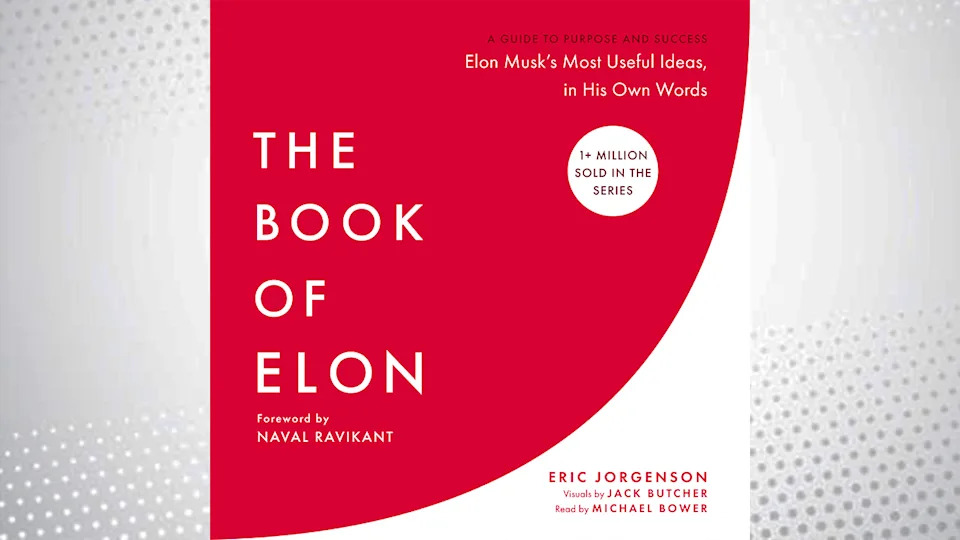
Eric Jorgenson says his mission with The Book of Elon is to "create one million Musks" by teaching readers the methods behind Musk's work.
Work Ethic, Leadership And Impact
The book mixes anecdotes about Musk’s intense work habits and rapid decision‑making with comparisons to other leaders. Jorgenson contrasts Musk’s hands‑on, factory‑forward approach to space and manufacturing with the more passive strategies of some peers, noting that Musk continues to double down on engineering and operational details even as his companies scale.
Jorgenson also notes that Musk has helped build companies that have reached roughly trillion‑dollar valuations over the past 25 years, and that his thinking often favors long‑term mission outcomes over short‑term financial returns.

Eric Jorgenson hopes The Book of Elon will inspire a million more people to tackle major problems through engineering and innovation.
Aspirations For Readers
Jorgenson says his goal for the book is ambitious: to "create one million Musks"—that is, to inspire a new generation of engineers and problem‑solvers who will tackle global, large‑scale challenges through technical innovation.
Recently, Musk was asked by Pete Hegseth to advise the Pentagon on which weapons and technologies American forces may need for future conflicts—an example Jorgenson uses to illustrate how Musk’s expertise is being sought in national‑security and policy circles.
Whether readers agree with every conclusion, Jorgenson’s book collects a coherent portrait of Musk as a curiosity‑driven, mission‑focused builder and offers concrete patterns for applying that mindset to difficult problems.
Help us improve.