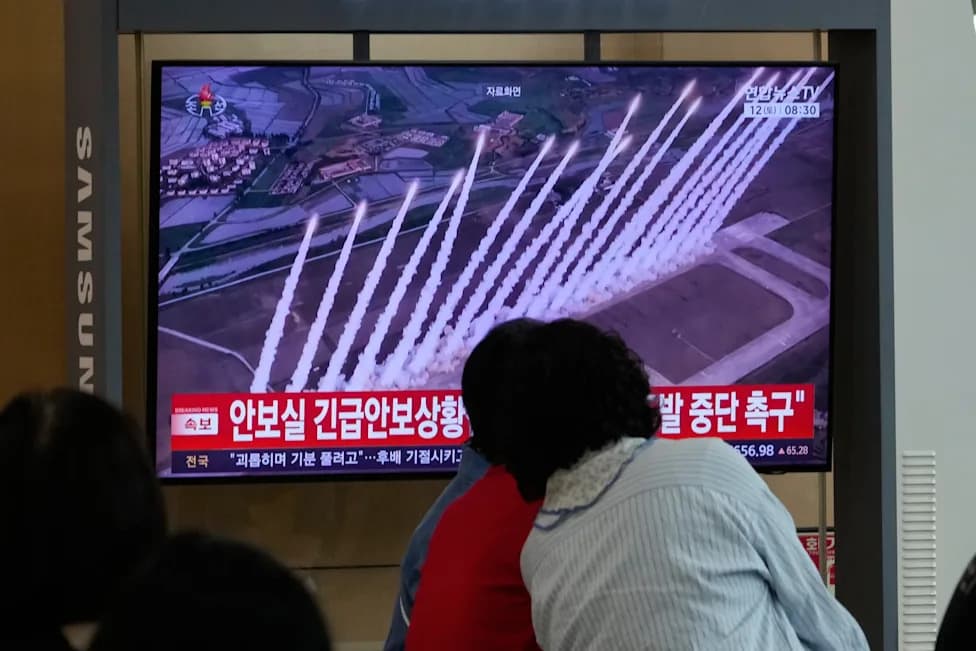
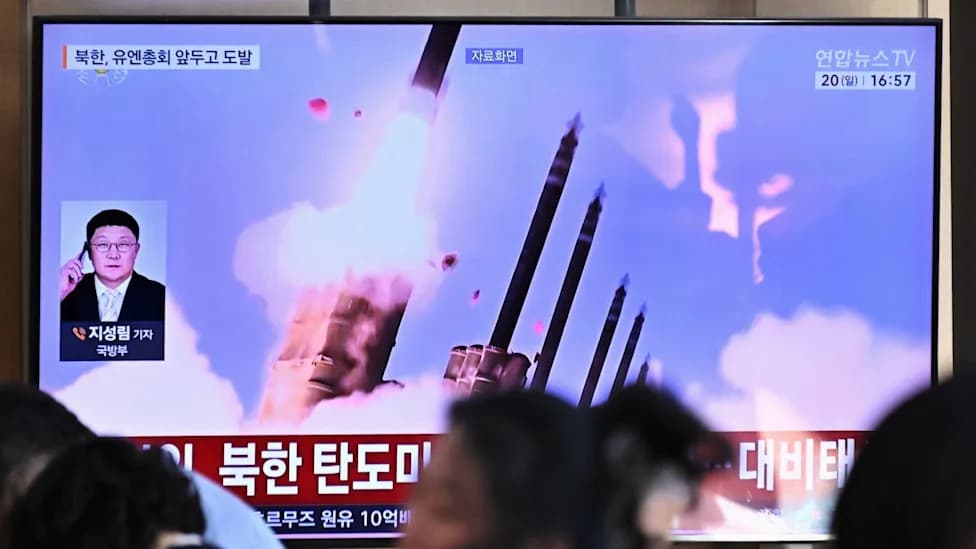
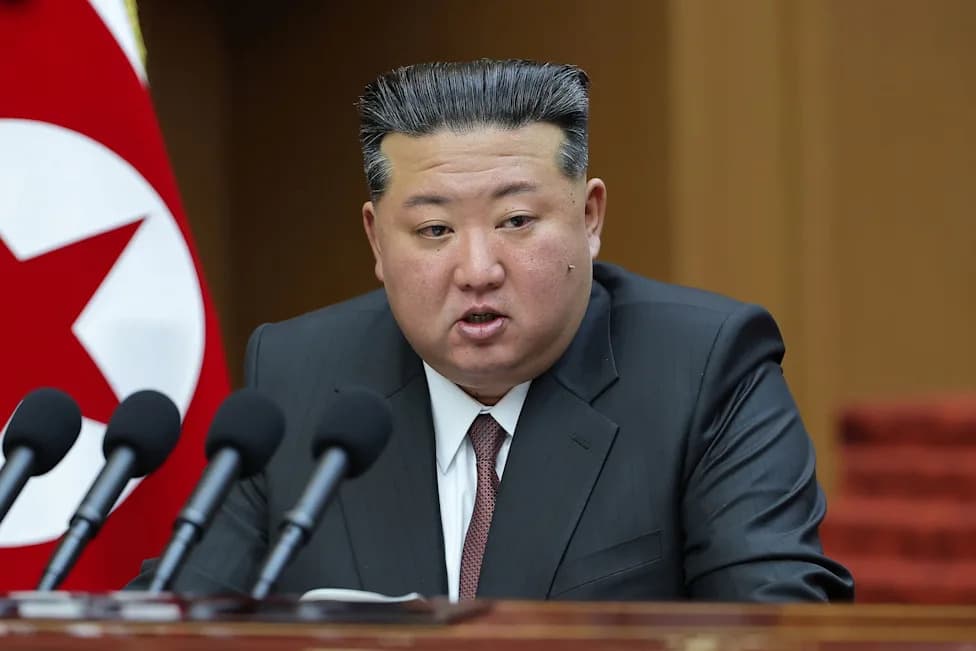
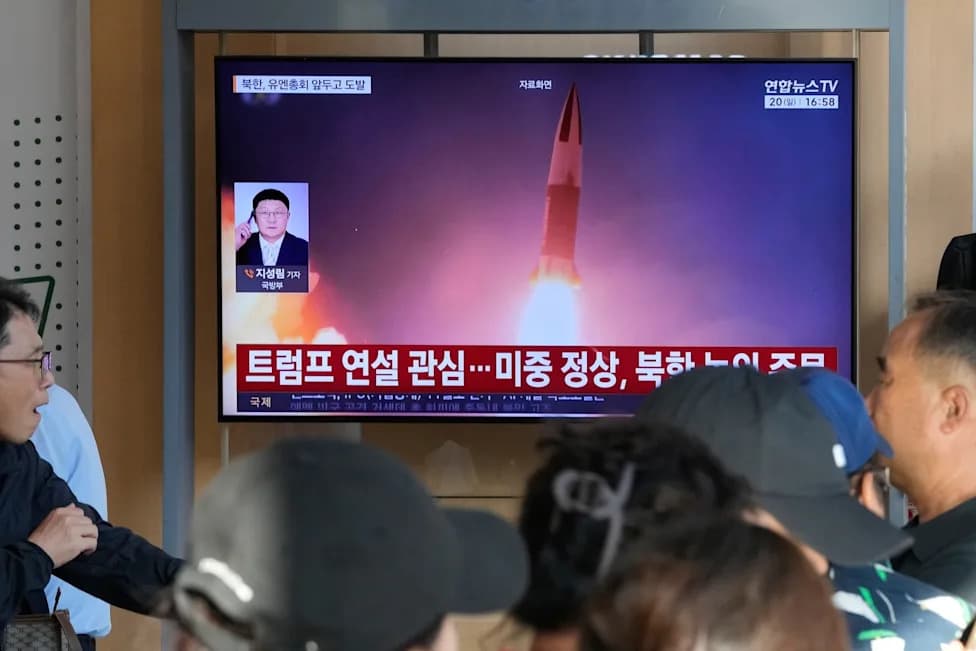
North Korea said Kim Jong Un supervised a test of an intermediate-range missile that KCNA reported struck a target 1,000 km away. South Korea separately reported an early-morning launch from Wonsan that travelled more than 700 km toward waters east of the peninsula. Analysts say the launches aim to develop military capabilities and demonstrate strength despite UN Security Council bans on such tests.
North Korea Says Kim Jong Un Oversaw Intermediate-Range Missile Test; KCNA Reports 1,000 km Strike
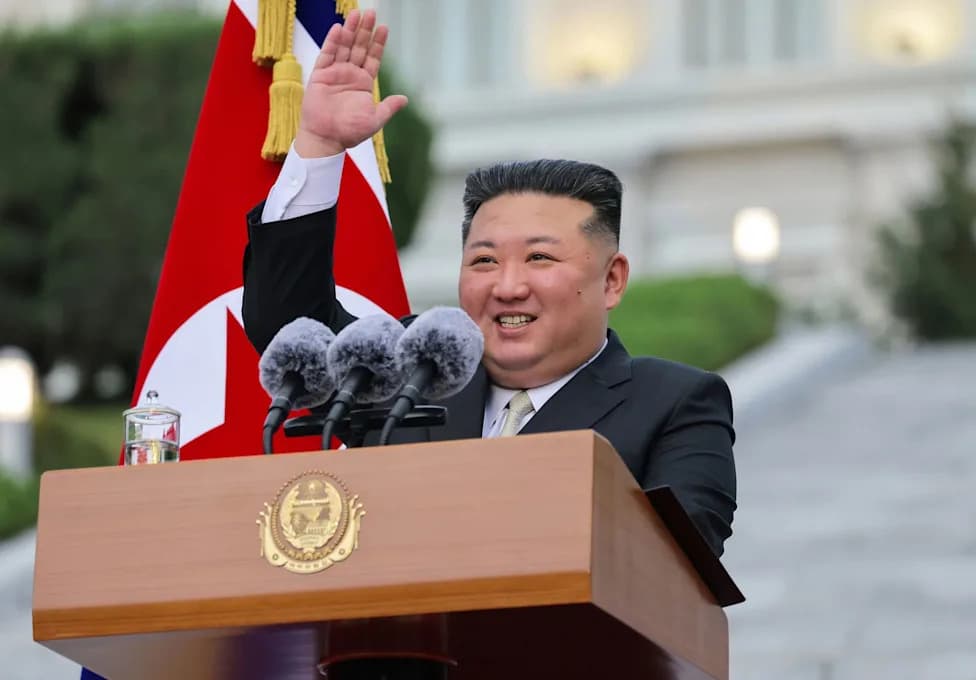
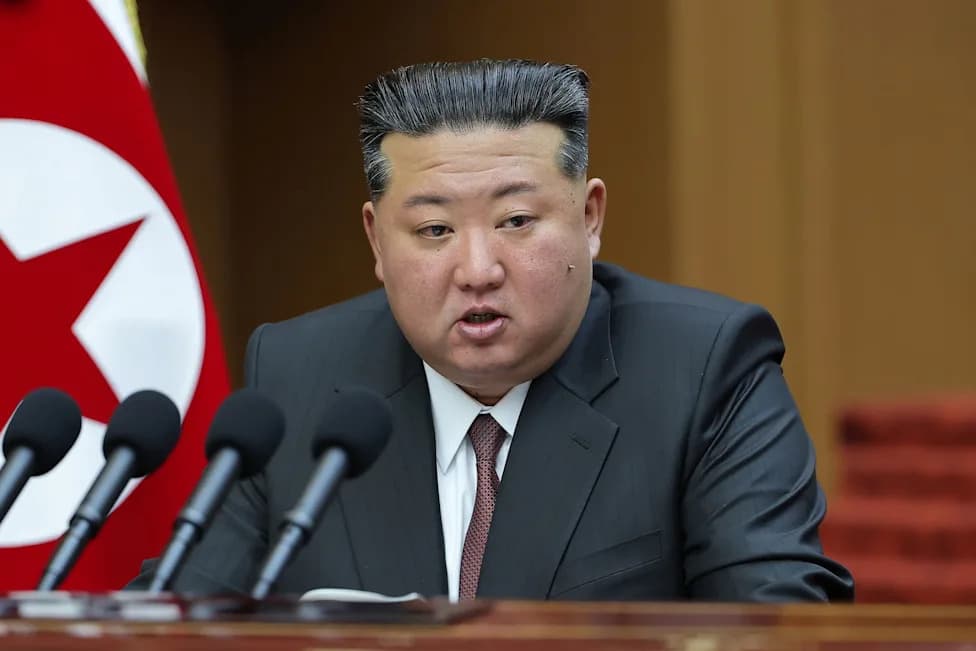
A photograph released by North Korea's official Korean Central News Agency (KCNA) on September 30, 2026, shows North Korean leader Kim Jong Un addressing a ceremony at Kim Il Sung University in Pyongyang marking the 80th anniversary of the country's top university. (is associated with: «Pyongyang says it tested intermediate-range strategic missile») -/YNA/dpa
North Korea told state media on Sunday that leader Kim Jong Un personally oversaw a test of an intermediate-range strategic missile, which the state-run Korean Central News Agency (KCNA) said struck a target 1,000 kilometres away.
KCNA said the Saturday launch was used to train missile units operating what it described as a "hypersonic strategic weapon system." The agency framed the exercise as both a training drill and a demonstration of Pyongyang's growing strike capabilities.
Separately, South Korea's military reported an early-morning ballistic missile launch from the Wonsan area on Saturday that travelled more than 700 kilometres toward waters east of the Korean Peninsula. Seoul said the projectile landed in the sea; KCNA's account emphasized the 1,000-kilometre impact range, a discrepancy that could reflect different tracking data, reporting windows, or multiple related launches.
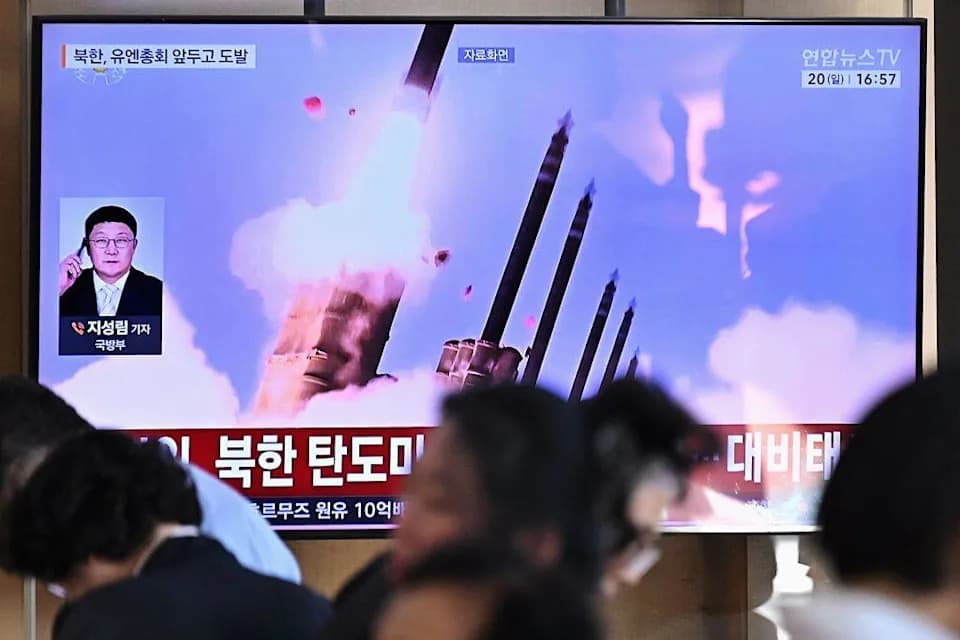
North Korea previously fired at least one ballistic missile in the same direction on Sept. 20. Analysts say such tests aim to advance the regime's weapons development, improve operational training and send a message of deterrence and domestic strength.
Legal and Regional Context
Pyongyang's missile launches are subject to international condemnation: multiple United Nations Security Council resolutions prohibit North Korea from conducting ballistic missile tests. The tests also heighten tensions with neighbours, prompting monitoring and defensive readiness in South Korea and Japan.
What To Watch
- Whether follow-up tests occur and whether North Korea provides technical details about the system KCNA called a "hypersonic strategic weapon system."
- Responses from Seoul, Tokyo, Washington and the UN Security Council, including possible statements, sanctions actions, or military posture adjustments.
- Independent tracking data from regional militaries and open-source analysts that may clarify range, trajectory and whether the missile displayed hypersonic characteristics.
Note: KCNA’s state-run account and South Korean military data differ on reported ranges (1,000 km vs. more than 700 km). Such differences are common in early reporting and can be resolved as more information becomes available.
Help us improve.