Proposal: The government is considering replacing the BBC licence fee with an £11 monthly levy added to household broadband bills, which would bring in roughly £132 a year versus the current £180 fee. Proponents say it would stabilise funding and cut collection costs, but industry experts warn it could raise bills by over 50% for some households and accelerate a shift to mobile-only internet use. Critics also warn of a potential "doom loop" — fewer broadband subscribers pushing up per-user levies and costs — and say the charge could slow the move to a fully streaming TV future by 2034.
Could an £11 ‘Broadband Levy’ Replace the BBC Licence Fee? What It Would Mean For Households
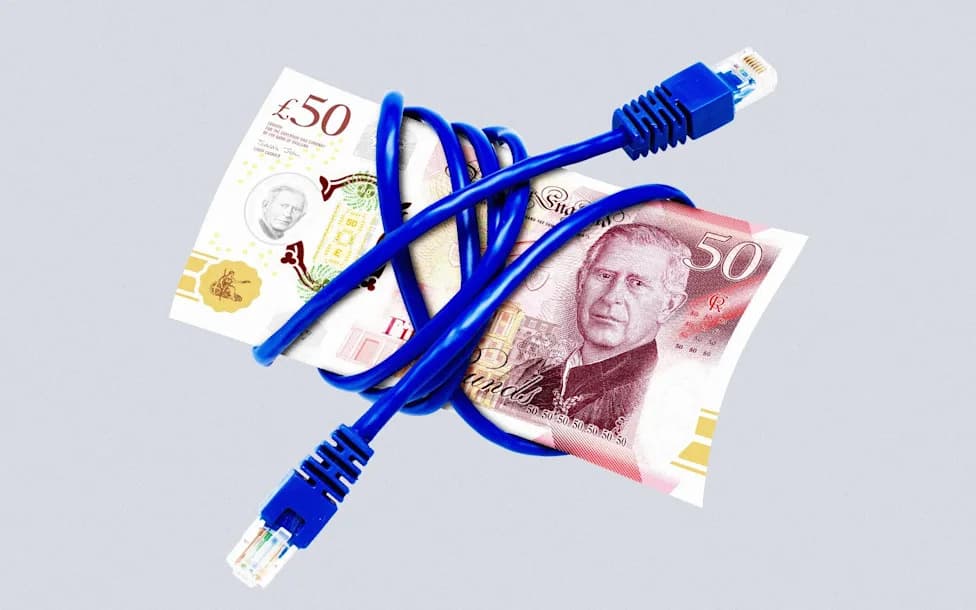
Illustration: broadband cable/cash
As ministers reassess how to fund the BBC ahead of the 2028 Charter review, one increasingly prominent proposal would scrap the existing TV licence and replace it with an £11 monthly levy added to household broadband bills.
What the Proposal Would Do
Originally proposed by the Social Market Foundation think tank, the measure would require everyone with a fixed home internet connection to pay a monthly charge of £11 — £132 a year — compared with the current £180 annual licence fee. Supporters say the approach would stabilise funding for the public broadcaster and cut BBC collection costs, which MPs estimate could save about £190m a year.
Who Supports And Who Opposes It
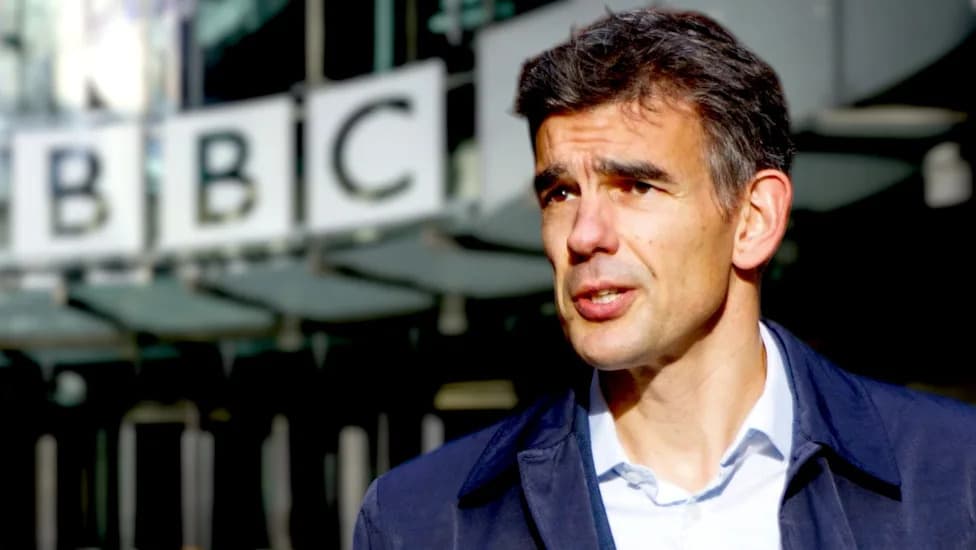
Culture Secretary Lisa Nandy has said she would not back a direct tax to fund the BBC, but some MPs have backed a so-called "household levy". The BBC itself argues that spreading costs more widely is necessary: director-general Matt Brittin told Laura Kuenssberg that if the BBC is "for everyone, then it needs to be funded by everyone." The corporation points to research suggesting 94% of adults use BBC services monthly, while under 80% of households currently pay the licence fee.
Industry Concerns And Potential Consequences
Industry analysts and campaigners warn that tying a levy to broadband bills could have far-reaching and unintended consequences. Entry-level broadband packages in the UK typically cost between £20 and £25. Adding £11 would therefore push some customers’ bills up by more than 50%, a "quite a dramatic increase" for households trying to minimise spending, according to James Barford of Enders Analysis.
"Using telecoms bills as a mechanism for licence fee funding is baffling... This funding model does not exist anywhere else, raises serious questions over implementation and enforcement, and could hinder fibre take-up while piling more costs onto millions of households," an industry executive said.
Broadband providers such as BT and Virgin Media O2 have warned that persistently low retail prices have already constrained investment in network upgrades; being asked to collect a levy could add to their operational burden and political frictions.
Market Effects And The Risk Of A 'Doom Loop'
Fixed broadband subscriptions fell in 2025 for the first time, driven in part by customers switching to alternatives such as Elon Musk’s Starlink and by younger people using mobile-only connections. Analysts fear an added cost on fixed internet could accelerate that trend. More households abandoning wired broadband could reduce the levy base, forcing higher per-connection charges to maintain BBC revenue — and causing providers to raise prices to cover fixed network costs. Enders Analysis calls this potential spiral a "doom loop" that would leave remaining subscribers paying more.
Paddy Paddison, chief executive of broadband industry body INCA, described the idea as a "self-defeating approach to moving television online": taxing the very connection that streaming depends upon could slow the planned transition from terrestrial TV to a full streaming model by 2034, which ministers say can only proceed if affordable, high-speed broadband is widely available.
Alternatives And Political Challenges
Alternatives floated include applying a surcharge to mobile bills instead of broadband, or attaching a household charge to a more universal utility such as water or energy. Analysts warn that adding costs to mobile plans — some of which start around £5 a month — risks harming digital inclusion and would be politically sensitive. Attaching a levy to utilities raises different fairness and administrative questions.
Bottom Line
The proposed £11 broadband levy is pitched as a simpler, lower-cost way to fund the BBC, but industry and consumer groups warn it could raise bills sharply for some households, accelerate moves away from fixed broadband, delay the streaming switchover and deepen digital exclusion. Ministers will weigh these trade-offs as part of the Charter review, considering how the BBC can operate more efficiently, generate commercial revenue and reform the licence fee.
Help us improve.