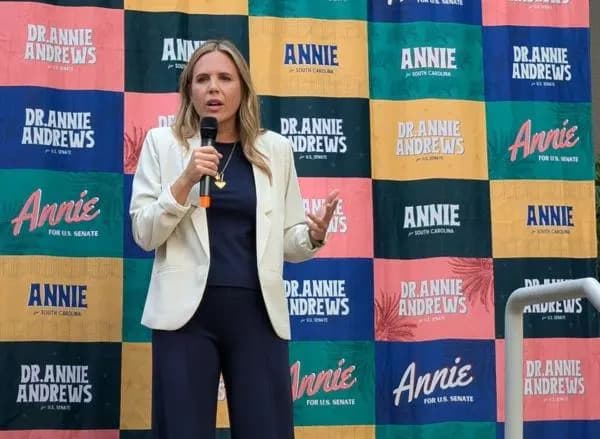
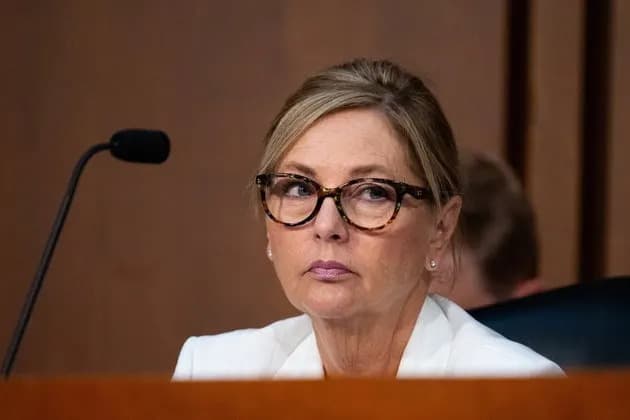
In Brief: With about a month until the election, Democrat Annie Andrews has outspent Republicans roughly $5.1M to $4.9M and maintained an aggressive travel and media schedule while Sen. Darline Graham’s in-state presence has been limited by Senate responsibilities and fundraising shortfalls. The race is polling as a toss-up, with outside PACs, a potential write-in campaign and third-party voters adding unpredictable elements ahead of an Oct. 11 debate.
Andrews Outspends Graham in Tight SC Senate Race — But Underdog Status Remains
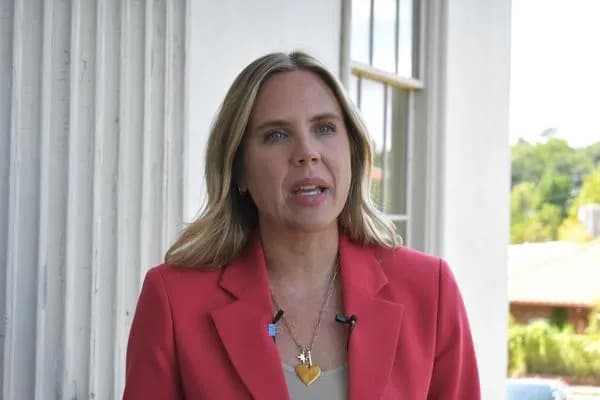
Annie Andrews, Democratic candidate for U.S. Senate, in Graniteville on Sept. 8. Carl Dawson/Staff
With roughly a month to go before Election Day, Democrat Annie Andrews has built a nonstop campaign presence across South Carolina while Republican U.S. Sen. Darline Graham — who has served three months after succeeding her late brother — has been noticeably constrained by Senate duties and fundraising shortfalls.
Fundraising, Advertising And Visibility
Democratic spending in the race has edged out Republican spending by several hundred thousand dollars, roughly $5.1 million to $4.9 million. Andrews’ campaign and allied groups have maintained heavy TV and digital buys, while Graham’s campaign repeatedly appealed to supporters for help getting ads on air. Ahead of the Sept. 30 federal filing, Graham reportedly had about $250,000 in campaign cash on hand.
Campaign Strategies
Annie Andrews has leaned into a moderate, economy-focused message: high gas prices, concerns about artificial intelligence and data centers, and opposition to the war in Iran. Andrews has pursued a high-profile travel and media schedule, appearing on national networks and even conservative Upstate talk radio to burnish her moderate credentials.
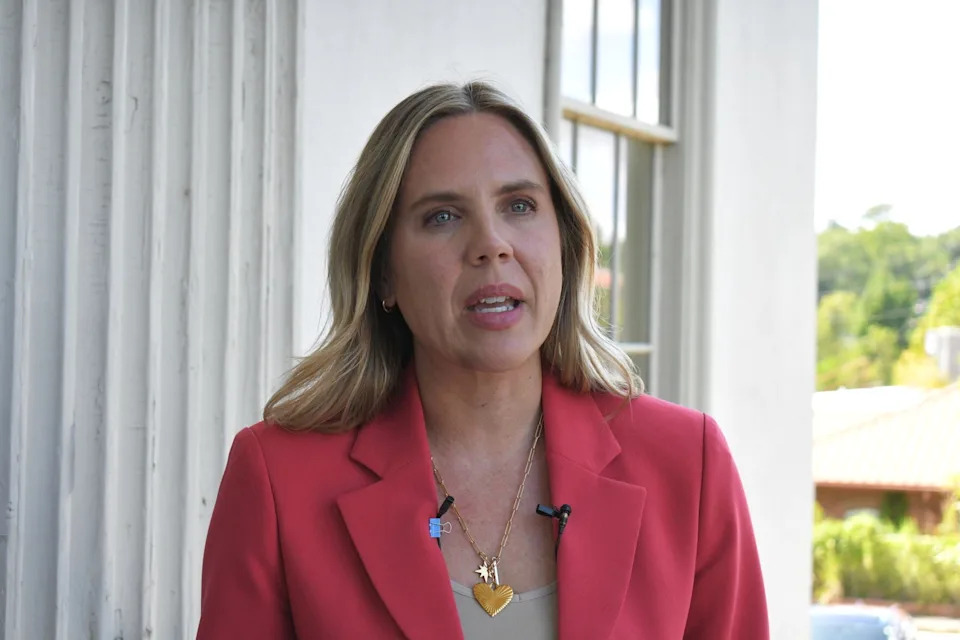
Annie Andrews, Democratic candidate for U.S. Senate, in Graniteville on Sept. 8. Carl Dawson/Staff
Darline Graham has framed the contest around culture-war issues ahead of an Oct. 11 debate, attacking Andrews’ positions on transgender athletes, abortion, gun rights and related topics. Graham has also sought to cast herself as a conservative heir to her brother’s legacy, though her time in Washington this fall has limited in-person campaigning in-state.
Outside Groups And Support
Outside spending has played a notable role. A Graham-aligned PAC, Security Is Strength, has spent six-figure sums attacking Andrews, while American Mission — a super PAC linked to tech figures Greg Brockman and Joe Lonsdale — disclosed nearly $500,000 in support for Graham in September FEC filings. High-profile Republicans such as Vice President JD Vance and Sen. John Thune have lent support or allowed their likenesses to be used in materials backing Graham.
Polls, Wildcards And The Outlook
Recent polls show a close, essentially toss-up race, but structural realities in South Carolina still favor Republicans: no Democrat has won statewide since 2006. Third-party Libertarian Kasie Whitener polls in the low single digits and could siphon votes, and a small but vocal write-in movement for former candidate Ralph Norman — even after his disavowal — adds an unpredictable element. Internal GOP polling in late September showed Republicans ahead on the generic ballot by about six points, though many voters remained undecided.
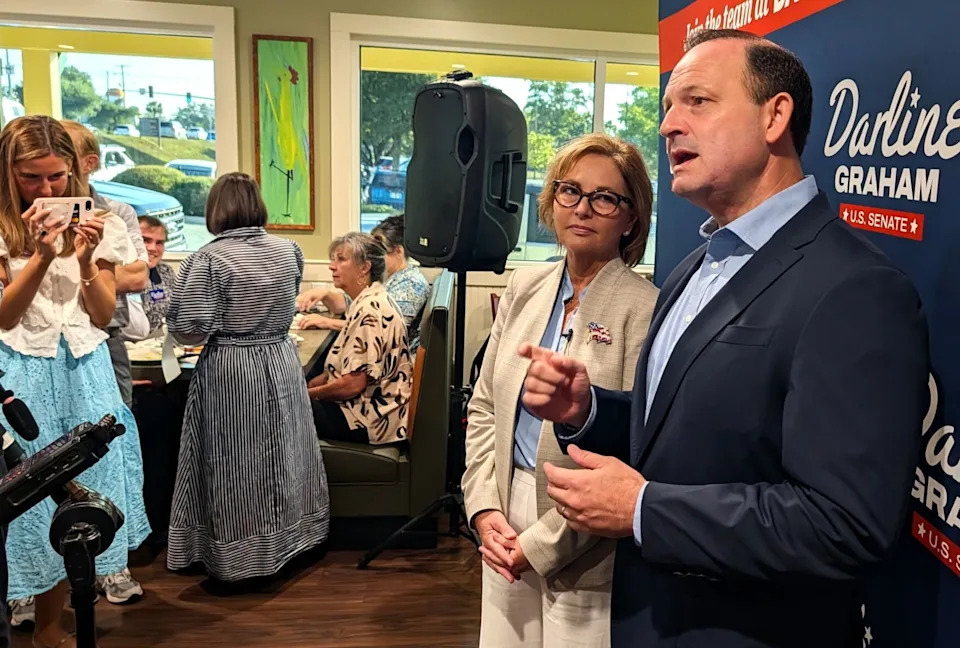
U.S. Sen. Darline Graham campaigns with Attorney General and Republican nominee for Governor Alan Wilson during a September 2026 campaign stop at a Lizard's Thicket restaurant in Lexington, S.C. Nick Reynolds/Staff
The Cook Political Report moved the seat from "Safe Republican" to "Likely Republican," prompting criticism from longtime Graham consultant Mark Knoop, who noted Cook’s 2020 misread of Lindsey Graham’s race.
Background
Andrews entered the race with organizational assets from a prior effort: a now-defunct PAC called Their Future that generated mailing lists and consultant relationships later used in her Senate campaign. Graham, still building a general-election operation after a bruising primary, has high-level Republican allies but faces fundraising competition from other GOP priorities nationwide.
"Darline Graham's strategy is clear: avoid reporters, avoid voters, and lie about Annie because she doesn't have a plan to help South Carolina," said an Andrews campaign statement. Graham's camp says it must "educate" voters about Andrews' record.
As the campaign enters its final weeks, money, outside spending and turnout dynamics in conservative Upstate counties — where Graham’s support is weakest — will likely determine whether Andrews’ spending advantage translates into a historic Democratic breakthrough or whether South Carolina’s Republican tilt reasserts itself.
Help us improve.