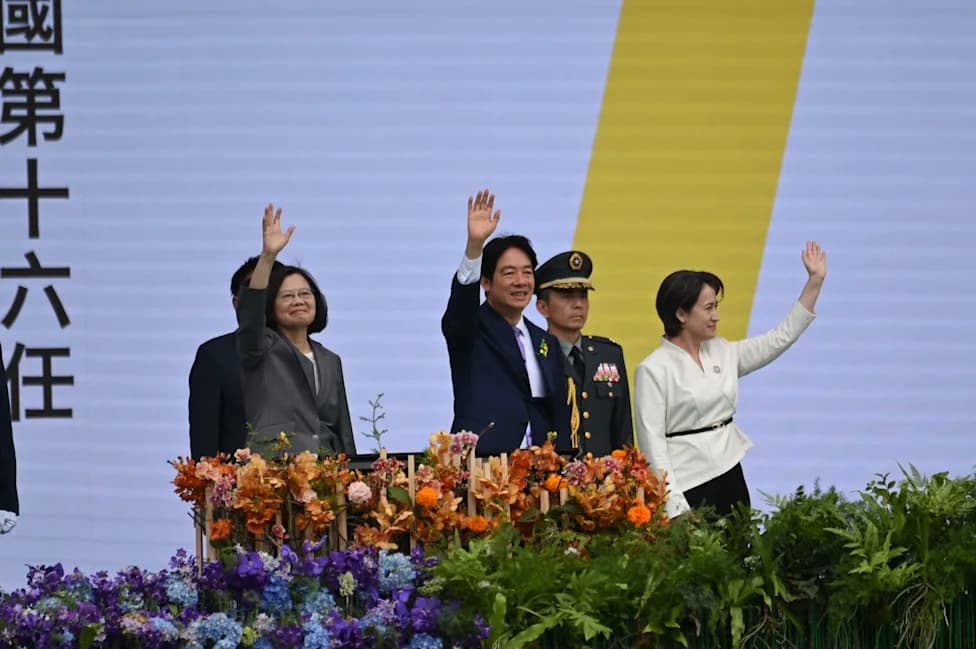
Former Taiwanese president Tsai Ing-wen will visit the United States next week to deliver opening remarks at the Stanford DEFCON 2026 Technology & National Security Conference — her first trip to the U.S. since leaving office in 2024. She says she will discuss Taiwan's approach to balancing technological development, democratic resilience and national security. Beijing routinely objects to foreign visits by senior Taiwanese officials and has not responded to requests for comment. The U.S. remains Taiwan's key international backer despite lacking formal diplomatic ties.
Former Taiwan President Tsai Ing-wen To Visit U.S. Next Week To Open Stanford DEFCON 2026
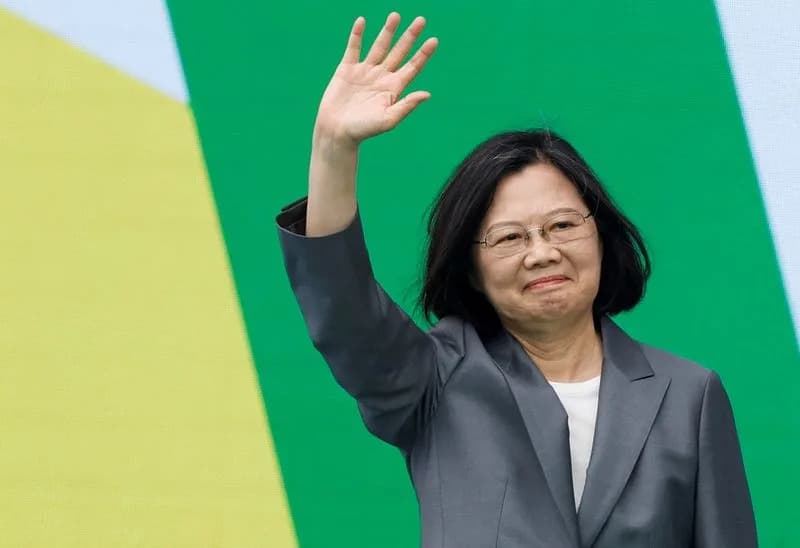
FILE PHOTO: Taiwan's former President Tsai Ing-wen waves during the inauguration of new President Lai Ching-te and new Vice President Hsiao Bi-khim, outside the Presidential office building in Taipei, Taiwan May 20, 2024. REUTERS/Carlos Garcia Rawlins/File Photo
Former Taiwan President Tsai Ing-wen said on Friday she will travel to the United States next week to deliver the opening remarks at the Stanford DEFCON 2026 Technology & National Security Conference — her first trip to the U.S. since leaving office in 2024.
Tsai posted on Facebook that she intends to "share Taiwan's experience with friends from academia, government, and the technology industry, as well as how we continue to face new challenges in balancing technological development, democratic resilience, and national security."
"I will share Taiwan's experience with friends from academia, government, and the technology industry, as well as how we continue to face new challenges in balancing technological development, democratic resilience, and national security," she wrote on Facebook.
Context And Diplomatic Tensions
Beijing, which regards democratically governed Taiwan as part of its territory, routinely objects to visits by senior Taiwanese officials, including former leaders. China's foreign ministry did not immediately respond to requests for comment.
Since leaving office, Tsai has traveled to several countries, including the United Kingdom, France and Canada. Beijing cut official communications with Tsai after her 2016 election victory and again after her 2020 re-election, accusing her and the Democratic Progressive Party of supporting separatism. China also declines official contact with her successor, President Lai Ching-te.
U.S.-Taiwan Relations
The United States does not have formal diplomatic ties with Taiwan but remains its most important international backer and primary supplier of defensive arms. Lai Ching-te has not yet visited the U.S. during President Donald Trump's second administration.
Taiwan's government says it has the right to engage with the international community and continues to reject Beijing's claims of sovereignty over the island.
Reporting: This article is based on public statements from Tsai, official background on cross-strait relations, and reporting by news agencies.
Help us improve.