Israel says Iran is evaluating responses as nuclear talks with Washington stall and US pressure mounts. Officials report a rise in unresolved incidents and nights of heightened readiness while highlighting Iran's economic strain from sanctions and new naval measures. Tanker traffic through the Strait of Hormuz has returned to pre-war levels (about 30–40 ships per day) and the rial has weakened to roughly 2.5 million per US dollar. Israel warns that failed Iranian attacks so far could still spiral into unpredictable escalation if a strike causes casualties.
Iran Weighs Responses as Nuclear Talks Stall; Israel Warns of Risk of Uncontrolled Escalation
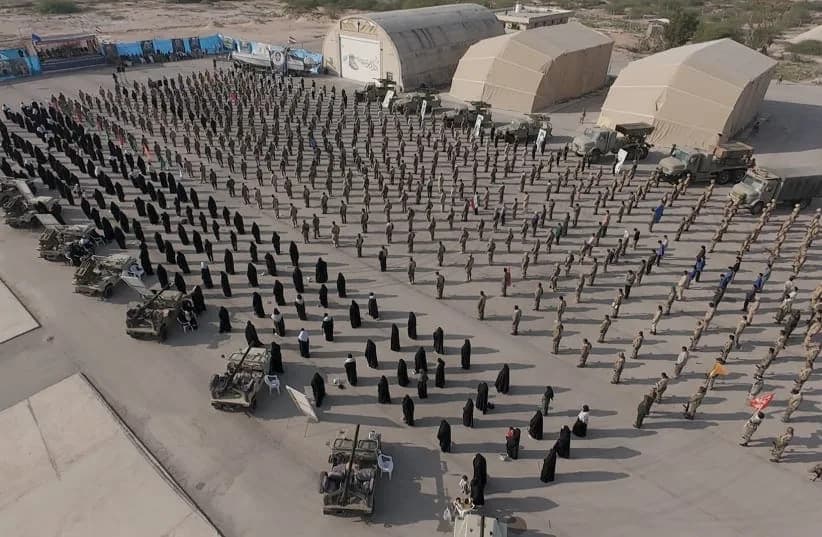
Members of the Islamic Revolutionary Guard Corps (IRGC) attend an exercise in southern Iran Monday, 16th February 2026 (photo credit: VIA REUTERS)
A senior Israeli defense official said on Friday that Iran is weighing how to respond as nuclear negotiations with Washington remain stalled and US pressure, including new naval measures, intensifies. The official warned that Tehran's options are narrowing and that Israel is preparing for scenarios in which an Iranian action could spiral out of control.
Rising Tensions and Unresolved Incidents
The official described a recent rise in unresolved maritime and regional incidents, some of which could potentially develop into attacks on Israel's home front from multiple directions and not necessarily originating from Iranian soil. He said there were many nights of heightened alert as military and civil defense systems worked to clarify events and adjust readiness levels.
'The Iranians are looking for tools within this campaign. They are asking themselves how they can get out of this situation,' the official said, adding that Tehran is also assessing whether it can influence external political developments to better understand other actors' intentions.
Economic Pressure and Naval Measures
The official pointed to growing signs of economic strain in Iran, saying US sanctions and recent naval measures are having an effect. According to the assessment, tanker traffic through the Strait of Hormuz has climbed to an average of 30 to 40 vessels per day—levels similar to those seen before the war—suggesting a decline in Iran's ability to influence shipping in the strait.
He also noted the Iranian rial has recently weakened to about 2.5 million rials per US dollar, while stopping short of labeling the situation hyperinflationary. To illustrate domestic hardship, the official cited a critical article in an Iranian pro-regime newspaper that compared the price of eggs to average salaries and called the cost of living 'unbearable.'
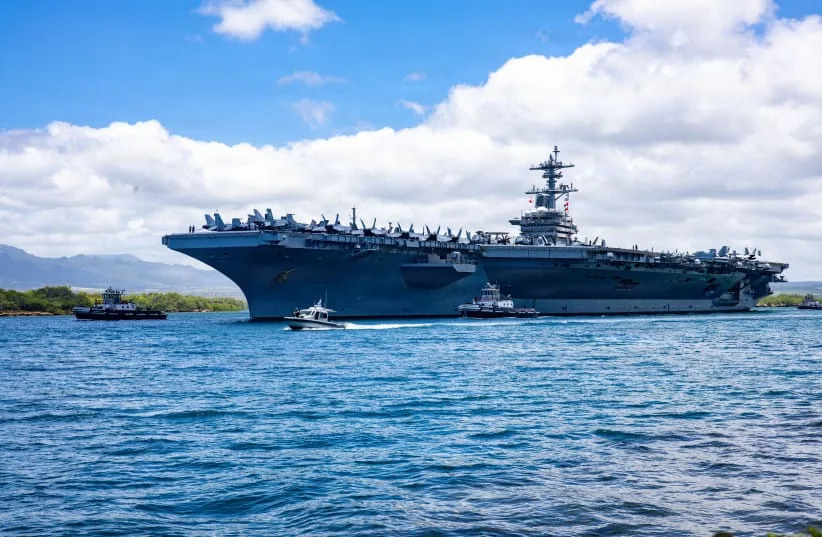
Nimitz-class aircraft carrier USS Theodore Roosevelt (CVN 71) in Exercise Rim of the Pacific 2026, July 7, 2026. (credit: US Navy photo by Mass Communications Specialist First Class Luke McCall)
Travel, Blockade Claims and Regional Responses
The official described what he characterized as a US naval blockade that began this week and said its effects extend beyond sanctions, including restrictions that have complicated family travel. Iranian authorities allegedly pressed neighboring states to restore civilian flights; Iraq has agreed so far, while flights to Azerbaijan remain suspended.
Military Calculations and Potential Escalation
Israeli defense officials assess that Tehran is continually calculating US domestic politics and Washington's willingness to confront Iran, and that those assessments shape Iranian decision-making. They point to unsuccessful Iranian attempts to target vessels in the Strait of Hormuz and to failed efforts to strike abroad as evidence that Iran's range of options has narrowed.
Nonetheless, Israeli planners are preparing for scenarios in which an Iranian initiative could inadvertently escalate—such as a cruise missile striking a US vessel and causing casualties—which could create uncertainty about how Washington would respond. Officials also warned that if Tehran concludes it is about to be attacked or losing ground in its confrontation with the US, it might consider strikes on US assets in Jordan or Israel, though a senior official said Iran understands the severe costs of such moves and has so far refrained from attacking Israel.
Context note: Israeli officials view the presence and posture of US naval forces, including carrier-class assets recently involved in multinational exercises, as part of a broader deterrence and pressure campaign directed at Tehran.
Help us improve.