The Hōlei Sea Arch — an iconic, roughly 90‑foot lava formation in Hawaiʻi Volcanoes National Park — collapsed into the Pacific on Sept. 27. Carved from a lava flow about 550 years old, the arch had been weakened by differential erosion and a partial break during a 2022 south swell. The final fall occurred amid stormy conditions as Hurricane Nolo passed the island, though officials have not confirmed a direct link. Visitors and park staff say the coastline remains striking even without the landmark.
Hōlei Sea Arch Collapses: Iconic 90‑Foot Lava Arch Falls Into the Pacific After About 550 Years
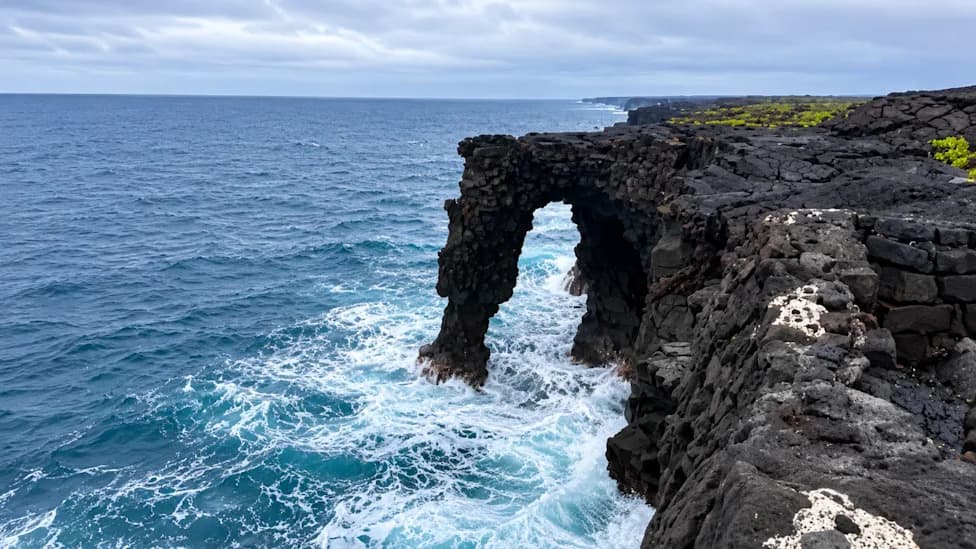
Famed 90-Foot Hōlei Sea Arch Implodes Into the Pacific After 500 Years (Video)
The famed Hōlei Sea Arch — a roughly 90‑foot lava‑rock formation at the end of Chain of Craters Road in Hawaiʻi Volcanoes National Park — collapsed into the Pacific Ocean on Sunday, Sept. 27, park officials confirmed. The arch had jutted from sea cliffs above some of the island's roughest surf and was a well‑known stop for visitors driving the scenic coast.
How the Arch Formed and Why It Fell
Geologists say the arch was carved over centuries as waves eroded an ancient lava flow dated to about 550 years ago. The National Park Service explains that layers of differing hardness in the lava allowed the ocean to wear away softer bands more quickly — a process called differential erosion that eventually hollowed the rock into an arch.
Park staff had warned for years that the formation was temporary. A large section broke away during a historic south swell in 2022, and officials cautioned the remaining structure could fail without warning. The final collapse occurred during a period of rough weather as Hurricane Nolo passed the island, though park officials have not confirmed whether storm conditions directly triggered the fall.
Public Reaction and Legacy
News of the collapse spread quickly online, with visitors sharing photos and video taken days before the arch vanished. In the comments on the park’s announcement, one visitor called Hōlei “always worth the drive,” and another described it as “a highlight of that drive.” Visitor Fahad Shaon, who arrived after the collapse, told Hawaiʻi Public Radio that the coastline remains spectacular: “The cliffs are really awesome,” he said, adding that even without the arch “it’s worth the drive.”
“For those lucky enough to have witnessed the ancient sea arch in person, it remains an unforgettable chapter in Hawaii’s rich geological history.” — Hawaiʻi Volcanoes National Park officials
Although Hōlei is gone, the coastal processes that shaped it continue. Along this dynamic stretch of shore the Pacific is already carving new features from volcanic rock, a reminder that sea arches and similar coastal forms are transient by nature.
Video and reporting: Park video captured the arch before and after the collapse. This story was originally published by Surfer on Oct. 1, 2026.
Help us improve.