In a high-stakes courtroom battle over Kansas' new restrictions on gender markers and restroom access, state lawyers have turned to plaintiffs' past social media posts to challenge their privacy claims. The case, Doe v. Kansas, asks the court to block Senate Bill 244, which invalidates driver’s licenses with gender markers that do not match a person’s sex assigned at birth and narrows restroom access in government buildings.
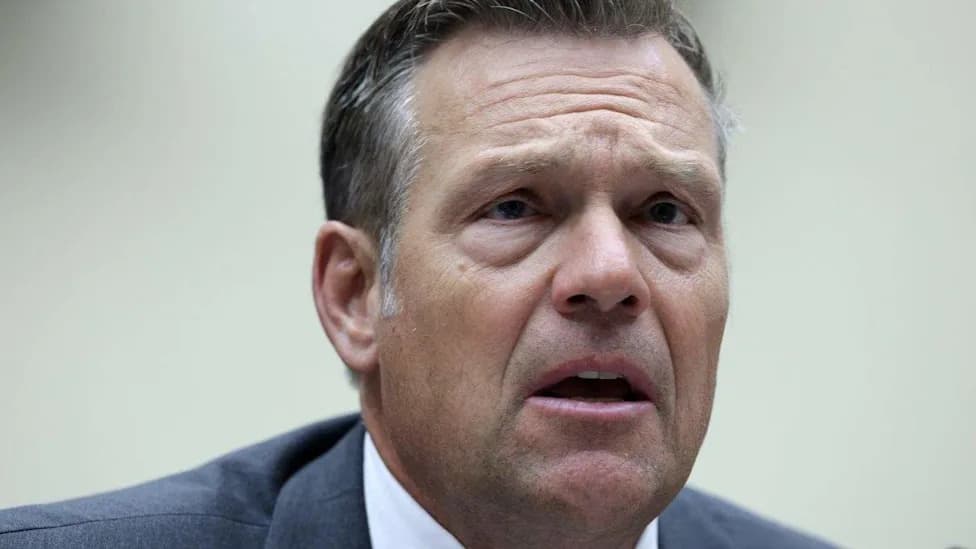
The ACLU of Kansas is backing the lawsuit, which contends the law effectively forces transgender and intersex Kansans to reveal their identities. Republican Attorney General Kris Kobach—who has a long record of supporting measures opposed by LGBTQ+ advocates—argued the plaintiffs have not shown the statute harmed them and pointed to public social media posts as undercutting any expectation of privacy.
Courtroom Testimony: The Topeka Capital-Journal reported Kobach cross-examined plaintiff Dakota West, an intersex woman who formerly lived in Reno County and now resides in Tennessee, about a Facebook post in which she described being intersex. Kobach noted the post had drawn millions of views and questioned West's concern about being outed. West said online disclosures feel "contextual" and are different from being identified in person, adding: "I've never seen anyone in person that's followed me. Sometimes, I think of it as numbers on a page." West—born with XY chromosomes whose body does not respond to male hormones—had held a license listing her as female for five months before the state told her it was invalid.
Another plaintiff, Daniel Doe, told the court some of their posts are archived and stressed the difference between voluntarily disclosing identity online and being compelled to produce ID in official settings: "I made all of these posts on my own terms. I can't necessarily control when I have to produce my identification." State attorneys pointed to view counts and the potential circulation of screenshots to argue the posts were effectively public.
Harper Seldin, an ACLU staff attorney, told The Capital-Journal the state's focus on social media is irrelevant to the legal claims and appears intended to pressure and intimidate plaintiffs: "There's no reason for this."
Kobach defended the approach to reporters: "The way they define their right is the right not to disclose to anyone the fact that they are trans. But when one has published thousands of times on social media that one is trans, that undermines one's claim that you have a constitutional right to privacy to keep that information private... If you are proclaiming something to the world, that indicates you don't have an expectation of privacy on what you just proclaimed."
Privacy, Sealed Identities, And State Tactics: Although three of the five plaintiffs are using pseudonyms and the court agreed to keep their names sealed, the state is seeking to reveal their faces in court. The plaintiffs say their primary harm is being forcibly outed against their will and describe the state's strategy as a continuation of efforts to intimidate transgender Kansans who are advocating for their rights without suffering the harms those laws create.
Kansas lawmakers passed Senate Bill 244 along party lines in January, and Republicans overrode Democratic Gov. Laura Kelly's veto in February to keep the law in effect. State officials estimate that roughly 1,700 intersex and transgender Kansans received notices that their licenses were invalidated.
Real-World Impacts: The law has already created confusion and distress in routine interactions. Transgender woman Kris Ripper obtained a license listing her as male to comply with the statute; during a traffic stop an officer questioned whether the ID was real, and authorities later dismissed a charge of driving without a valid license. In another case, a judge temporarily restored driver Jamie Miller's privileges after finding the state likely denied Miller due process when it revoked her license.
The litigation will test whether the state's use of plaintiffs' social media posts can defeat claims of a constitutionally protected privacy interest and whether the law's practical consequences—forced disclosure, harassment, or denial of services—constitute legal harm.